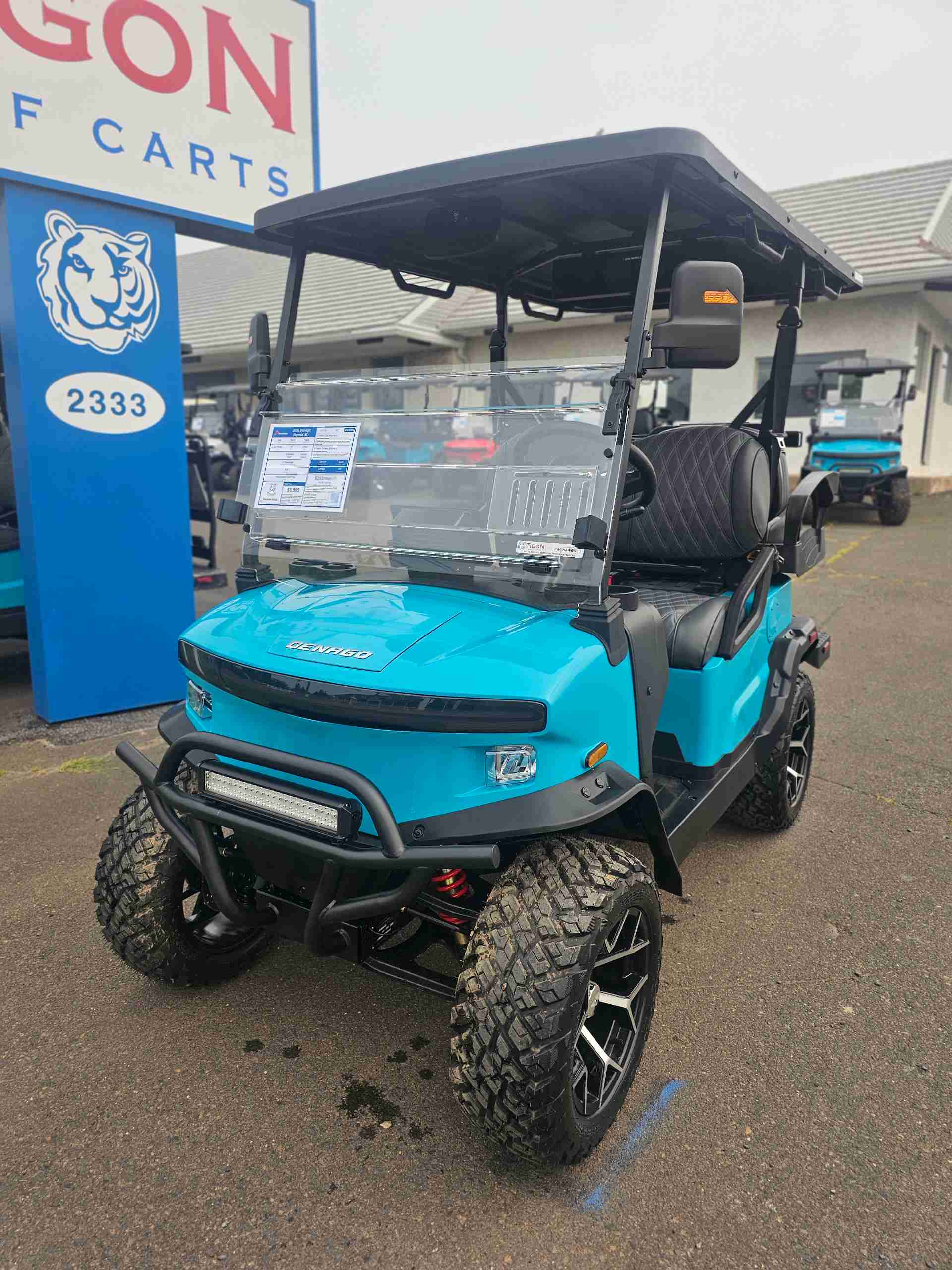
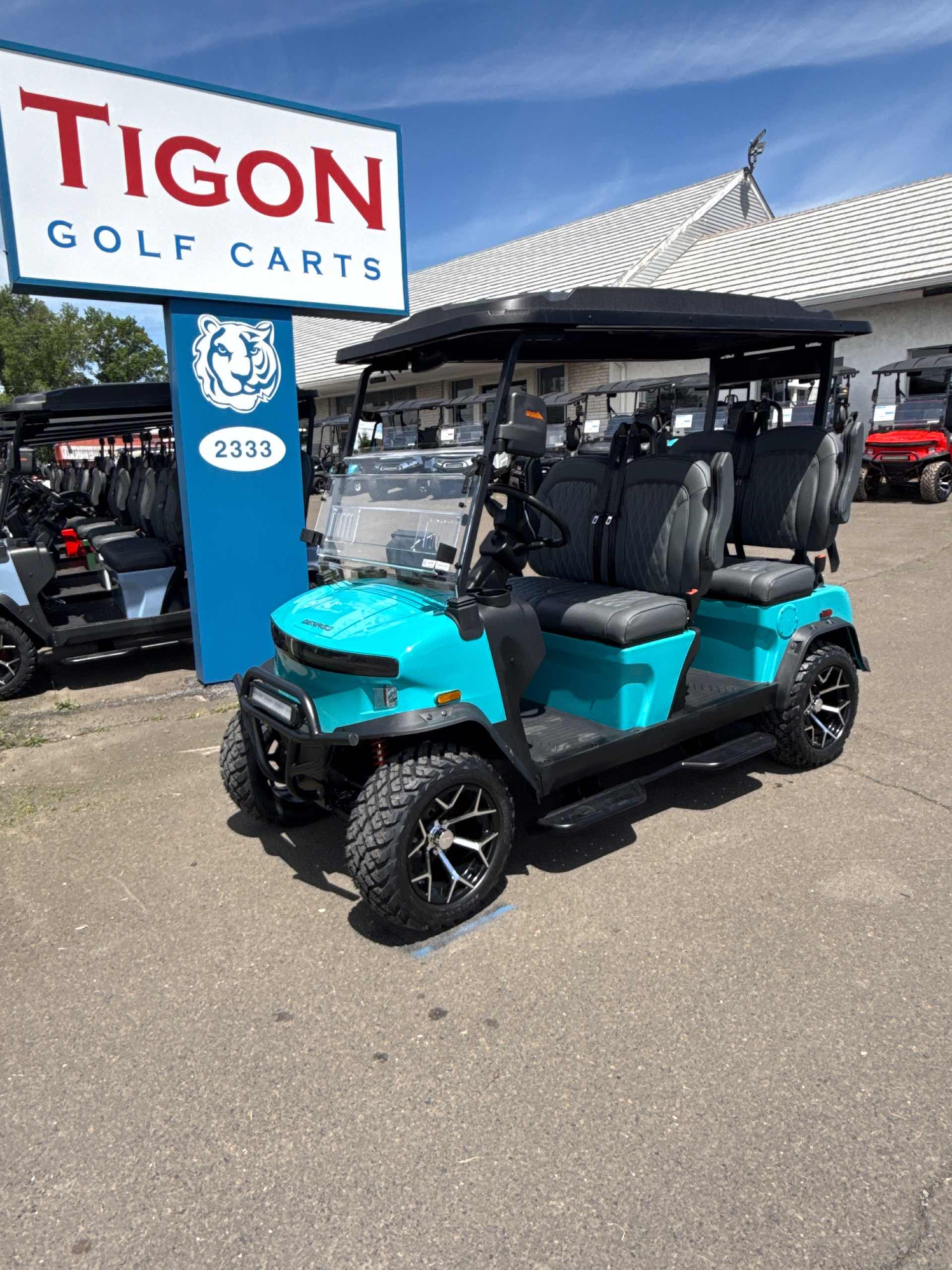
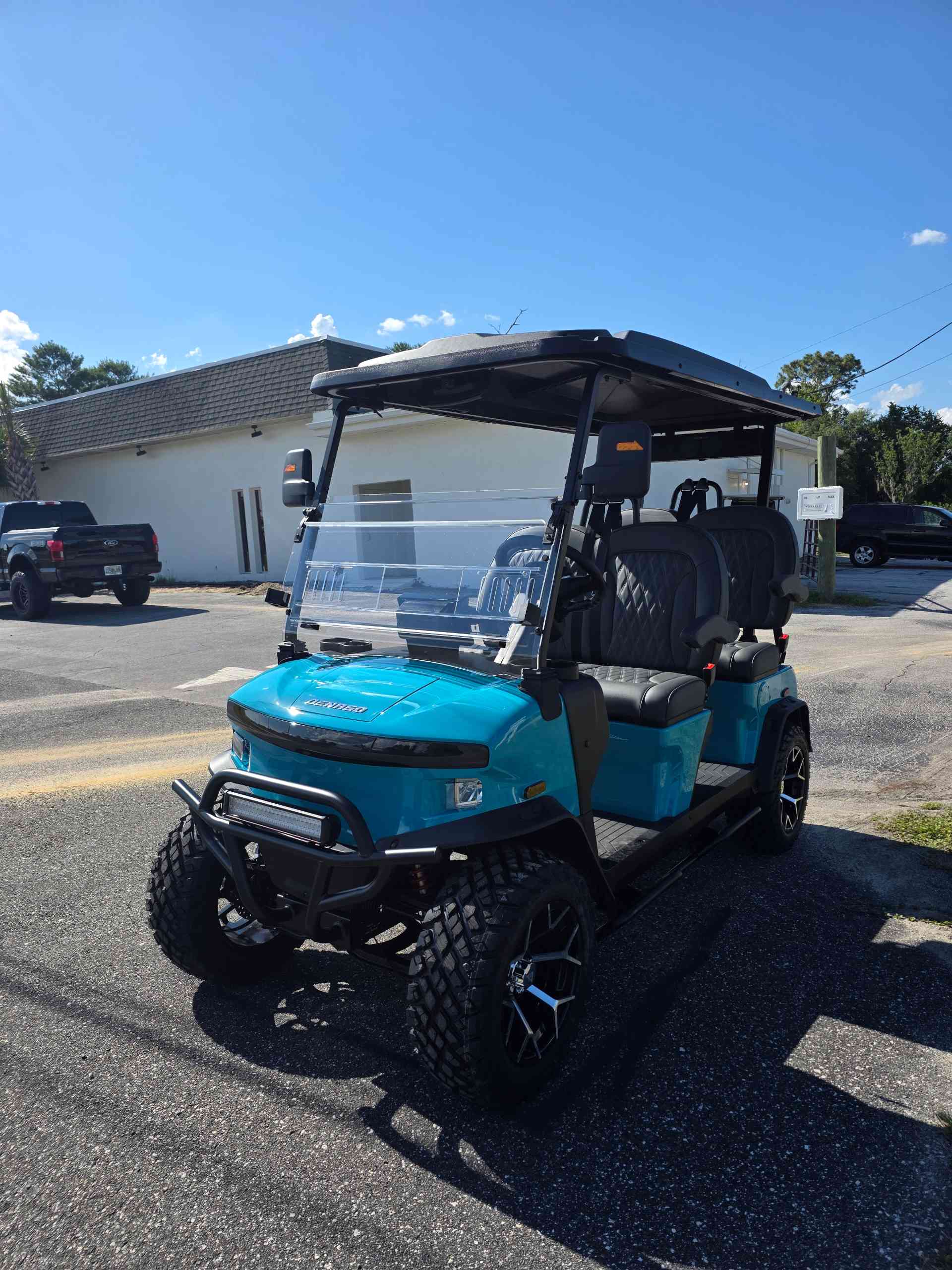
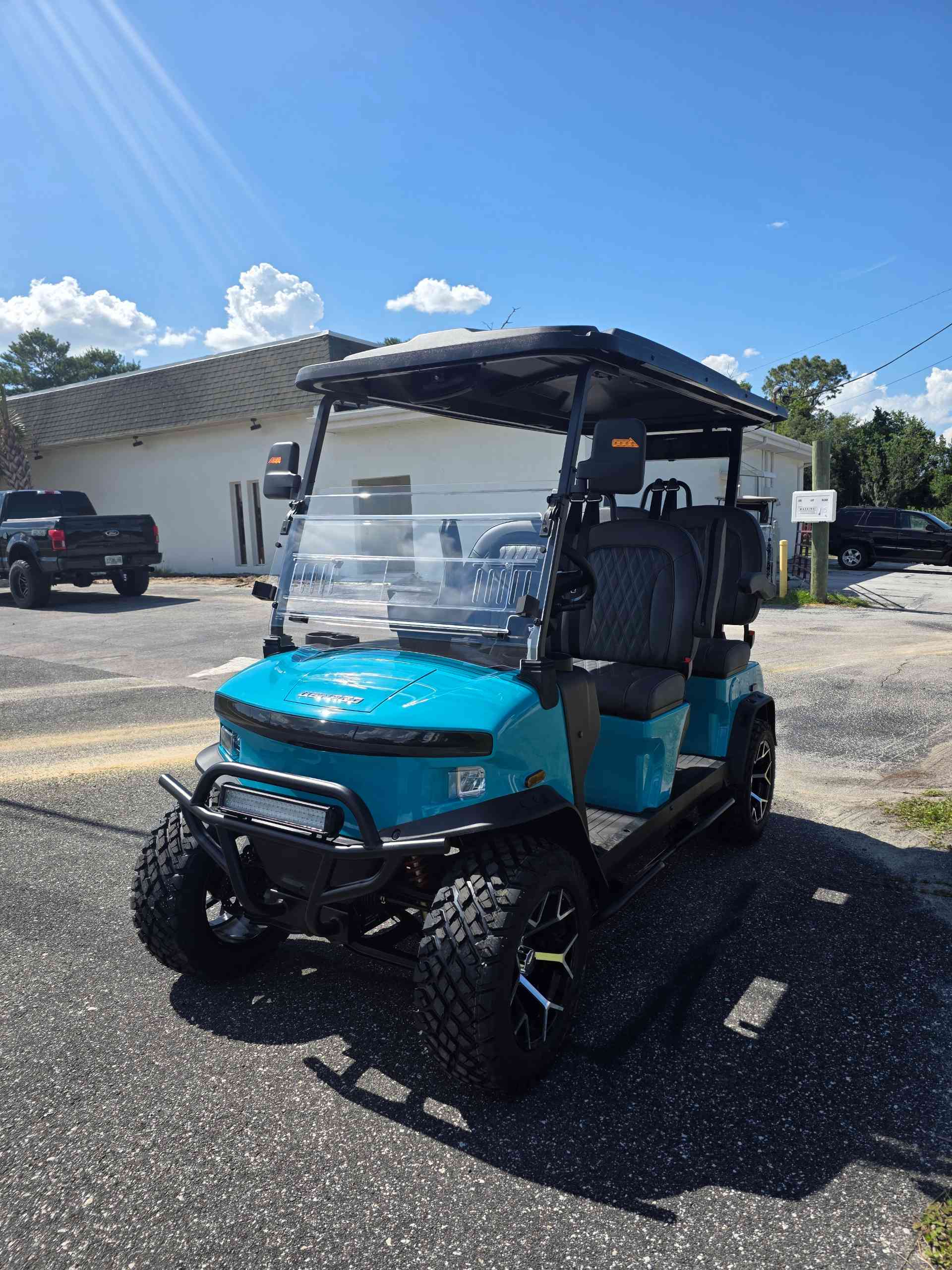
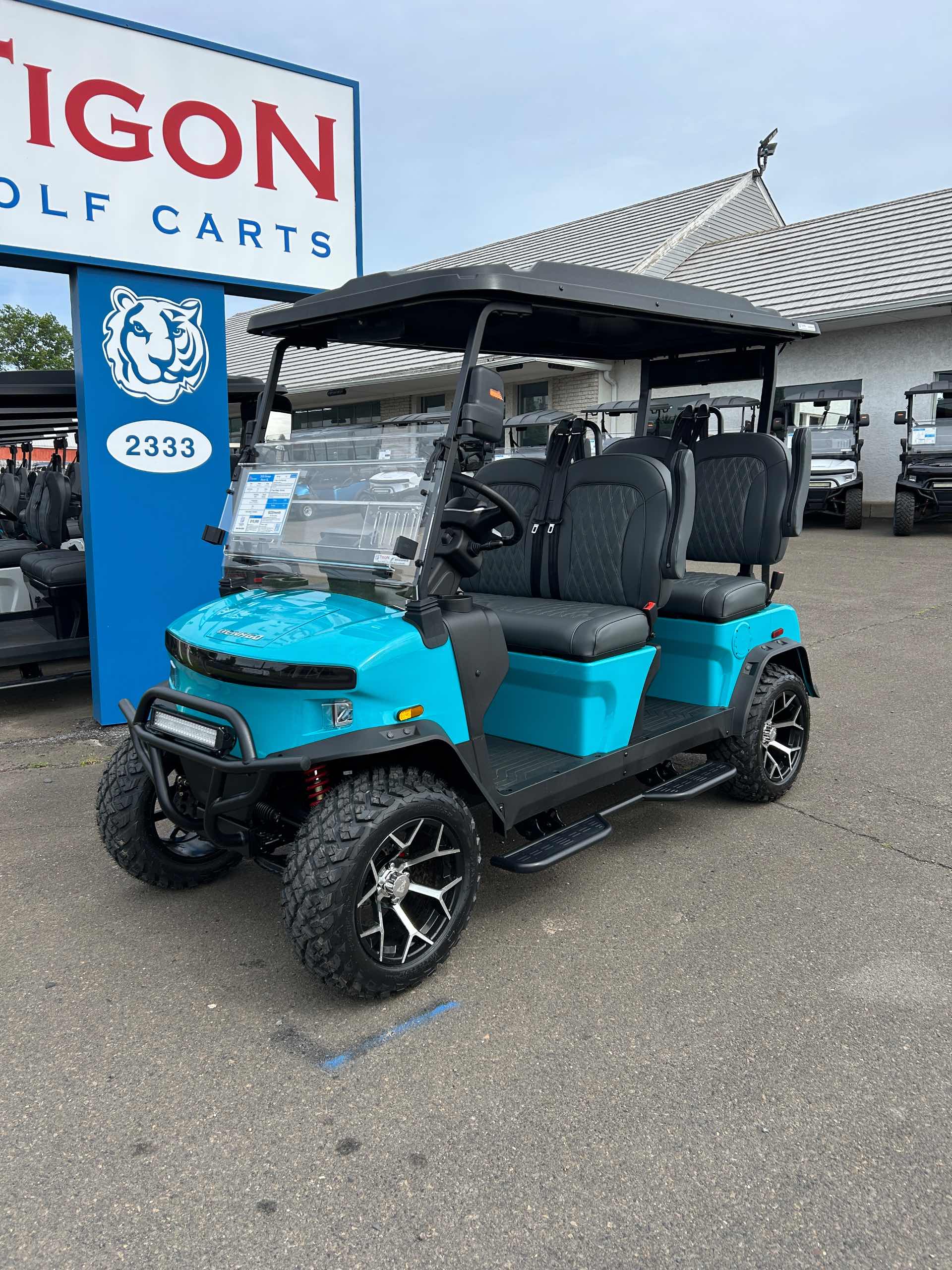
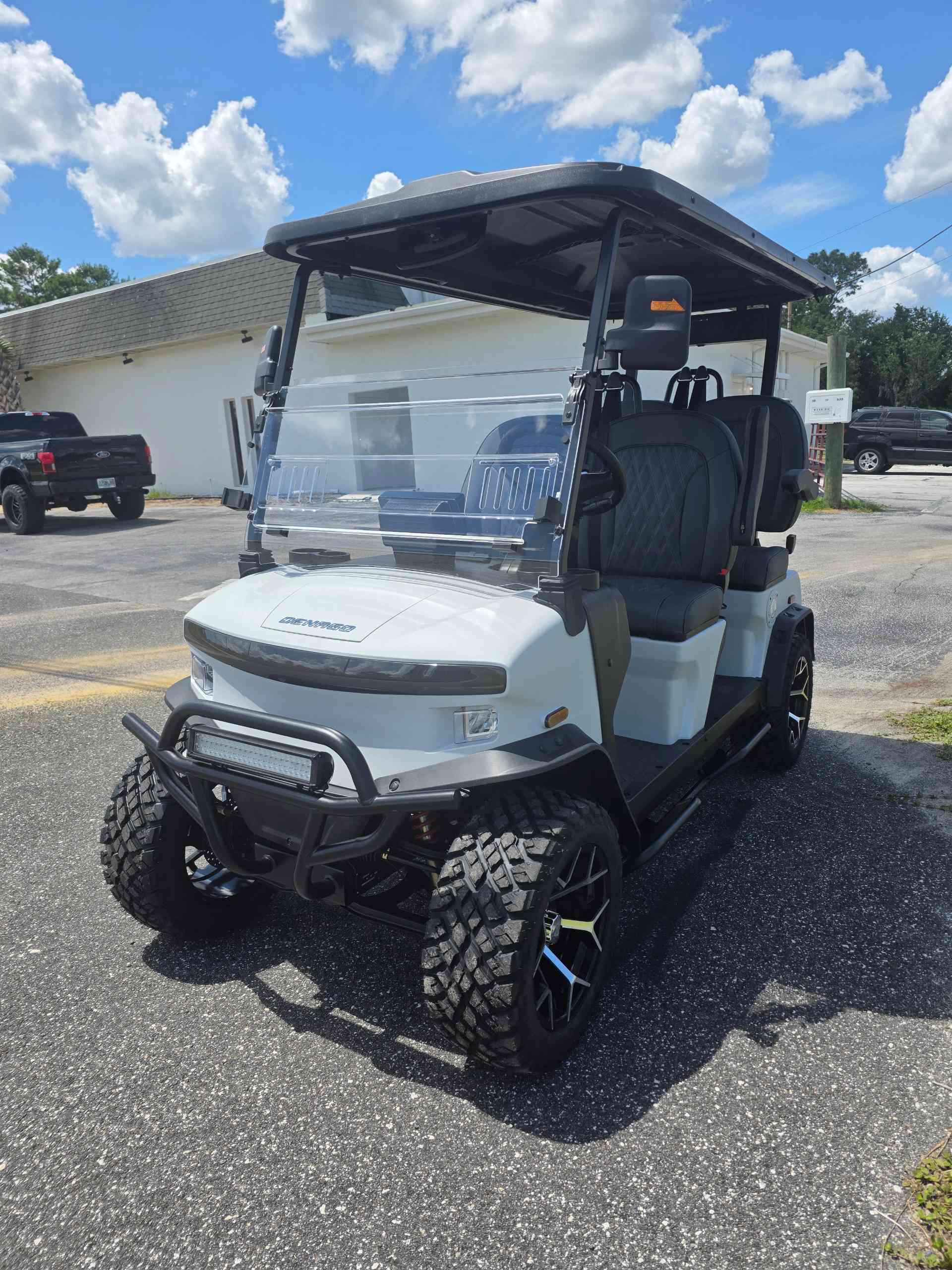
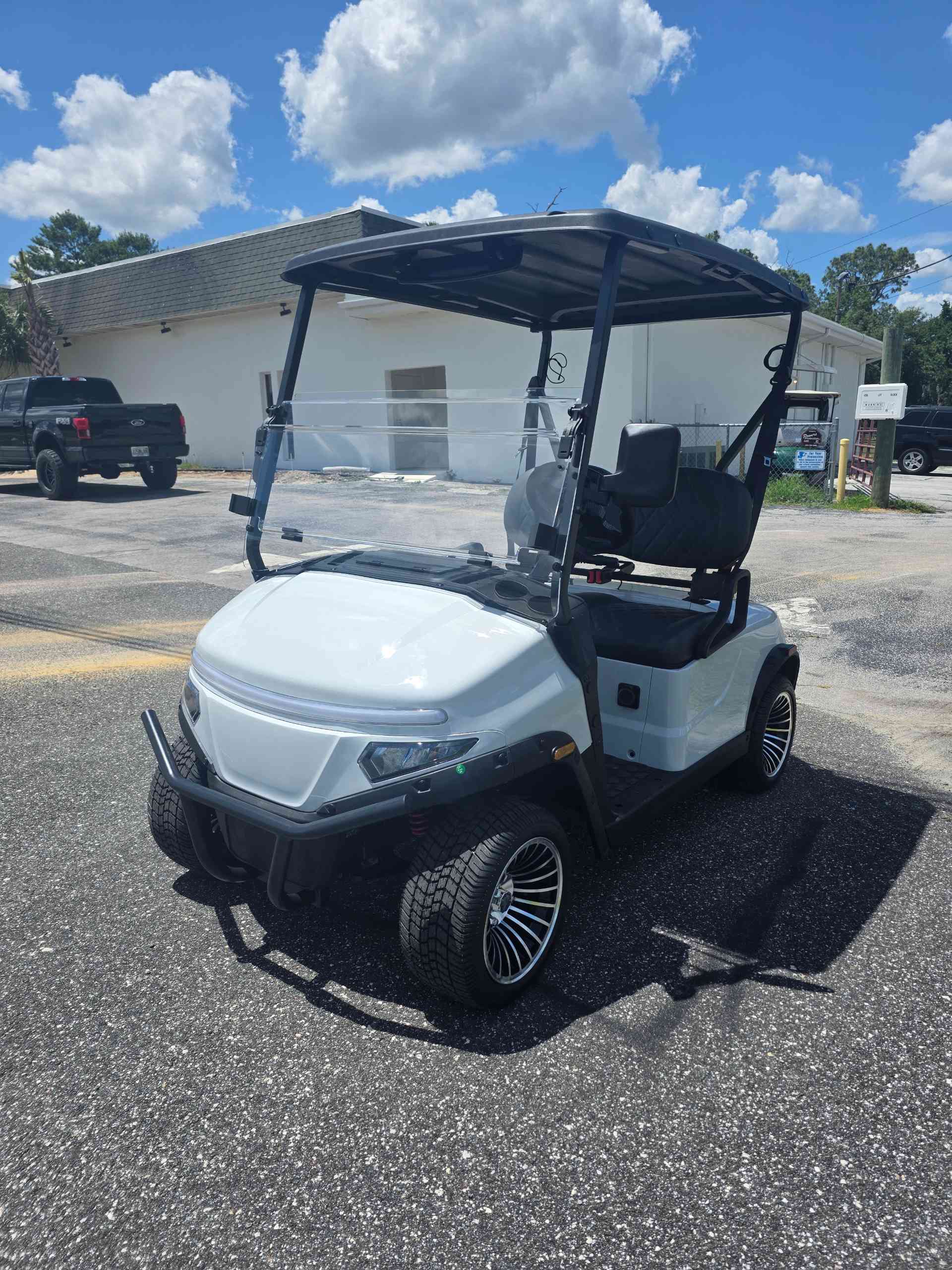
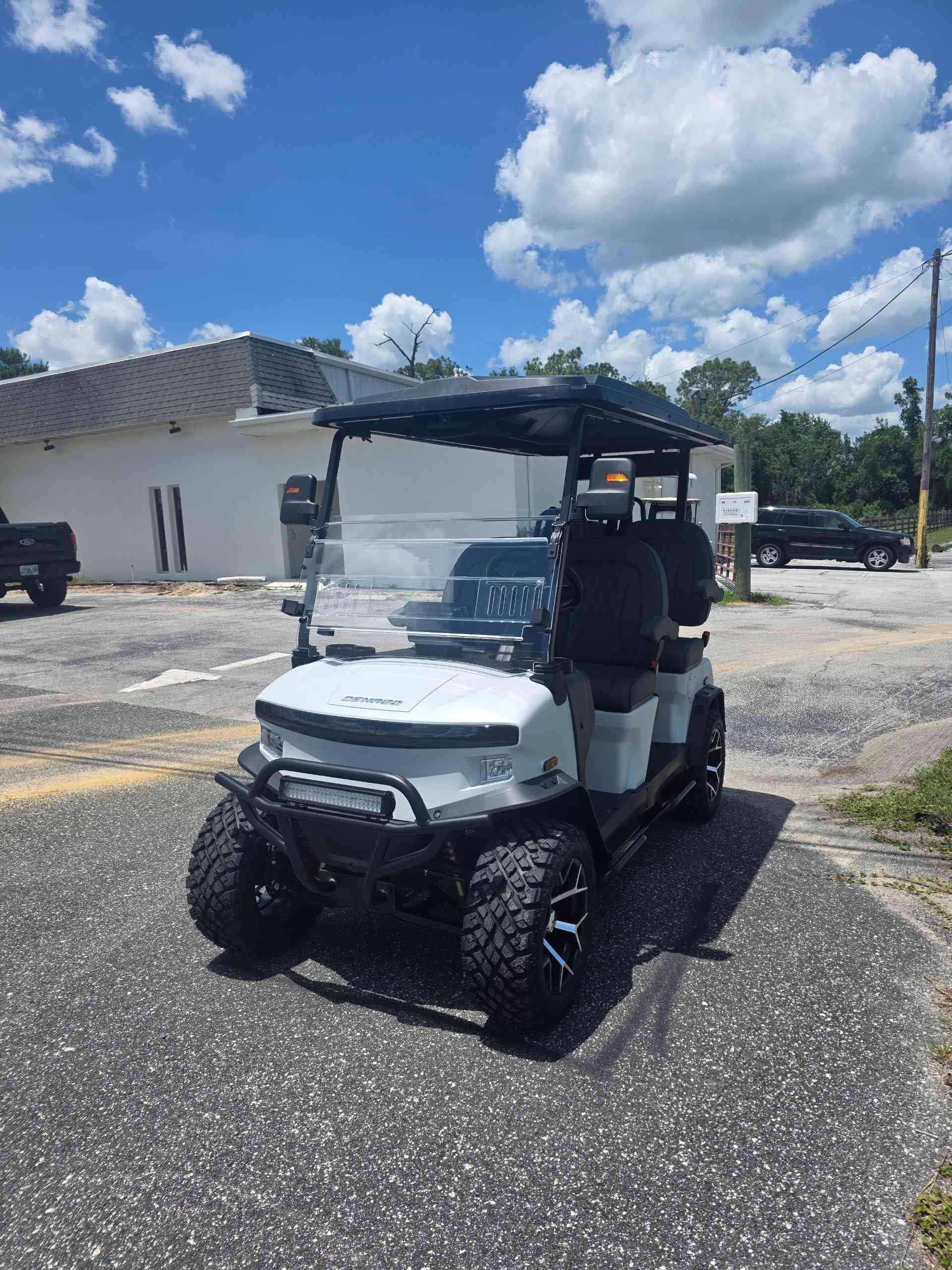
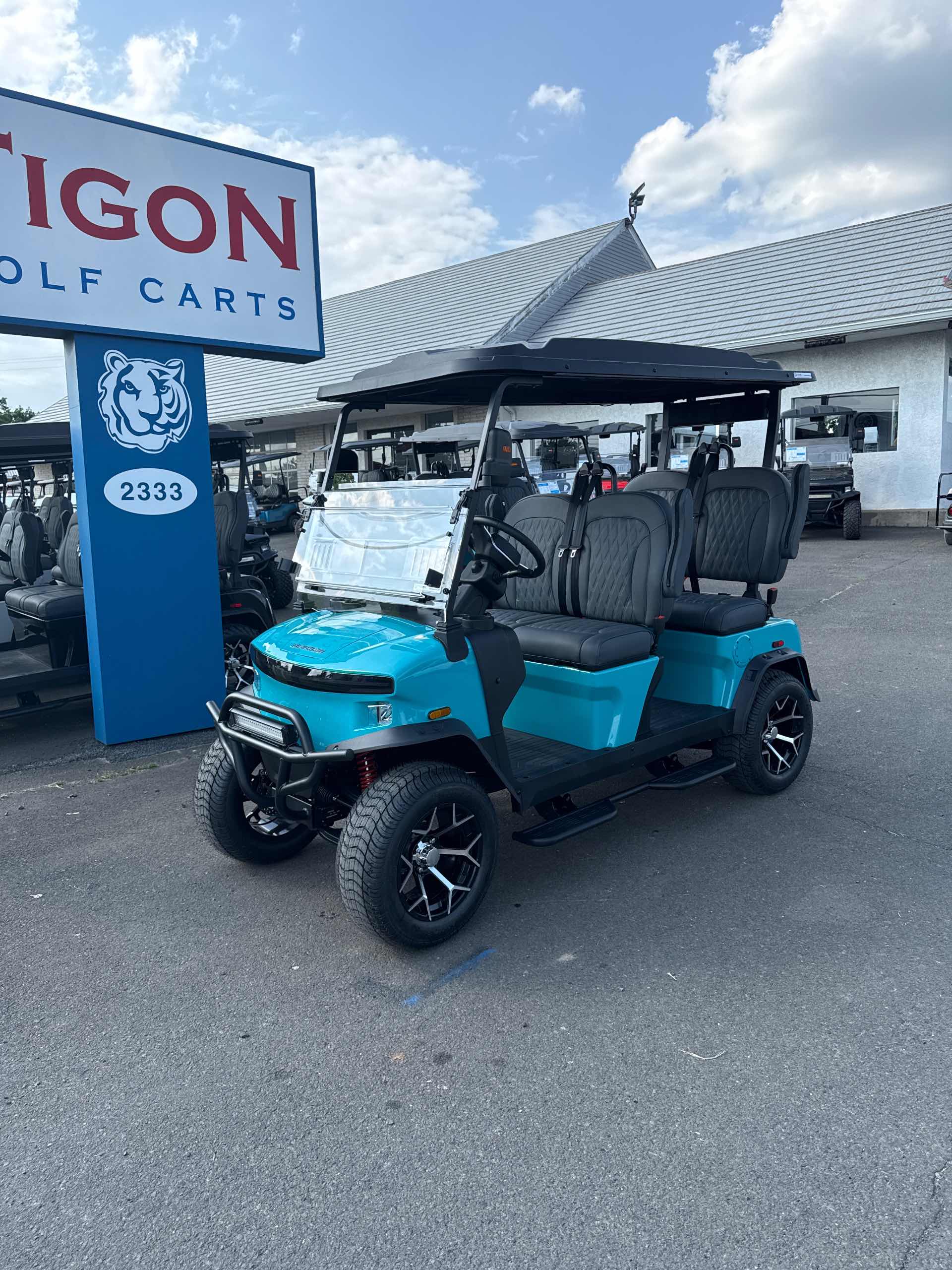
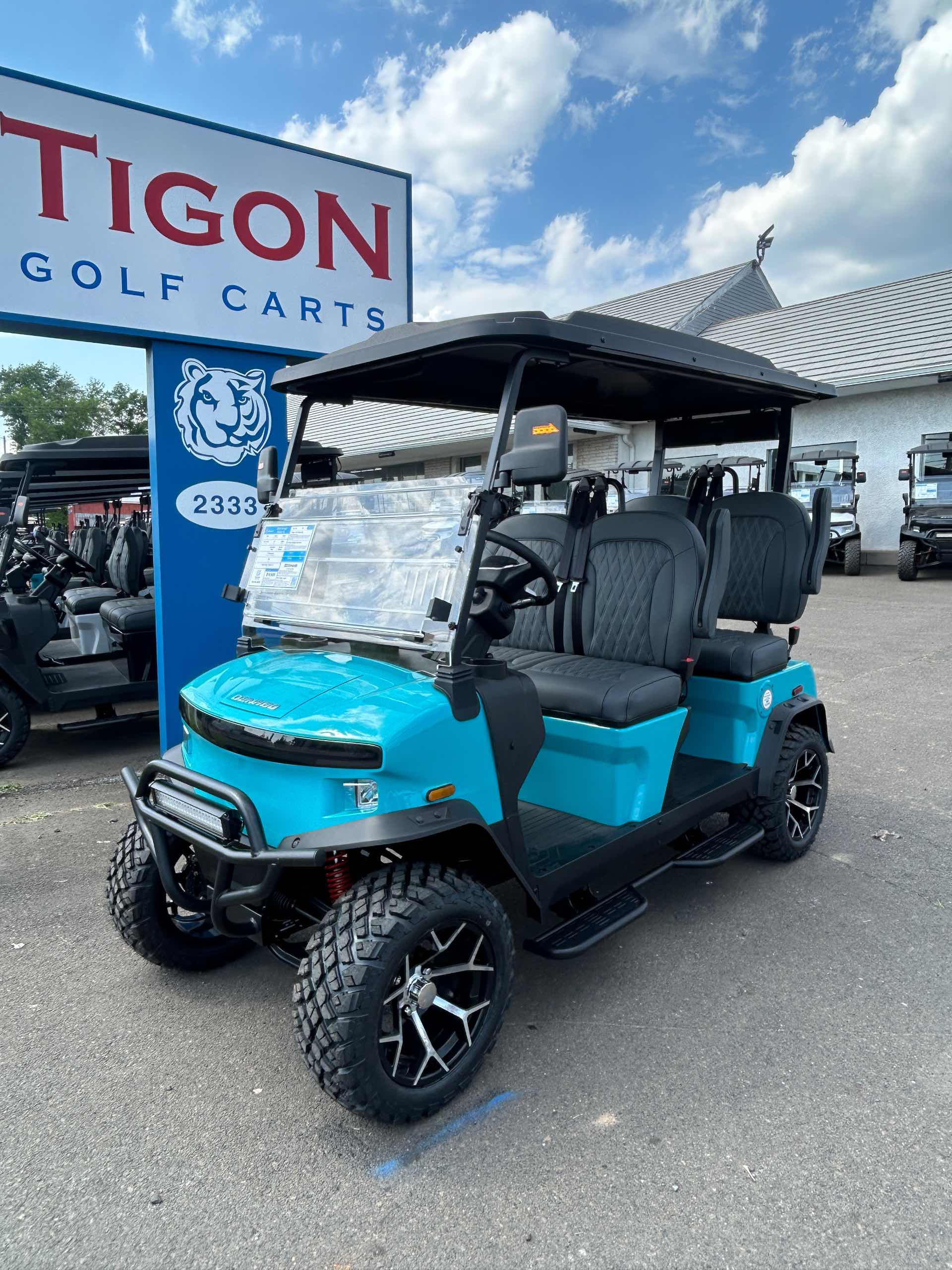
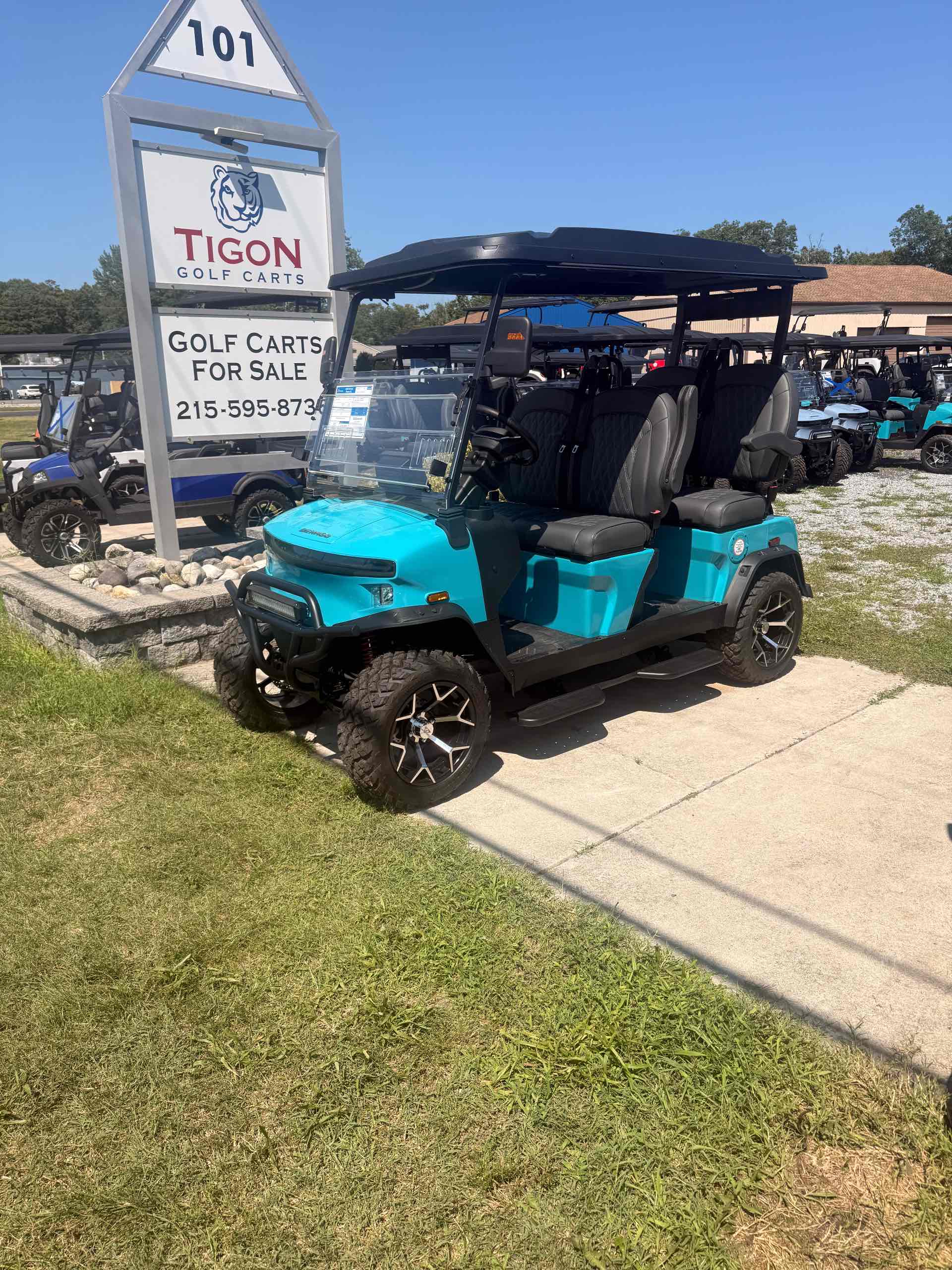
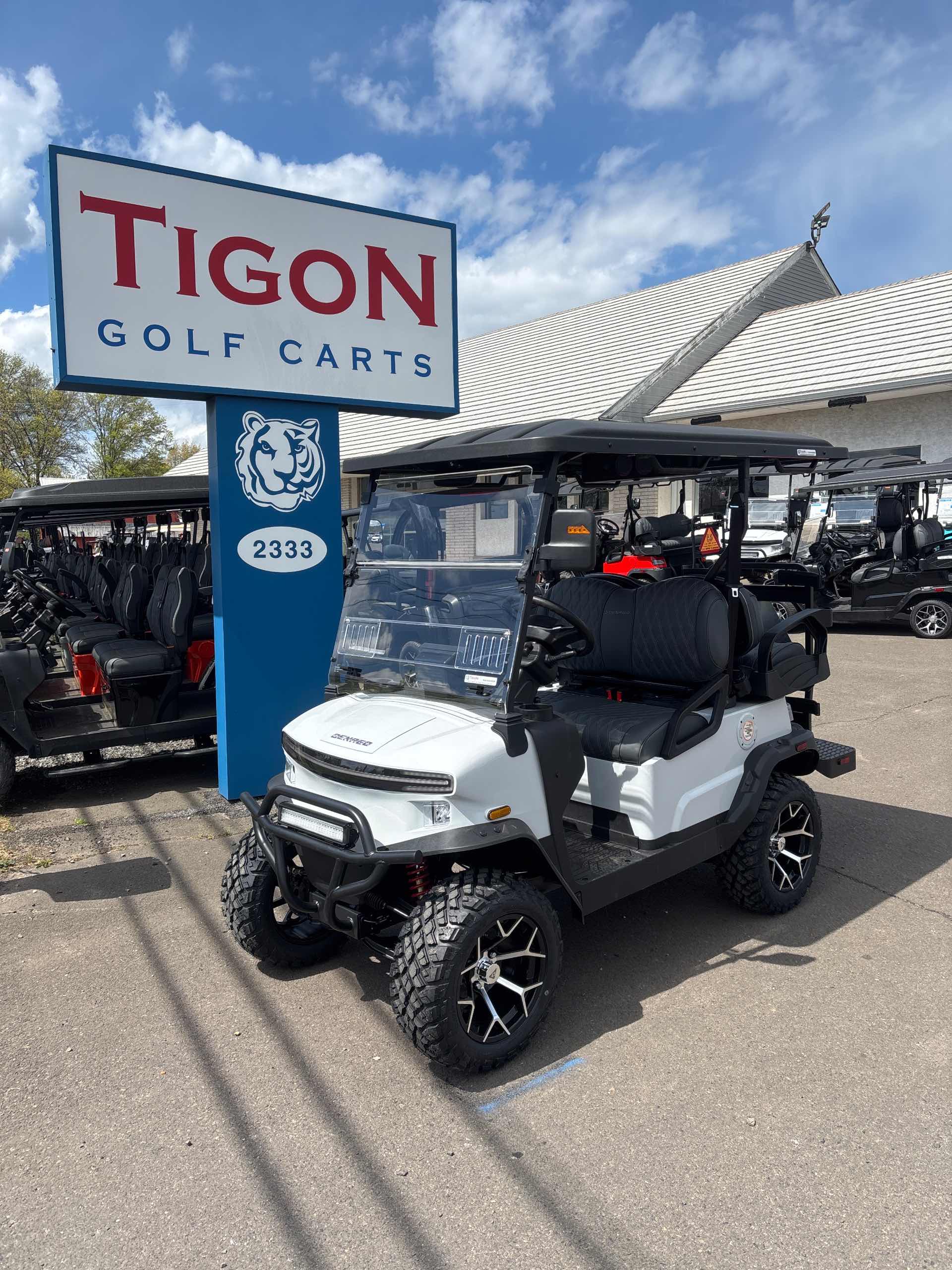
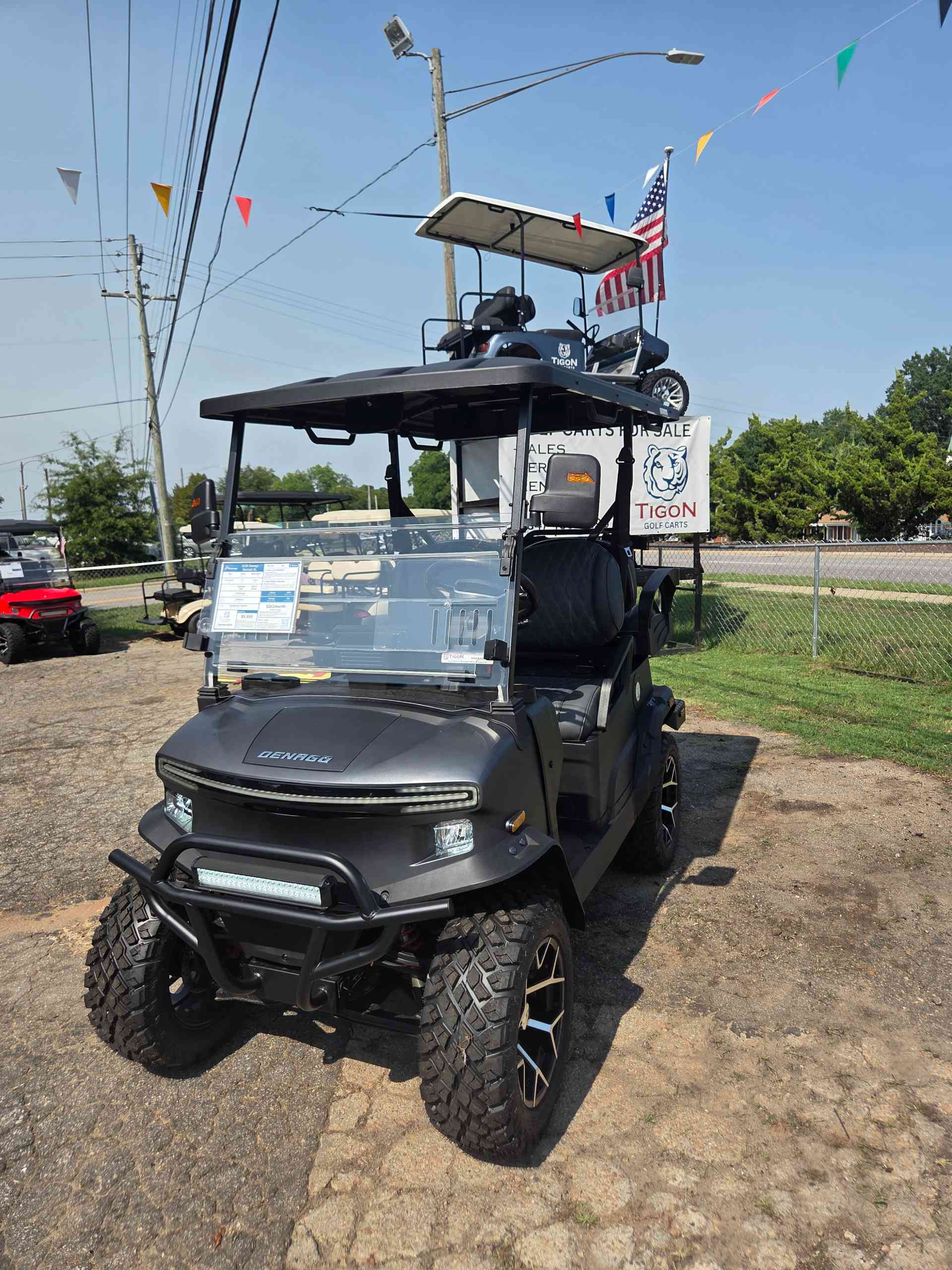
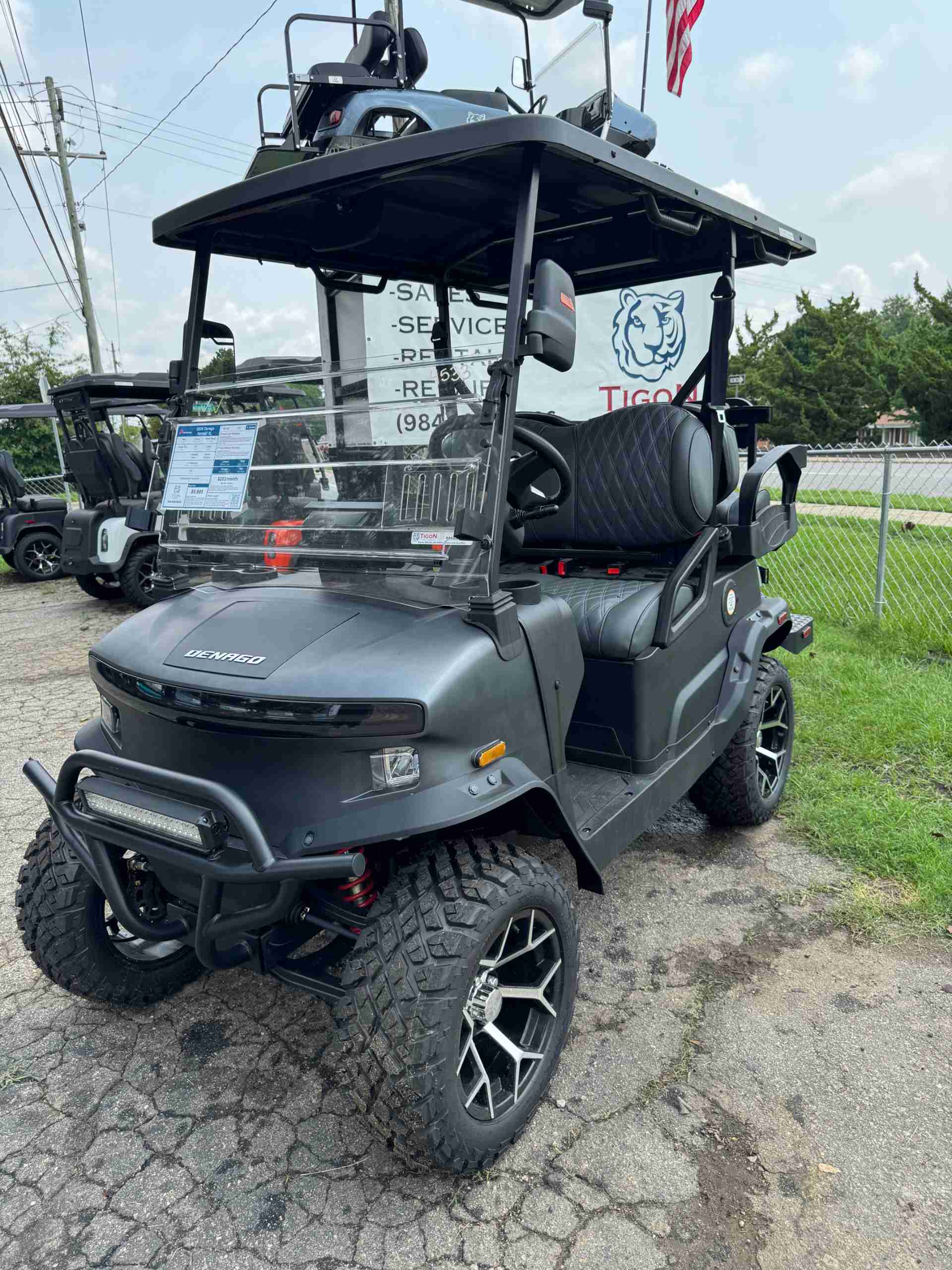
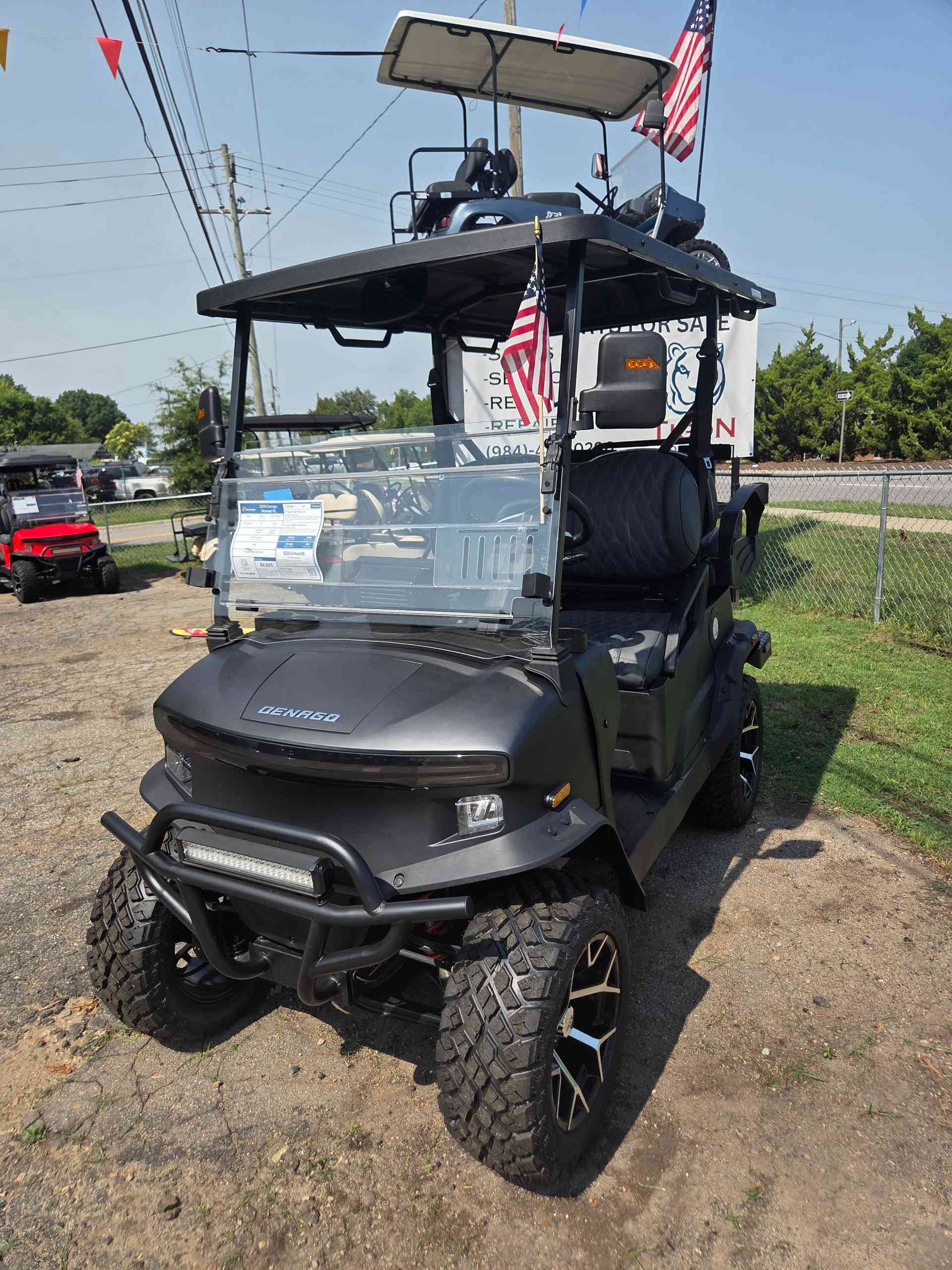
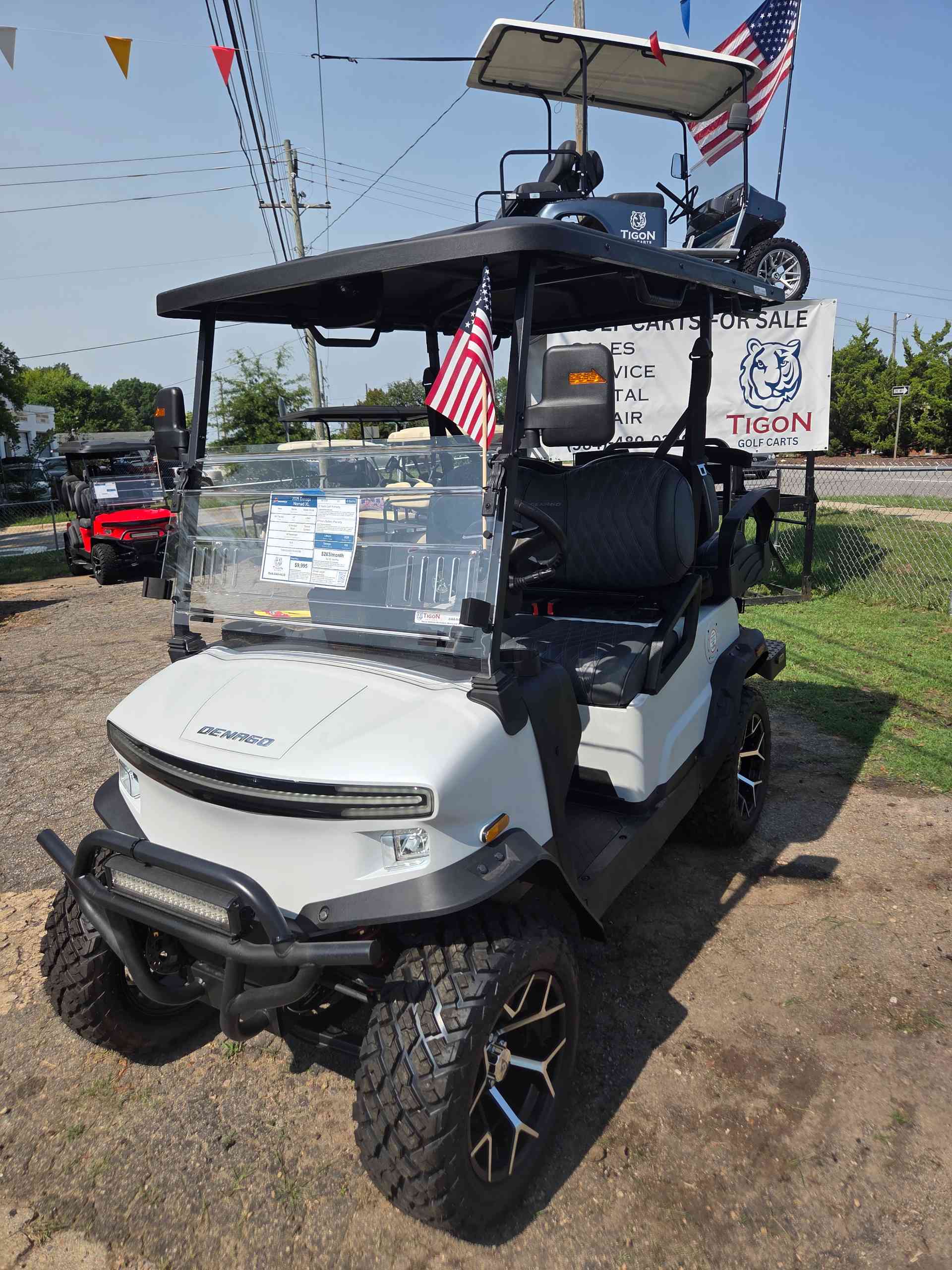
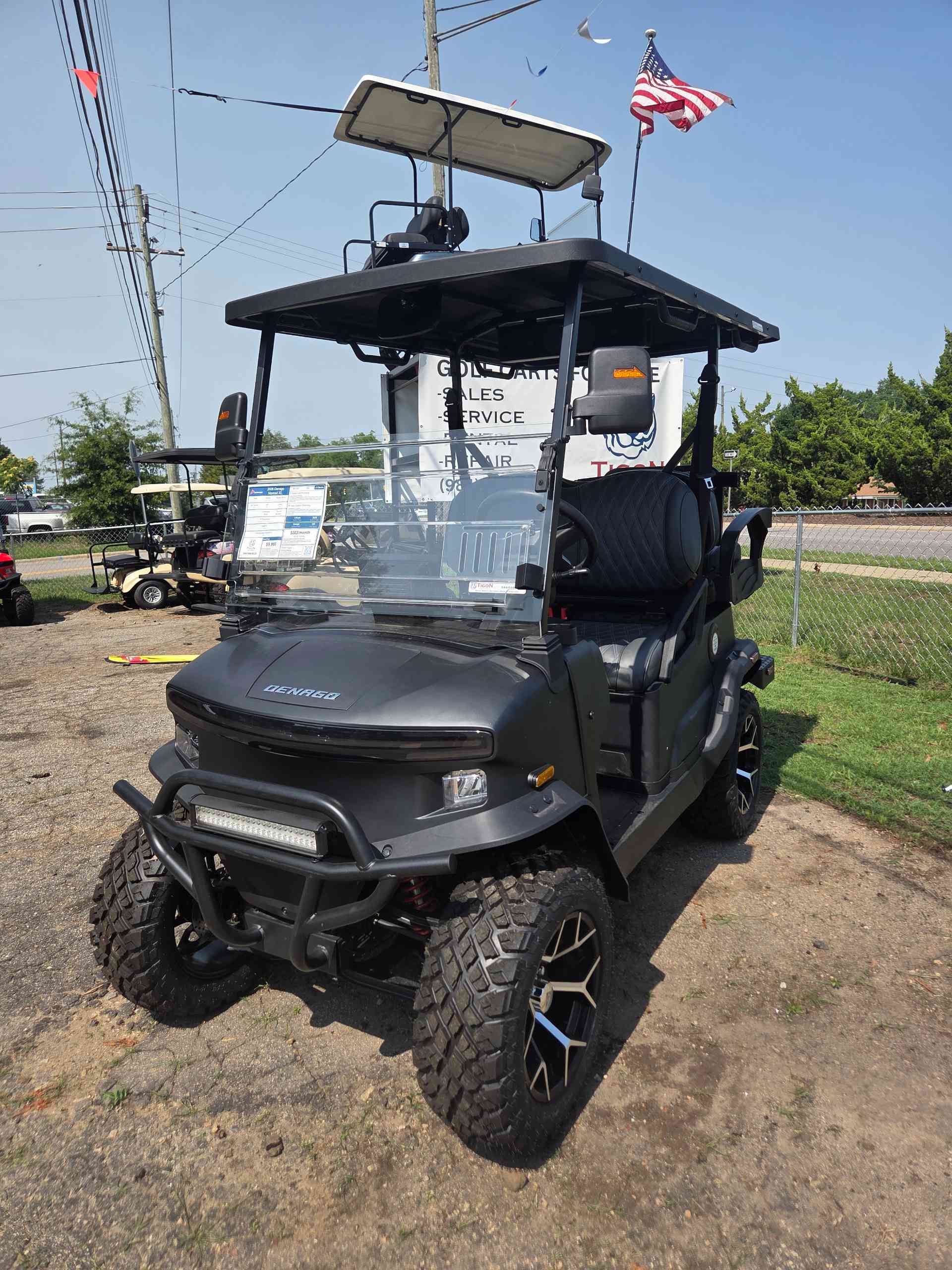
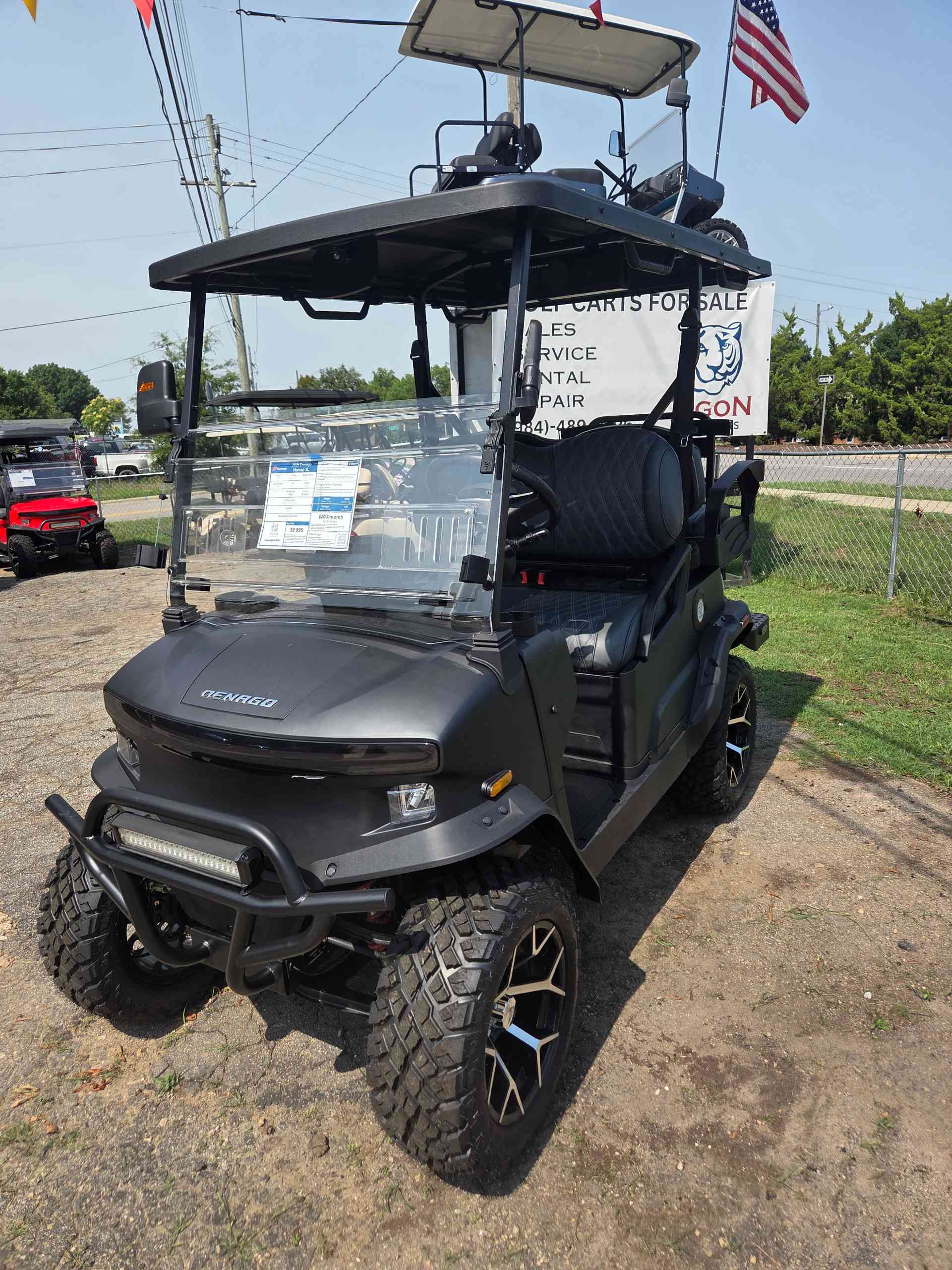
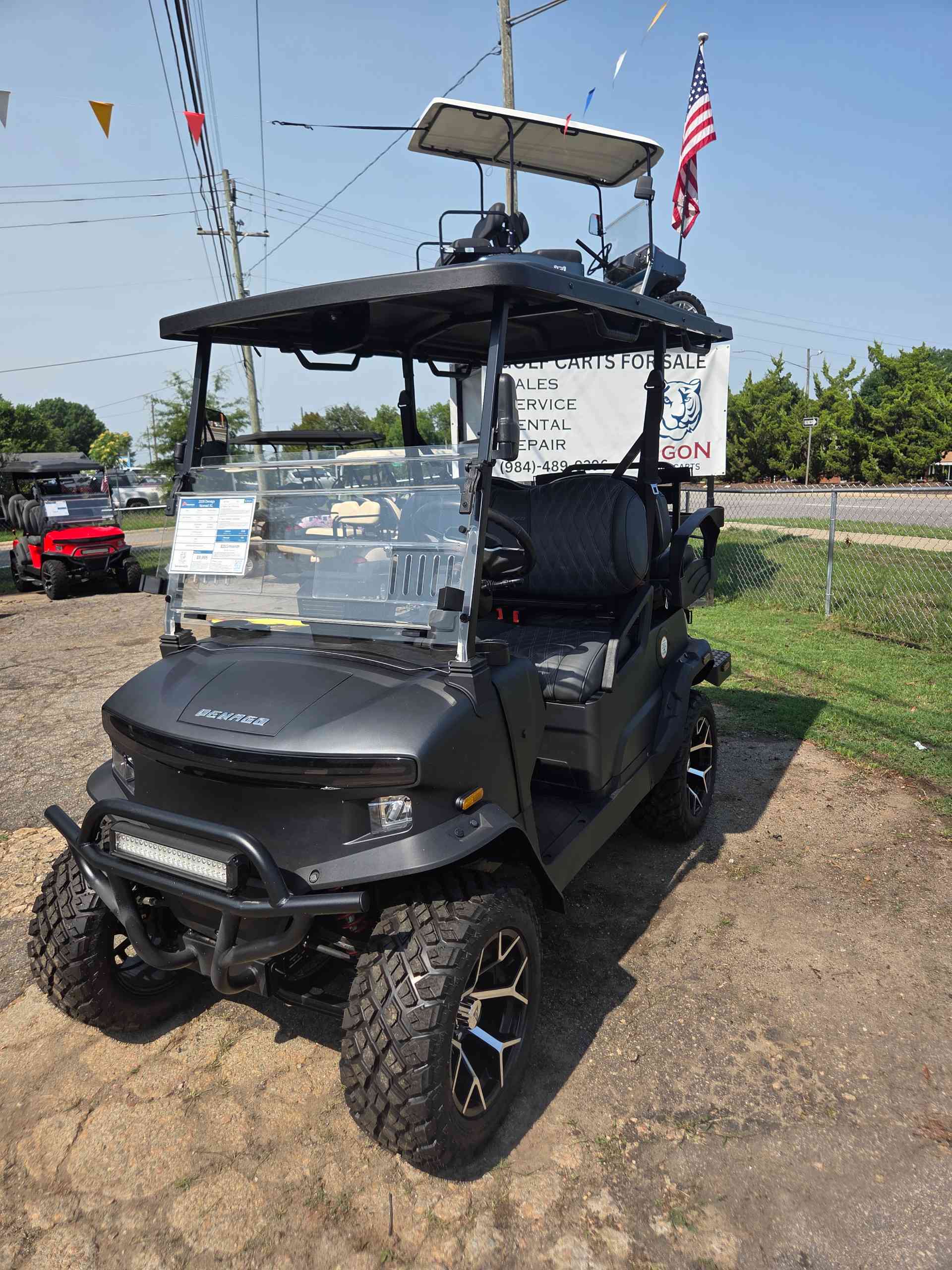
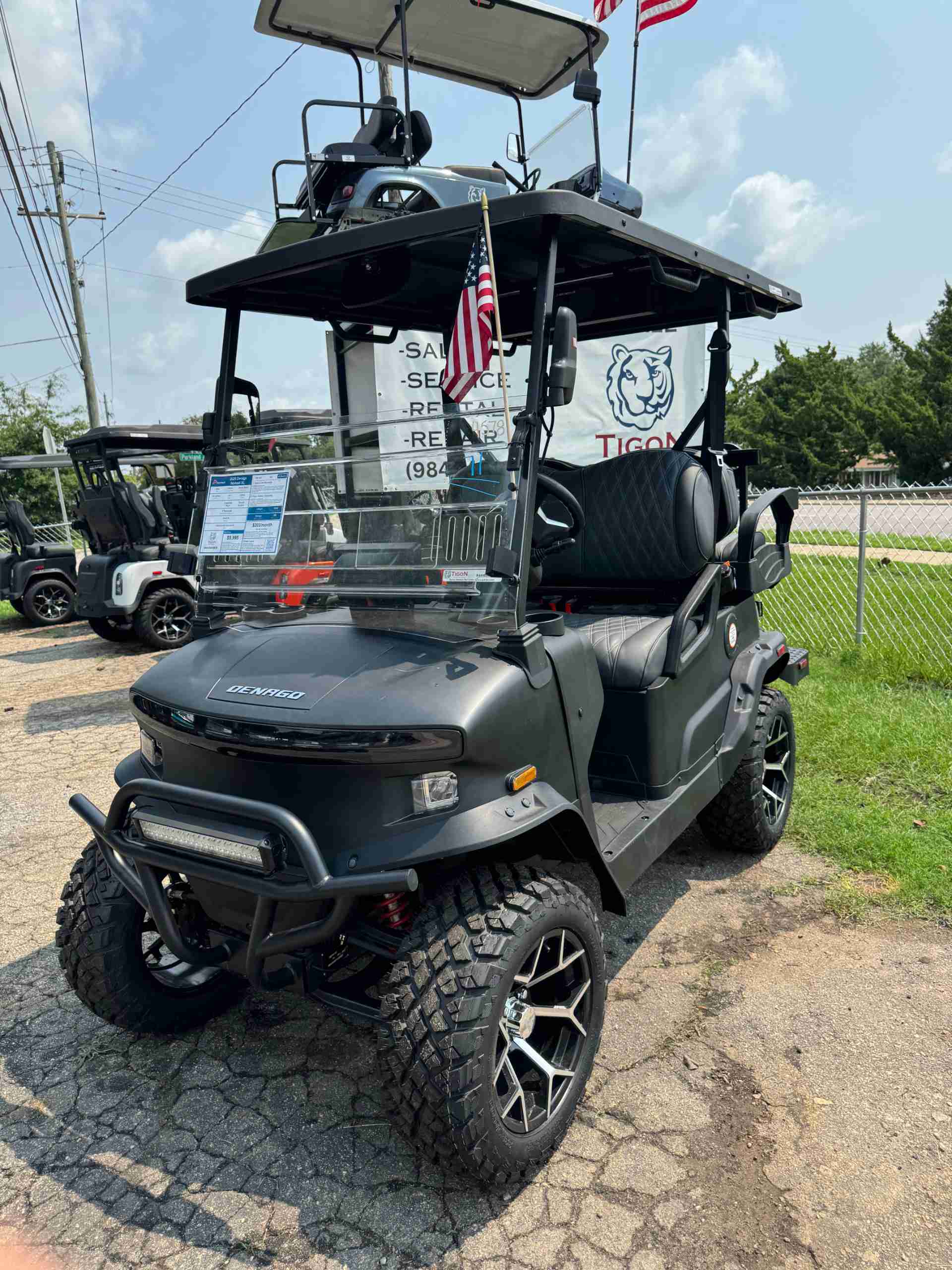
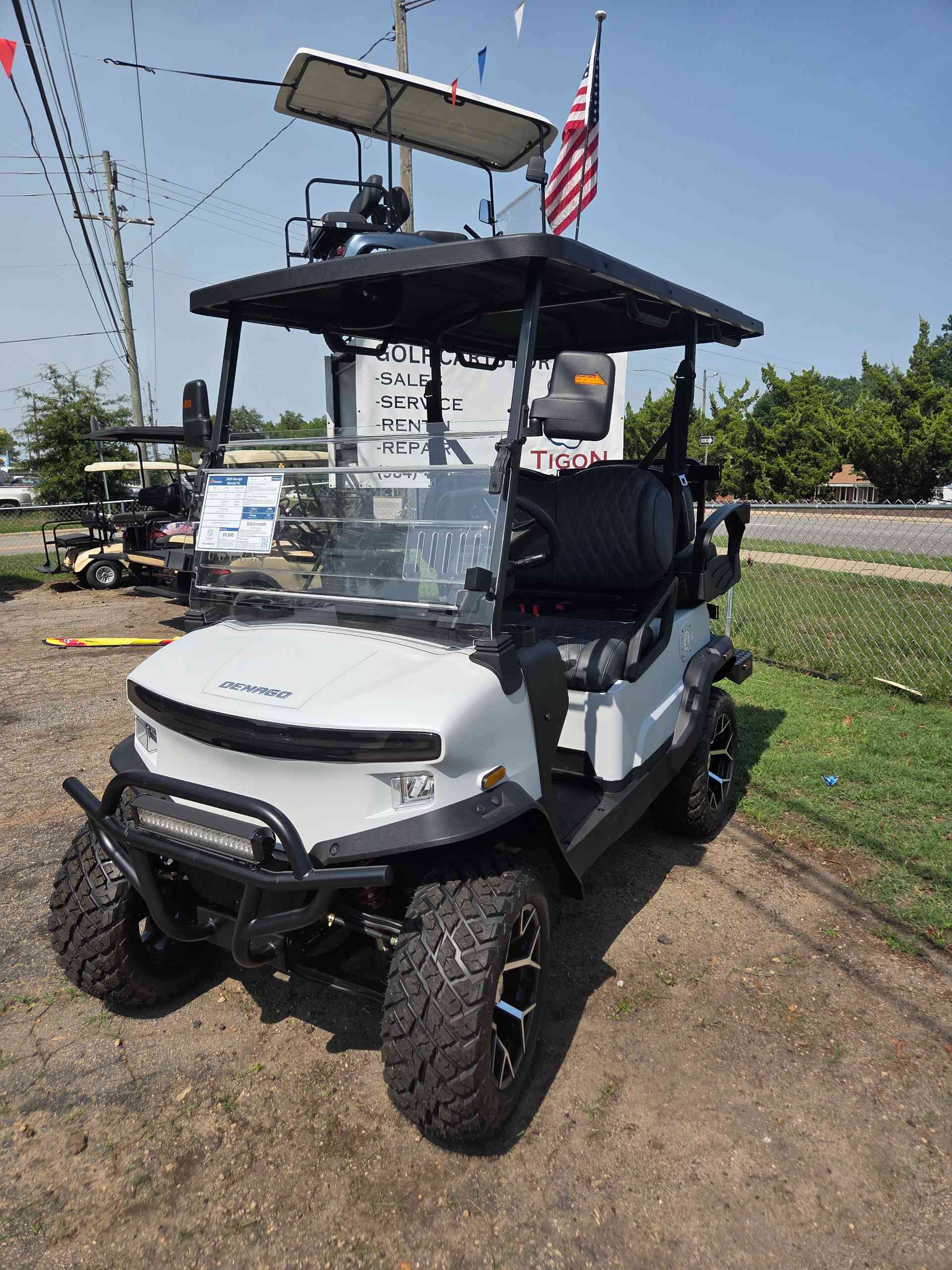
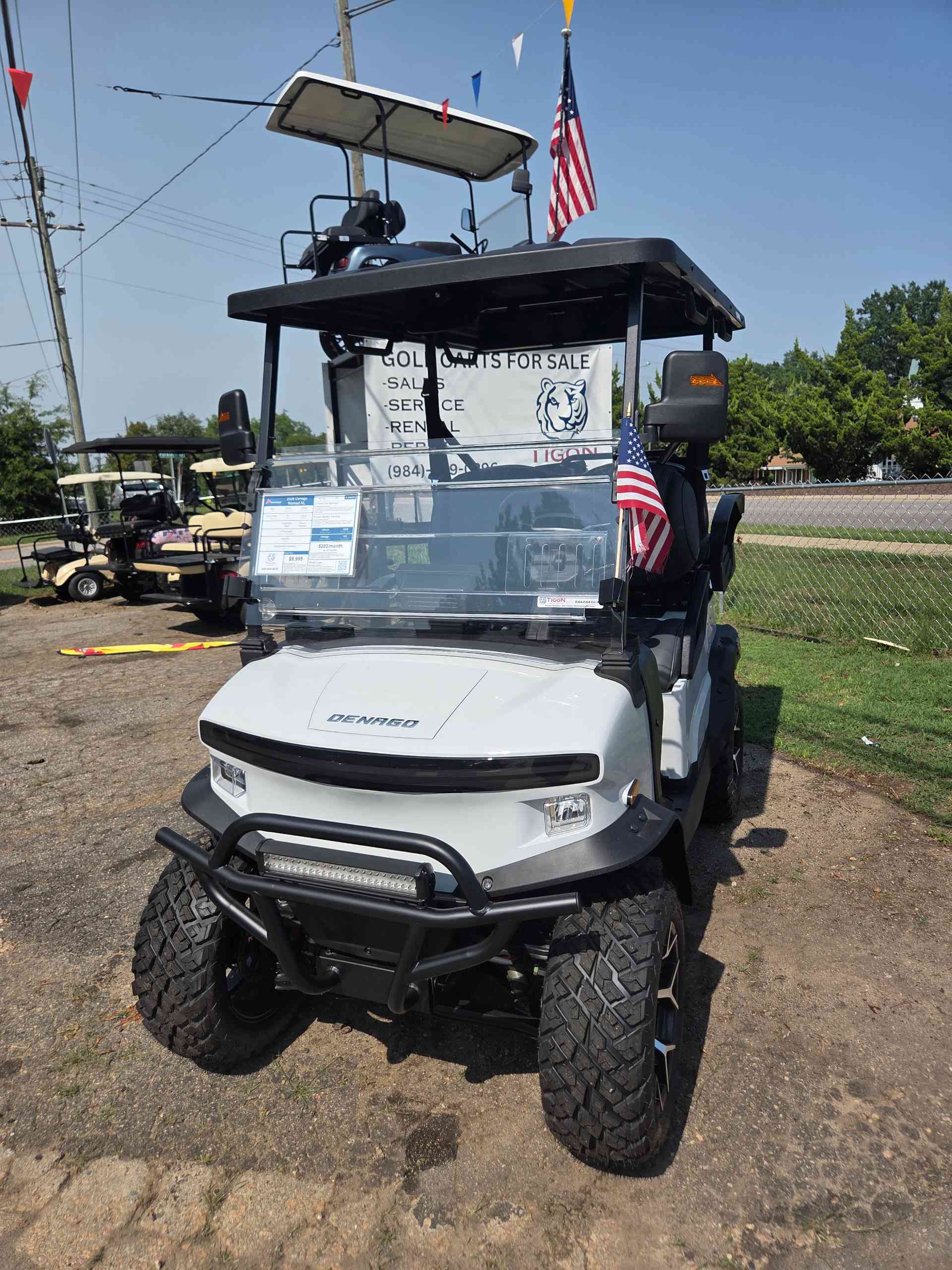
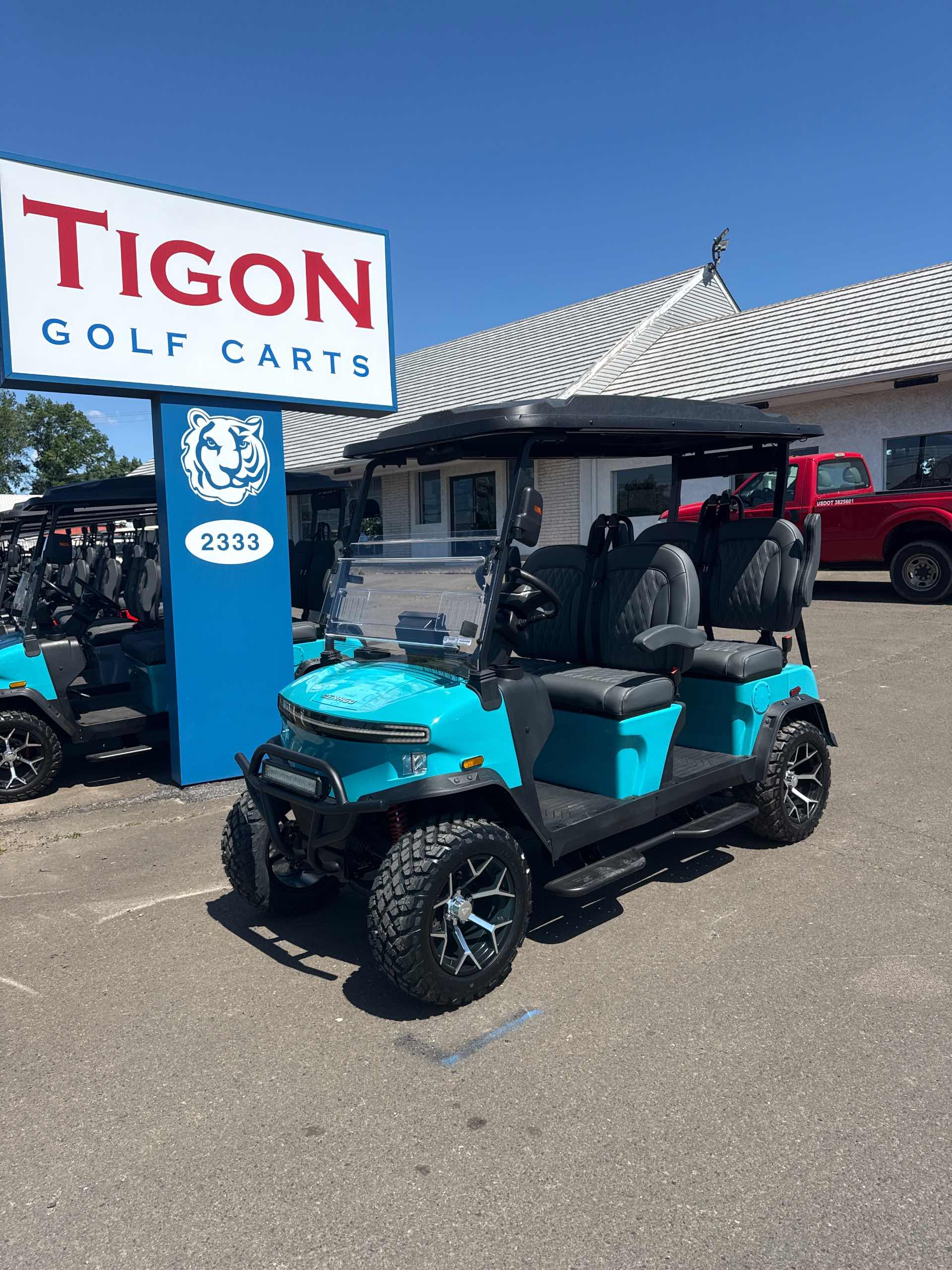
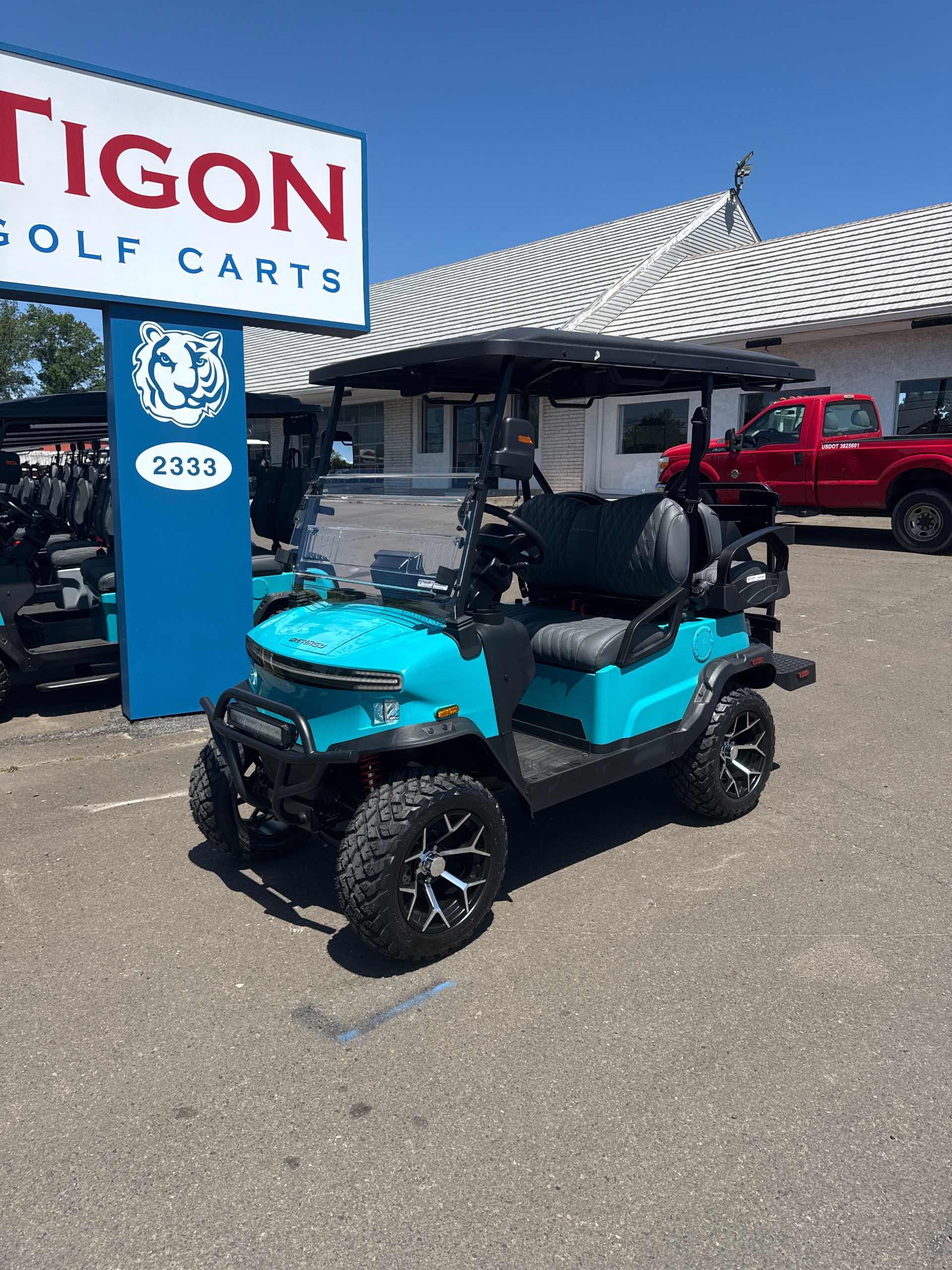
Shop new street-legal golf carts at TIGON Golf Carts — Neighborhood Electric Vehicle (NEV) & Low-Speed Vehicle (LSV) models with DOT lights, mirrors, seat belts & turn signals. Built for communities, campuses & resorts. 0% financing.
TIGON Golf Carts carries a wide selection of brand-new golf carts including electric street-legal models, gas-powered carts, lifted carts, and utility vehicles from top manufacturers. All new carts qualify for 0% APR financing.
Brand New Golf Carts
Electric Street-Legal Models
Neighborhood Electric Vehicles (NEVs)
Low-Speed Vehicles (LSVs)
Gas Golf Carts
Lifted Carts
0% APR Financing on All New Models
Top Brands: Denago, Evolution, Swift EV, Teko EV, Club Car
Why Buy a New Golf Cart?
Buying new means the latest battery technology — modern lithium and AGM systems that charge faster, run longer, and need far less maintenance than the aging packs found in many used carts. New golf carts are backed by a manufacturer warranty that typically covers the motor, controller, and battery. You also get to customize the cart exactly the way you want it — seating capacity, color, wheels, lift kit, lighting, and street-legal package — instead of settling for a previous owner's choices. New models meet current LSV and street-legal safety standards (DOT lighting, seat belts, and mirrors) and arrive with zero wear on tires, brakes, and upholstery. A used golf cart can save money up front, but a new cart from TIGON delivers peace of mind, the newest features, and 0% APR financing that keeps monthly payments low.
Street Legal Golf Carts For Sale
A street legal golf cart is one built and registered as a Low-Speed Vehicle (LSV). To be driven legally on public roads, the cart needs the same core safety equipment as any low-speed vehicle and must be capable of the 20–25 mph LSV speed range. Many of the new electric carts in our inventory can be ordered or upgraded with a street-legal package, then registered and insured in your state.
Headlights, taillights & brake lights
Turn signals & a horn
Side mirrors & a rearview mirror
Windshield & seat belts
DOT-rated tires & a 17-digit VIN
Top speed in the 20–25 mph LSV range
Low-Speed Vehicle laws vary by state. Federally, an LSV is capped at 25 mph and is generally street-legal on roads posted at 35 mph or less, though some states allow crossings of 45 mph roads. Most states require an LSV to be titled, registered, and insured just like a car. To make a golf cart street legal in your state, equip it to LSV standard and register it with your local DMV — our team can tell you which new carts qualify and help configure the right package.
Neighborhood Electric Vehicles (NEVs) For Sale
A Neighborhood Electric Vehicle (NEV) is a federally defined, road-legal electric vehicle with a top speed of 25 mph. NEVs meet NHTSA Federal Motor Vehicle Safety Standards (FMVSS 500) and are a popular choice for gated communities, retirement communities, college campuses, resorts, and planned neighborhoods. An NEV is simply a Low-Speed Vehicle that runs on electric power — quiet, zero-emission, and inexpensive to operate.
Because every NEV is a low-speed vehicle, NEVs are also street legal golf carts when equipped for the road. Ask our team which new carts can be configured as an NEV or LSV for your community.
TIGON Golf Carts carries new NEV and LSV golf carts from brands including Denago, Evolution, Swift EV, and Teko EV. Street-legal eligibility depends on the cart's build and your state's rules, so call us to confirm which in-stock models can be set up as a street-legal NEV where you live.
Need something tougher than a standard cart? TIGON Golf Carts also stocks utility vehicles (UTVs) built for hauling, property upkeep, and light off-road work around farms, campuses, resorts, job sites, and large properties. A UTV is not an all-terrain vehicle (ATV) — it seats passengers, carries cargo, and can be configured street-legal — but it makes a practical, low-cost alternative for buyers comparing work-ready golf carts to an ATV.
Yes. Most golf carts can be made street legal by equipping them as a Low-Speed Vehicle (LSV) — headlights, taillights, brake lights, turn signals, side and rearview mirrors, a windshield, seat belts, a horn, and a 17-digit VIN — then registering and insuring the cart with your state. The cart must also be capable of the LSV speed range (20–25 mph). TIGON Golf Carts offers street-legal packages on qualifying models; call 1-844-844-6638 to confirm which in-stock carts qualify in your state.
What speed does a street legal golf cart go?
A street-legal golf cart is classified as a Low-Speed Vehicle (LSV) and tops out at 25 mph. That 20–25 mph range is the federal threshold that lets it be registered and driven on public roads posted at 35 mph or less in most states.
Do street legal golf carts need insurance?
In most states, yes. Once a golf cart is registered as a street-legal LSV with a VIN and license plate, it generally must be insured like any other vehicle to be driven on public roads. Coverage requirements vary by state — check with your local DMV and insurer.
Are electric golf carts street legal?
Electric golf carts can be street legal when they meet Low-Speed Vehicle (LSV) requirements: a top speed of 20–25 mph plus DOT safety equipment — lights, turn signals, mirrors, seat belts, a windshield, and a VIN. Many of TIGON Golf Carts' electric models are available with a street-legal package. Call 1-844-844-6638 to ask which carts qualify where you live.
What is a Neighborhood Electric Vehicle (NEV)?
A Neighborhood Electric Vehicle (NEV) is a federally defined, road-legal electric vehicle with a top speed of 25 mph. NEVs meet NHTSA Federal Motor Vehicle Safety Standards (FMVSS 500) and are popular in gated communities, retirement communities, college campuses, resorts, and planned neighborhoods. An NEV is a type of Low-Speed Vehicle (LSV).
Are NEVs street legal?
Yes. By federal definition an NEV is street legal when equipped with the required safety features — headlights, taillights, turn signals, brake lights, mirrors, a windshield, seat belts, and a VIN. Most states allow NEVs on roads posted 35 mph or less, and some permit crossing 45 mph roads. Confirm the rules with your state's DMV.
What speed do NEVs go?
By federal law, an NEV (a Low-Speed Vehicle) has a maximum speed of 25 mph. That speed cap is what keeps it classified as a street-legal low-speed vehicle rather than a full motor vehicle.
Do NEVs require insurance?
In most states, an NEV must be registered, titled, and insured like other street-legal vehicles because it carries a VIN and is driven on public roads. Requirements vary by state — confirm with your local DMV and insurer.
Do you need a driver's license to drive an NEV?
In most states, yes — operating an NEV on public roads requires a valid driver's license, because an NEV is a registered, street-legal Low-Speed Vehicle. Rules differ on private property and within some private communities. Confirm the requirements with your state's DMV.
How far can an NEV go on a single charge?
Range varies widely by battery, model, terrain, and load. Many electric low-speed vehicles travel roughly 25 miles or more on a full charge, and lithium-powered models generally go farther and recharge faster than older lead-acid packs. Ask our team about the rated range of a specific cart — call 1-844-844-6638.
Can you drive an NEV on the highway?
No. Because an NEV (a Low-Speed Vehicle) is capped at 25 mph, it is not permitted on highways or interstates. NEVs are built for neighborhood and low-speed roads — in most states those posted at 35 mph or less, with some states allowing crossings of 45 mph roads.
What street-legal golf carts and NEVs does TIGON Golf Carts currently carry?
TIGON Golf Carts carries federally certified street-legal LSVs (Low Speed Vehicles / NEVs) from several brands including DENAGO (City 2 and City 4), Evolution (D5 Ranger with DOT package, Classic 4 LSV), Swift EV, TEKO EV, and TARA EV. All are FMVSS 500-compliant with factory-assigned VINs, DOT-rated safety equipment, and Manufacturer's Statements of Origin for DMV registration. Browse current in-stock LSVs at tigongolfcarts.com/lsv-for-sale or call 1-844-844-6638. Related: LSV for sale, DENAGO golf carts
How much does a street-legal golf cart cost at TIGON Golf Carts?
Street-legal golf carts (LSVs/NEVs) at TIGON start at approximately $9,995 for baseline 4-passenger models (Swift EV, TEKO EV, TARA EV) and range to $18,000+ for premium lithium models. Financing is available with 0% APR on qualifying new LSVs. Call 1-844-844-6638 or browse tigongolfcarts.com/lsv-for-sale for current pricing on in-stock models. Related: LSV for sale, Apply for financing
Can I get financing on a street-legal golf cart or NEV from TIGON Golf Carts?
Yes — TIGON Golf Carts offers financing on all street-legal LSV models through six lending partners. 0% APR is available on qualifying new LSVs. Most applications receive a same-day decision. Apply at tigongolfcarts.com/financing/apply or call 1-844-844-6638 to apply by phone. Related: Apply for financing
Does TIGON Golf Carts deliver street-legal golf carts and NEVs nationwide?
Yes — TIGON delivers all in-stock LSV and NEV models to all 50 states. TIGON provides the MSO and bill of sale at delivery — all documentation needed for state DMV registration. Most in-stock street-legal carts ship within 5–10 business days. Call 1-844-844-6638 for a delivery quote to your ZIP code. Related: LSV for sale
How do I register a street-legal golf cart or NEV in my state?
To register an LSV/NEV: (1) Obtain the MSO from TIGON Golf Carts at purchase. (2) Secure liability insurance from an insurer familiar with LSV/NEV coverage. (3) Bring the MSO, proof of insurance, photo ID, and applicable fees to your state DMV. (4) Apply for a title, registration, and license plate. TIGON Golf Carts guides buyers through this process at purchase and can provide state-specific steps. Call 1-844-844-6638 for guidance. Related: Street-legal guide
Does a street-legal golf cart or NEV need to be insured?
Yes — in virtually all US states, a registered LSV/NEV must carry at minimum liability insurance before it can be driven on public roads. Because an LSV is a titled motor vehicle, most state liability minimums (bodily injury + property damage) apply. Ask your auto insurer specifically for "Low Speed Vehicle" or "NEV" coverage — standard golf cart recreational policies may not cover road use. Annual premiums range from $100–$400 for basic liability depending on your state. Related: Street-legal golf carts
Do I need a driver's license to operate a street-legal golf cart?
Yes — in most US states, operating an LSV/NEV on public roads requires a valid driver's license, because the cart is a registered street-legal motor vehicle. Unlicensed drivers may not legally operate an LSV on public roads in most states. On private property (your own land, a private community, a golf course), license requirements typically don't apply. Confirm the rules with your state DMV. Related: LSV golf cart
Which states are the most permissive for street-legal golf cart use?
The most permissive states for street-legal golf cart and LSV/NEV use include: Florida (many municipalities allow golf carts on roads ≤25 mph), South Carolina (widespread golf cart ordinances in beach communities), Arizona (Scottsdale, Sun City, and other planned communities), Georgia (Peachtree City has the largest cart-path network in the US), and California (many planned communities allow NEVs). Texas, Colorado, North Carolina, and most states with active retirement and resort communities also have extensive local golf cart ordinances. Call 1-844-844-6638 and ask about your specific state and municipality. Related: States