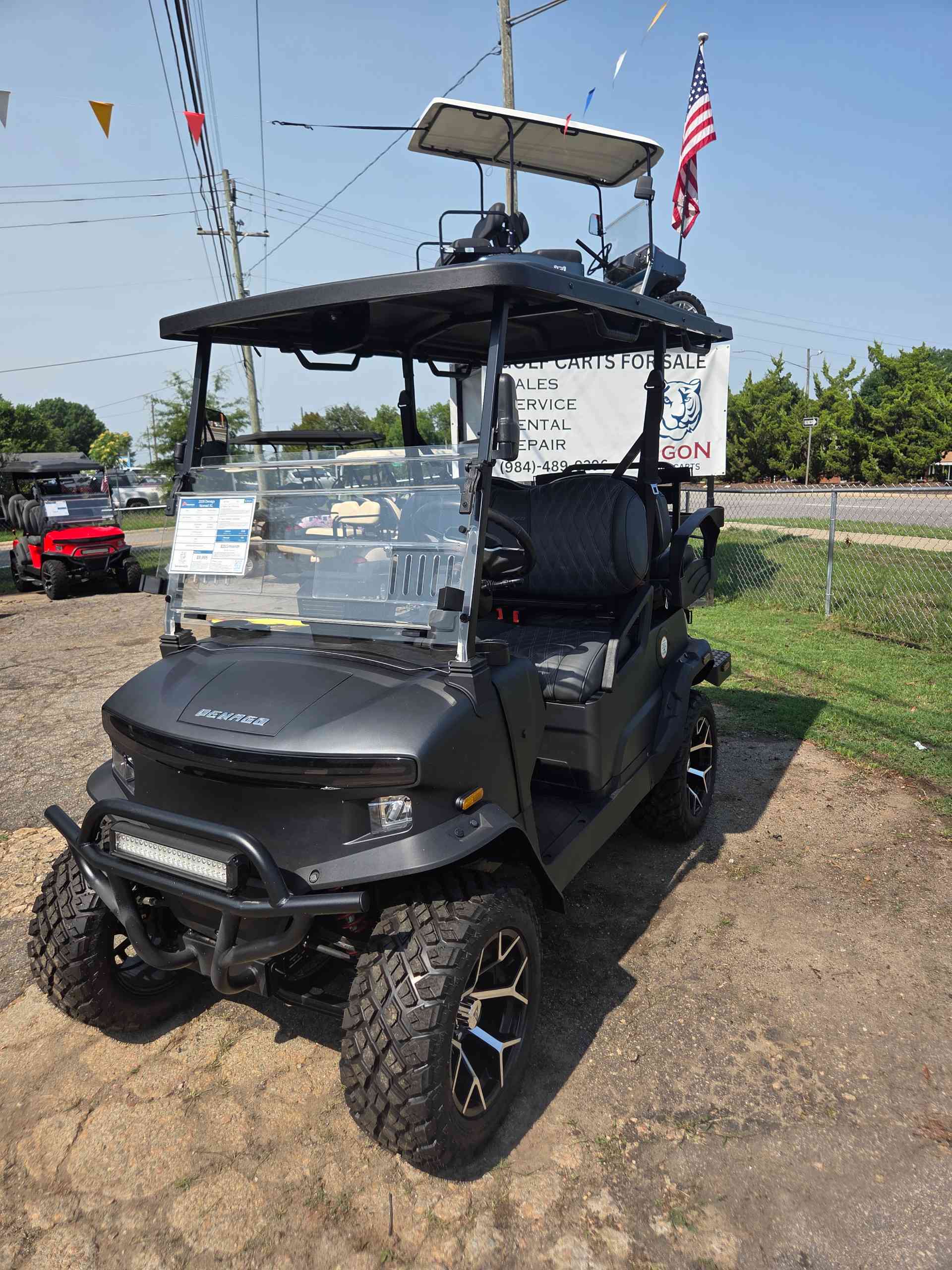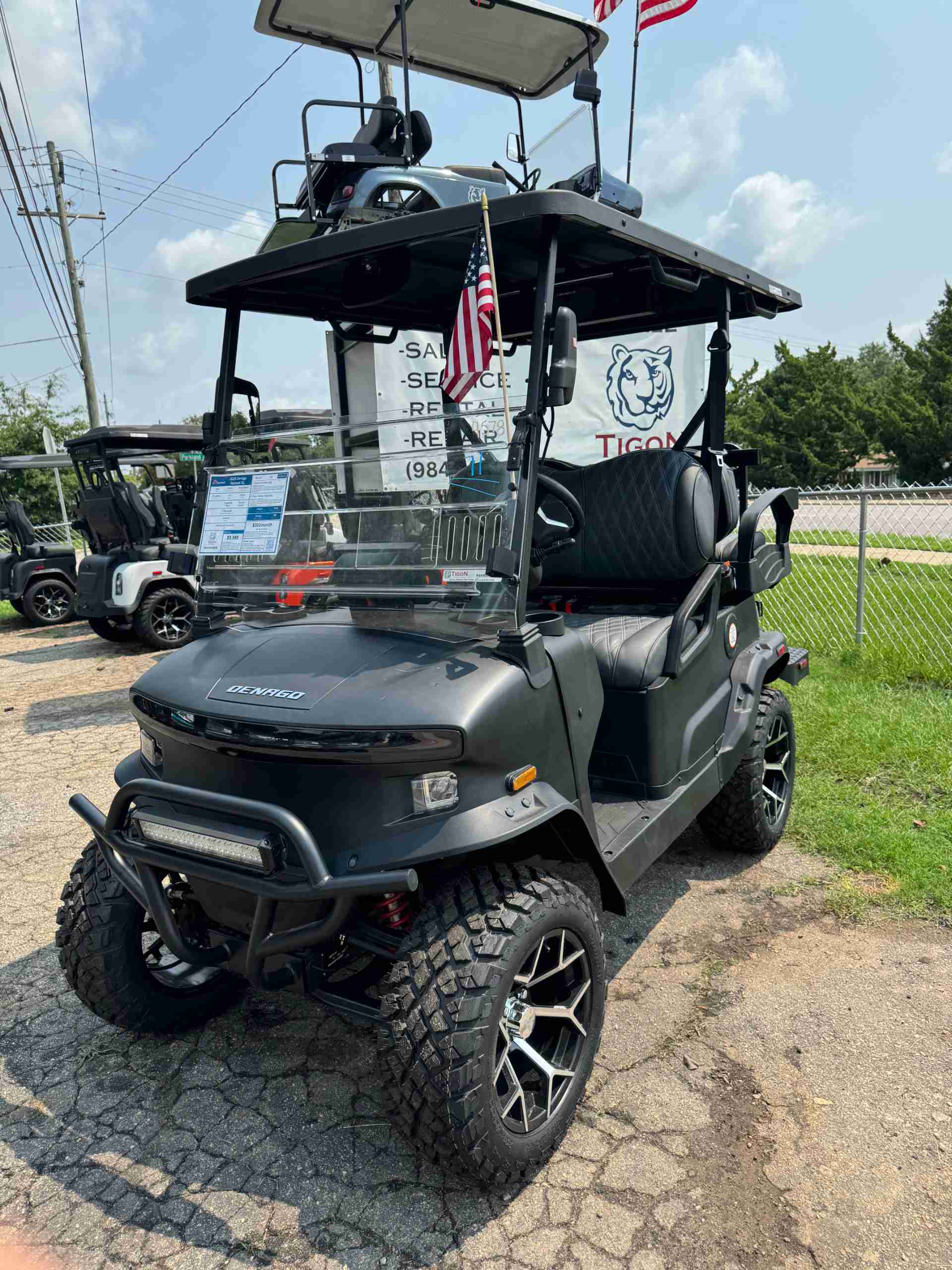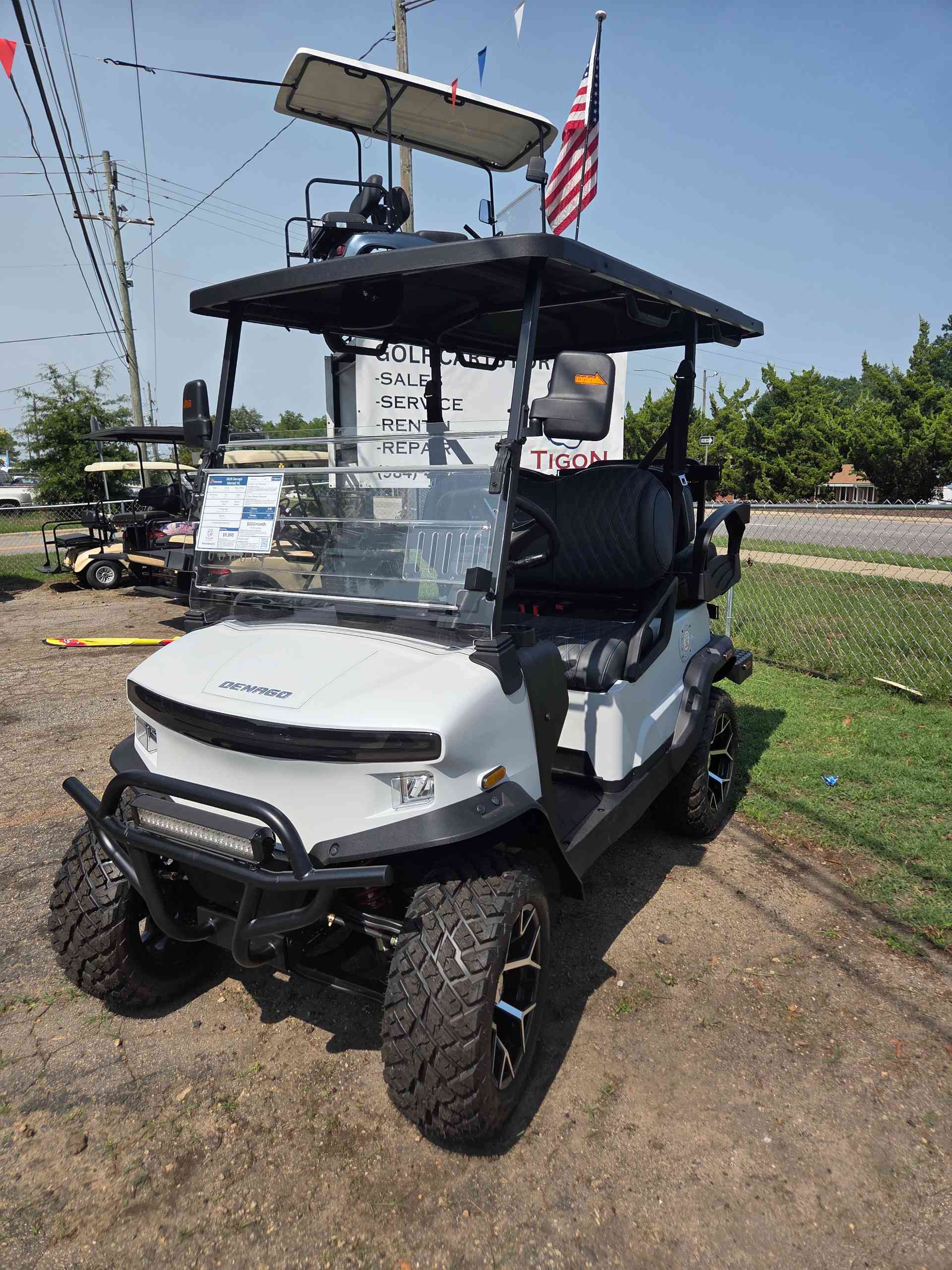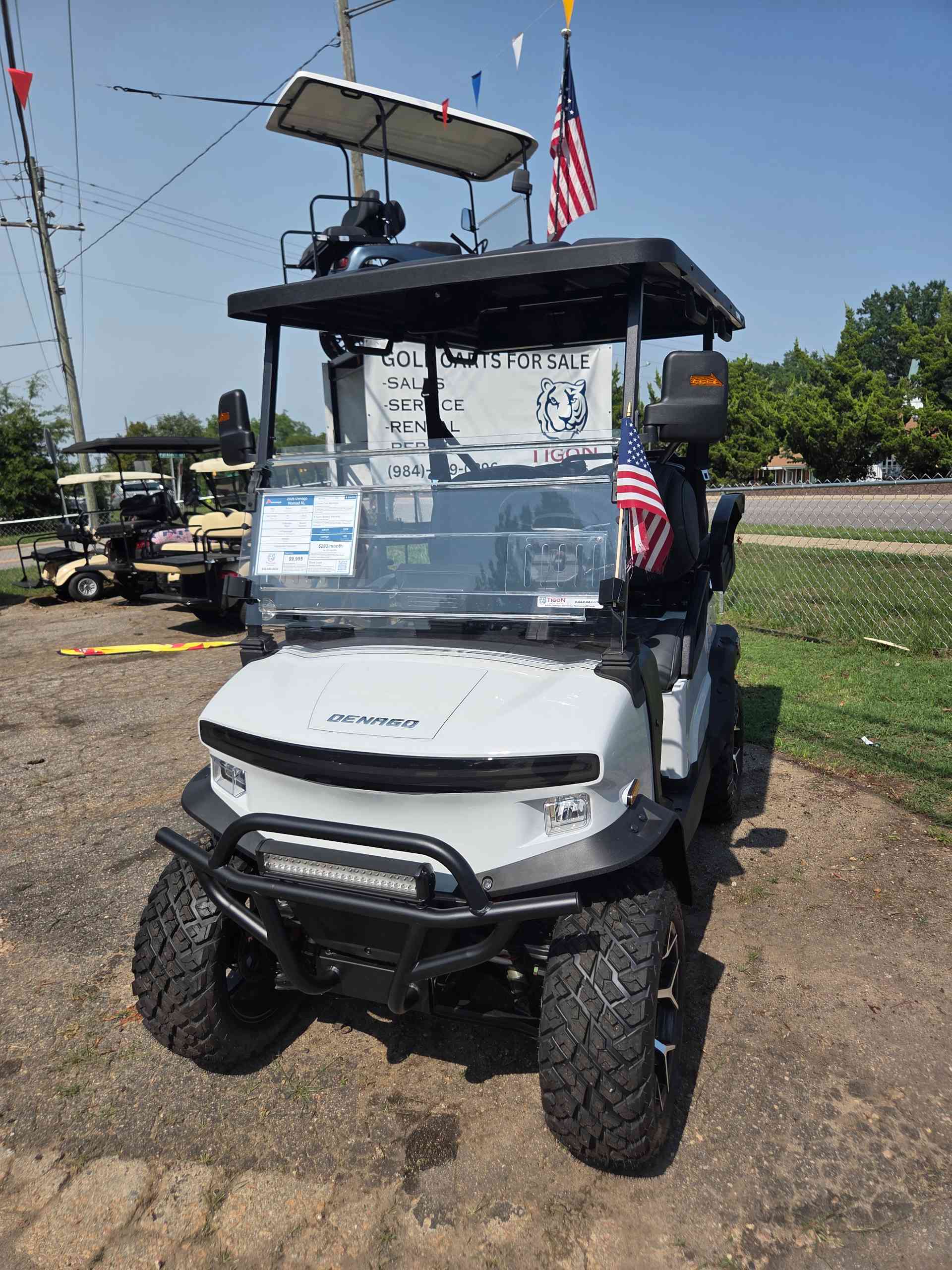
New
New Golf Cart
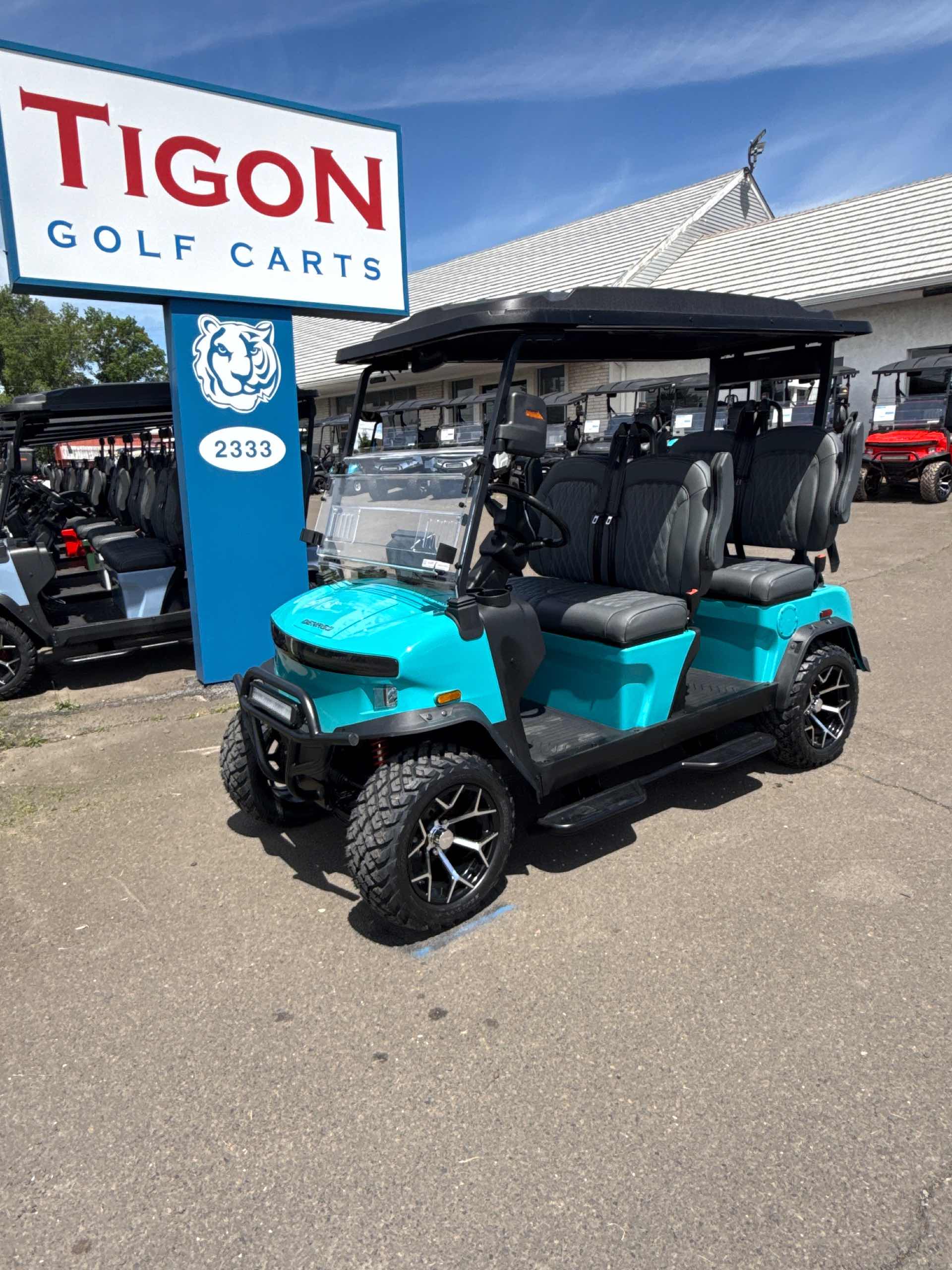
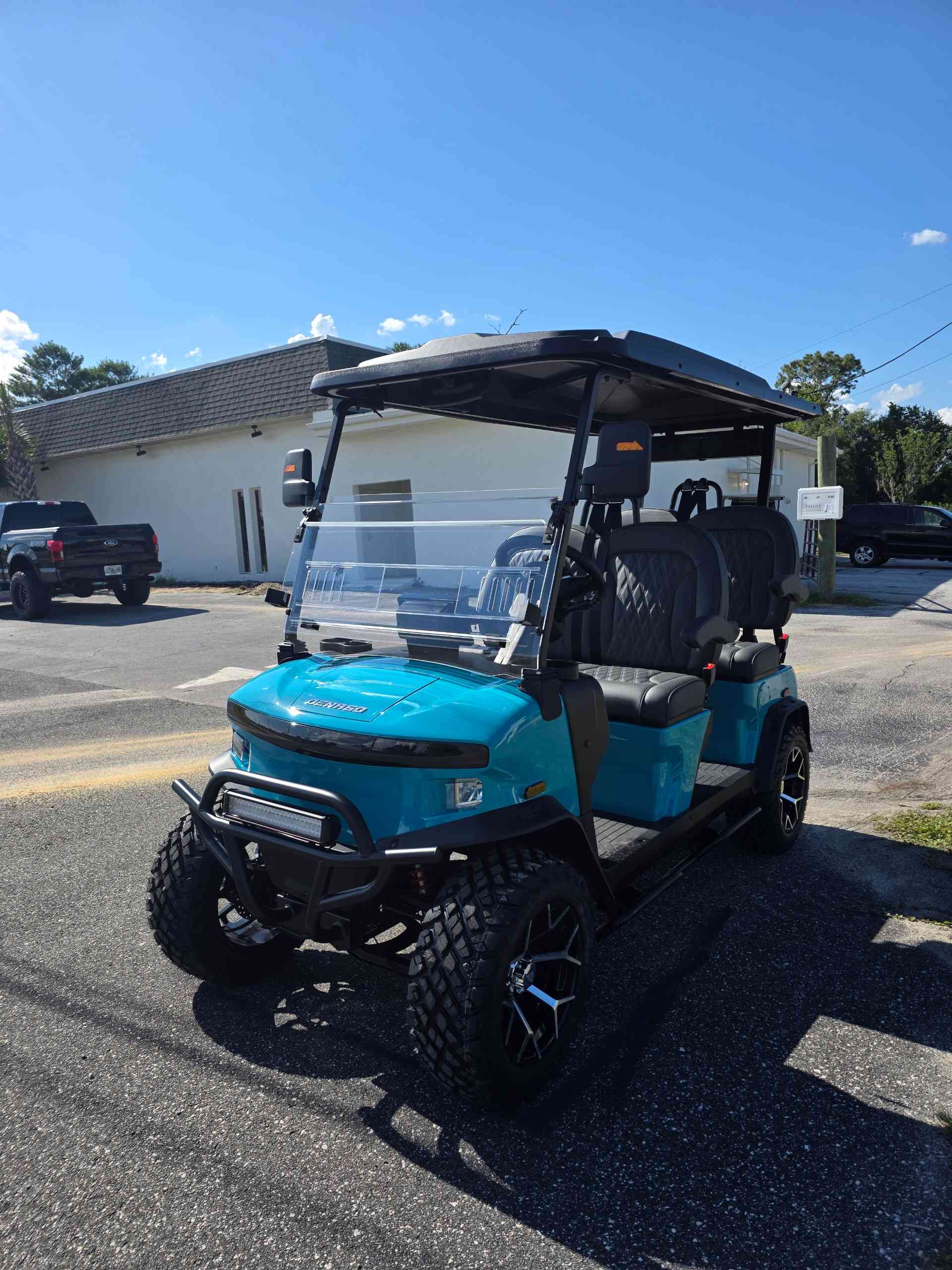
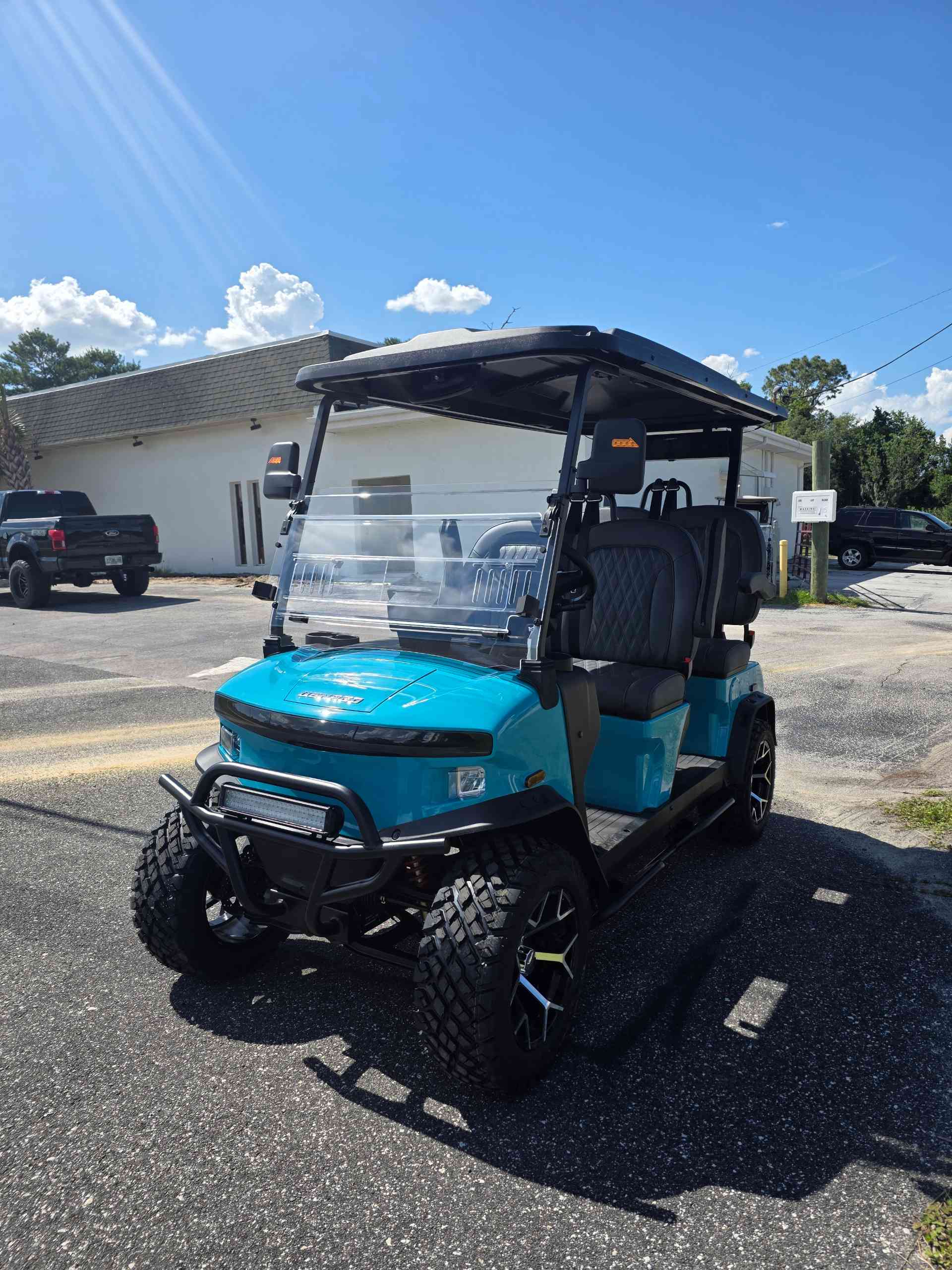
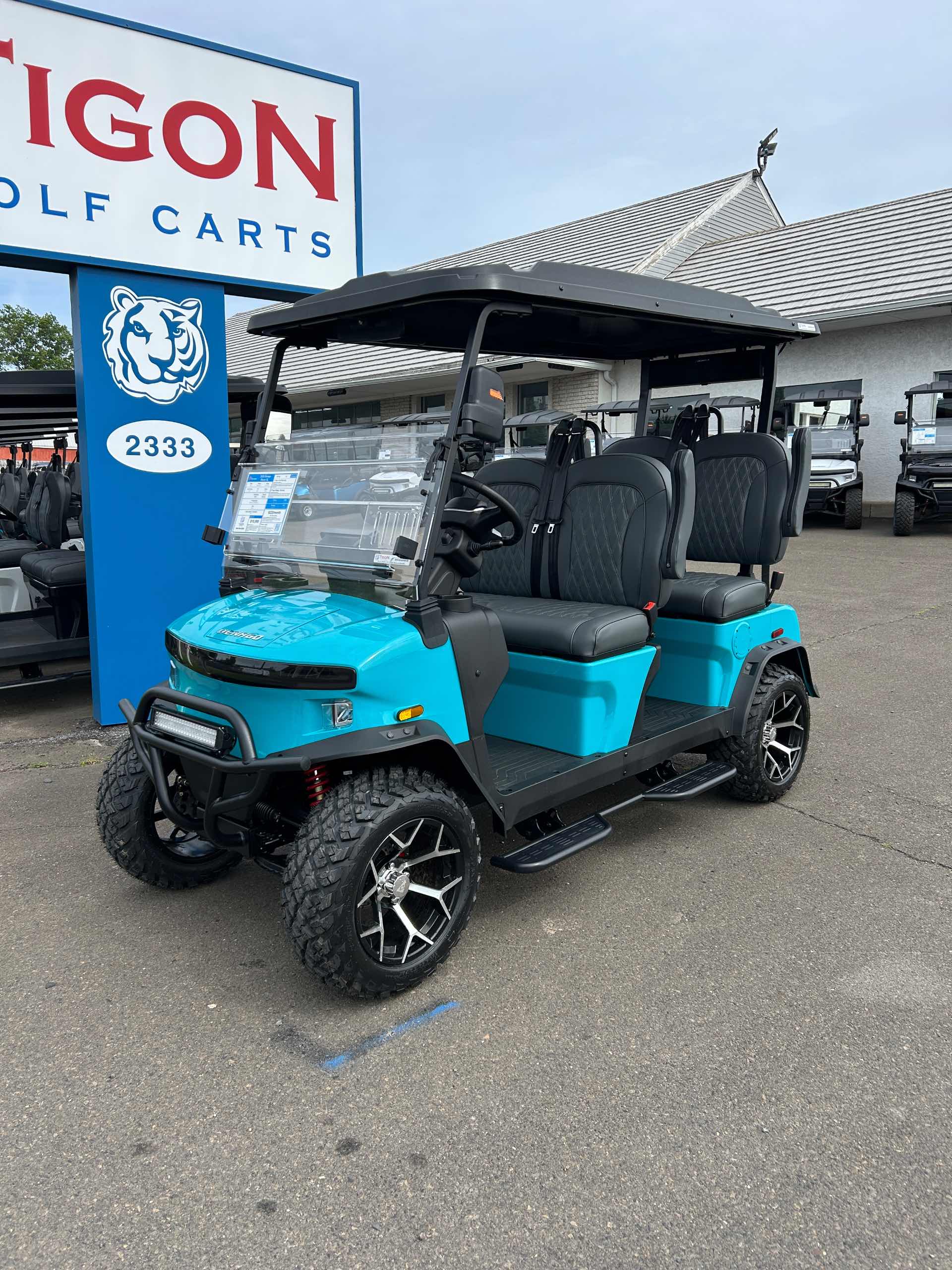
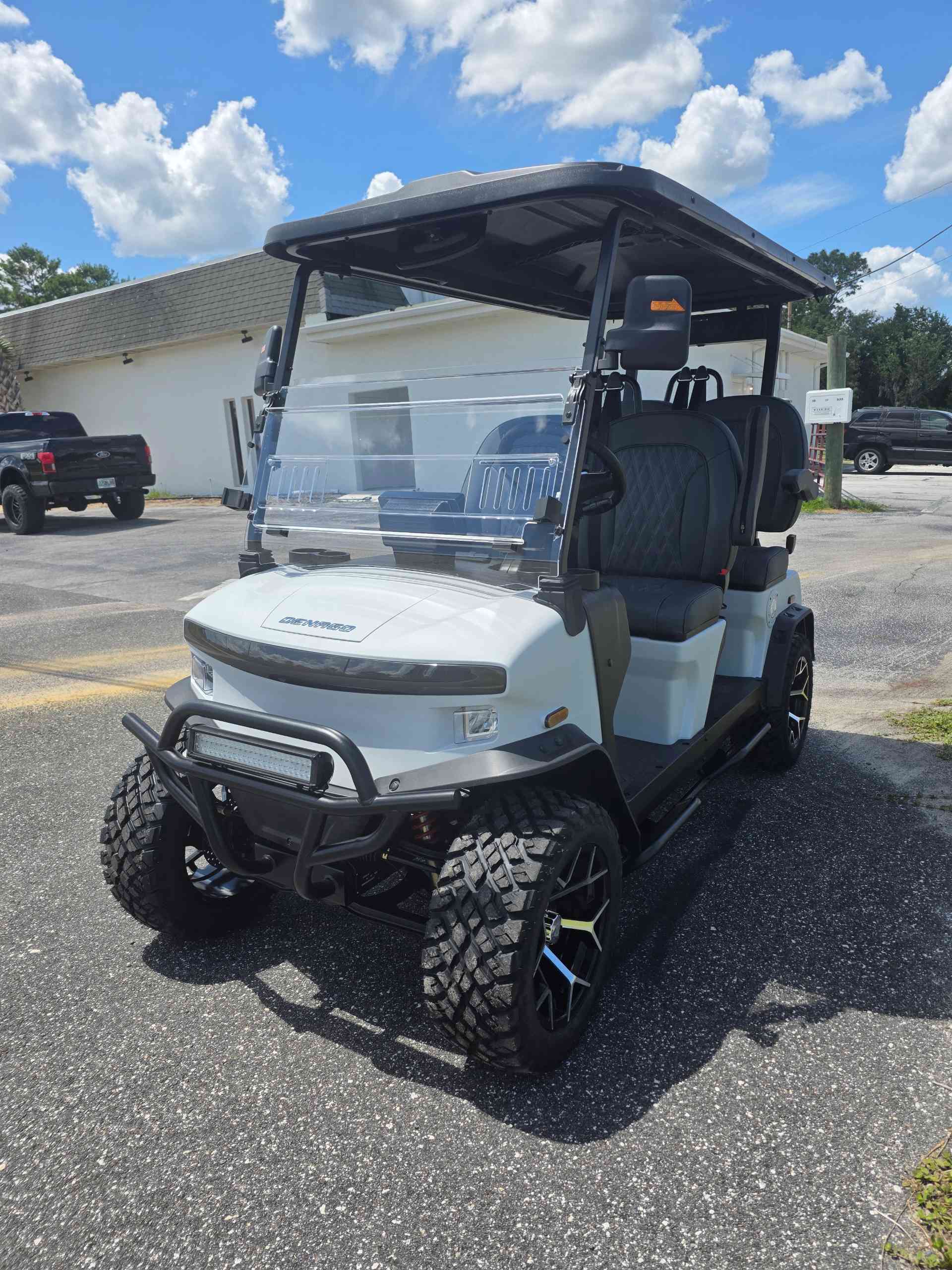
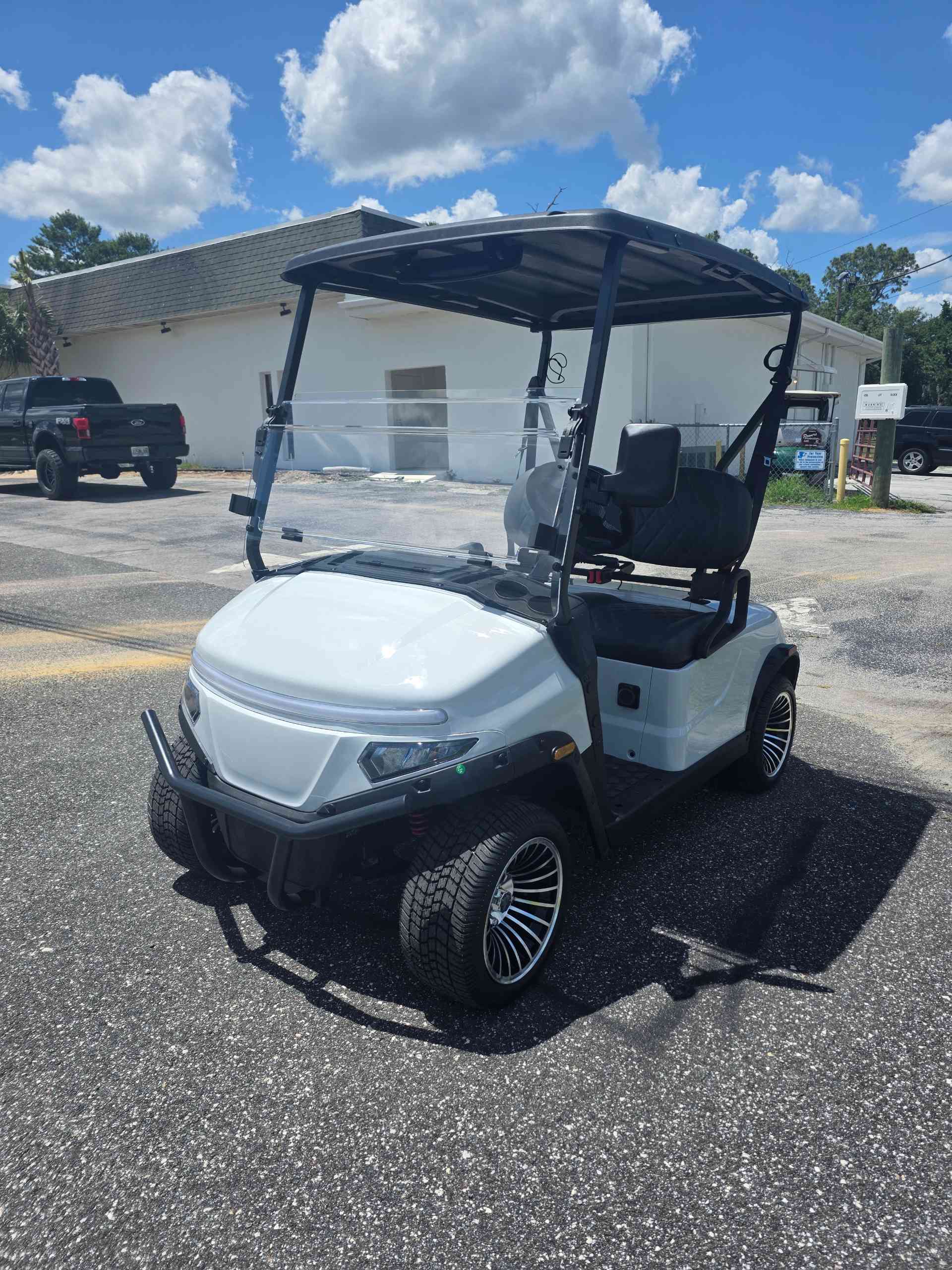
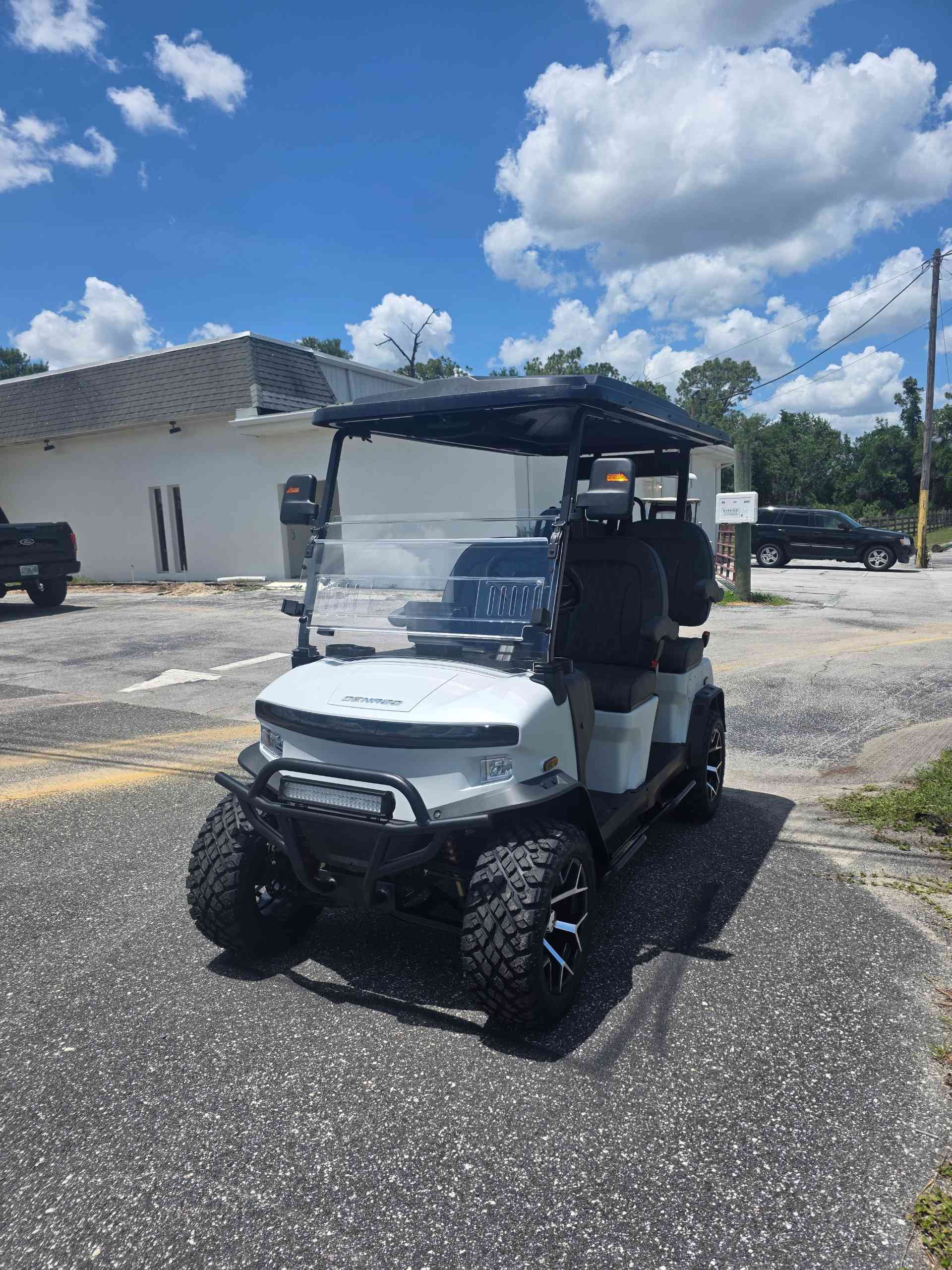
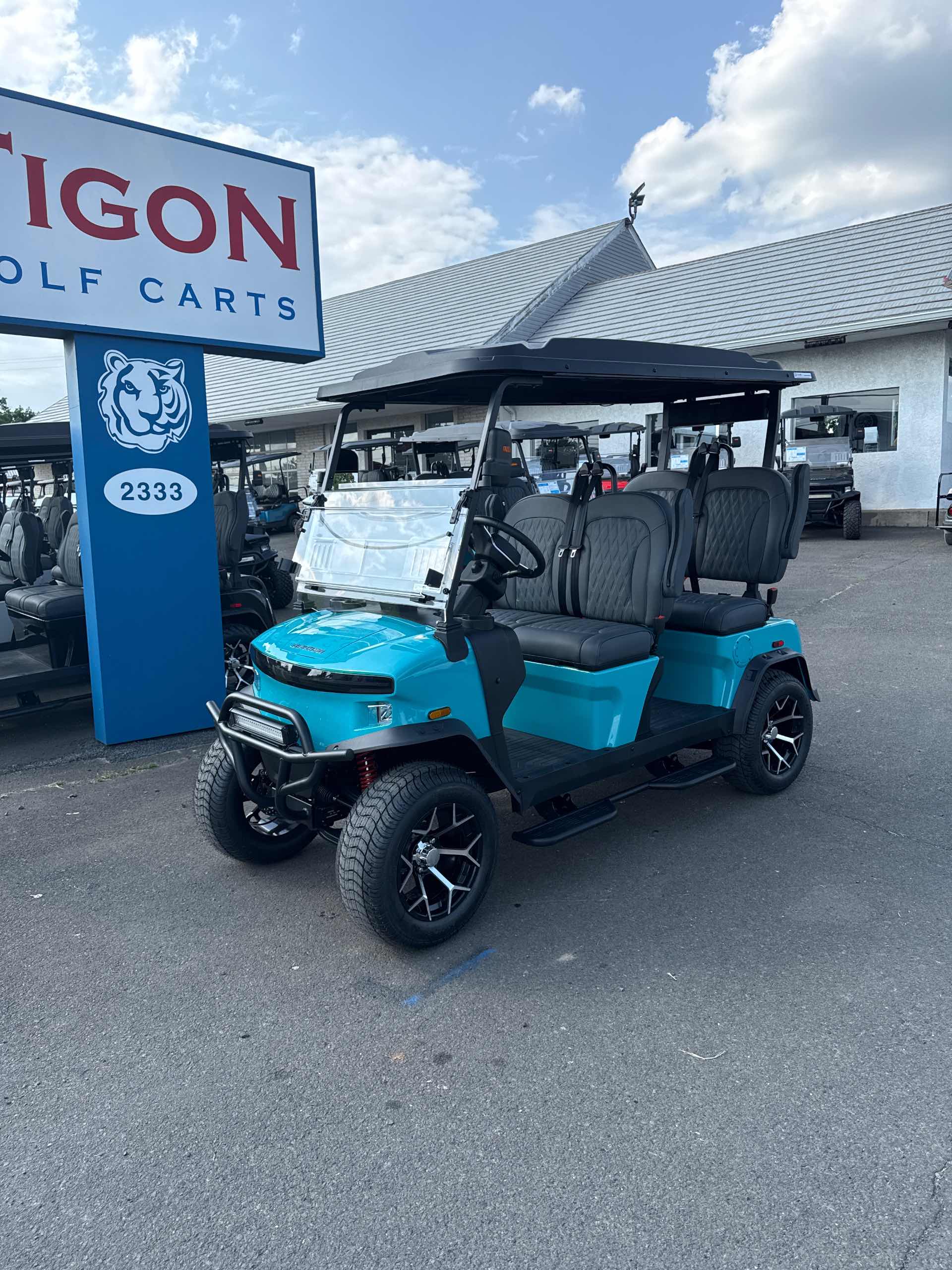
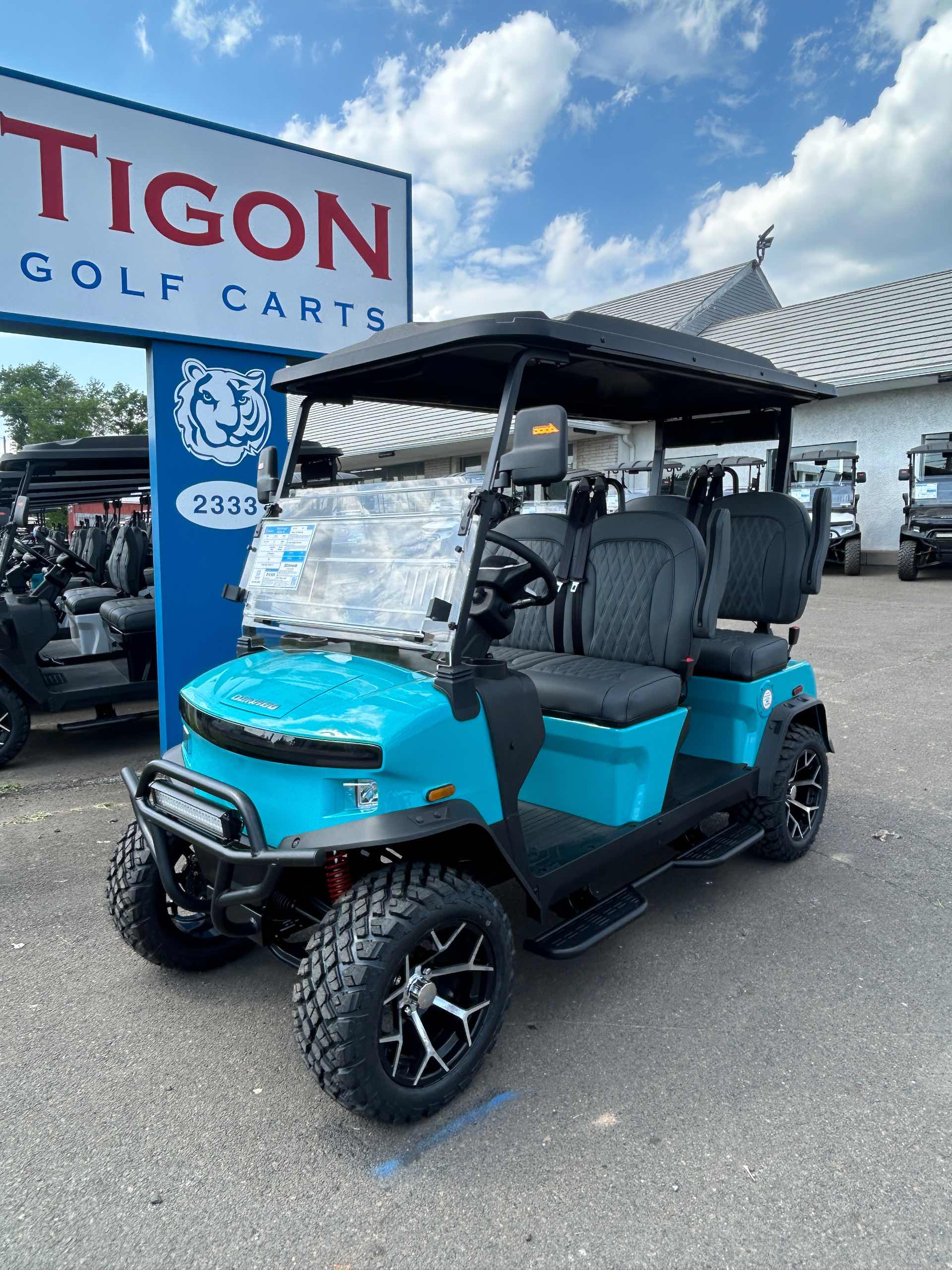
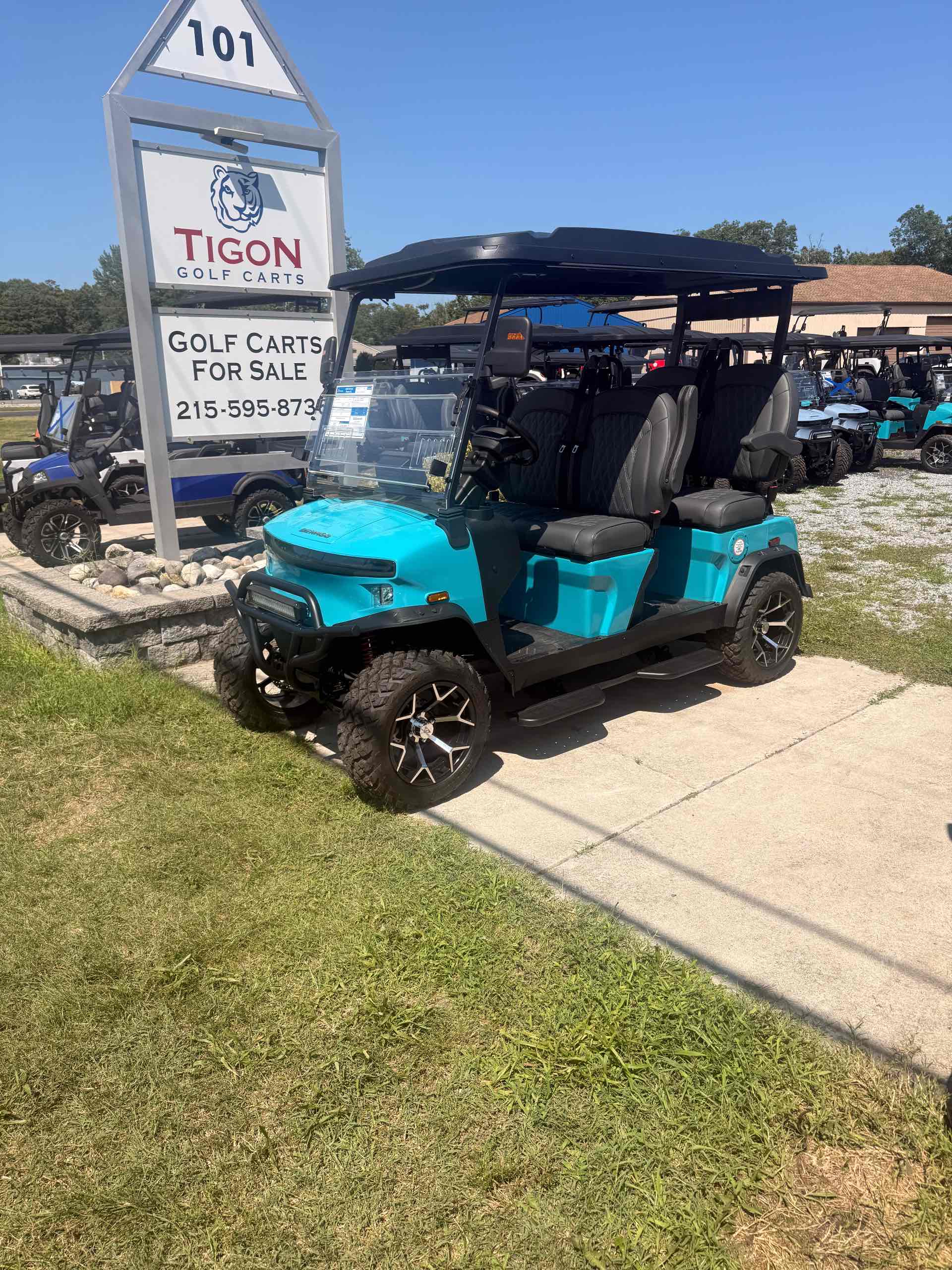
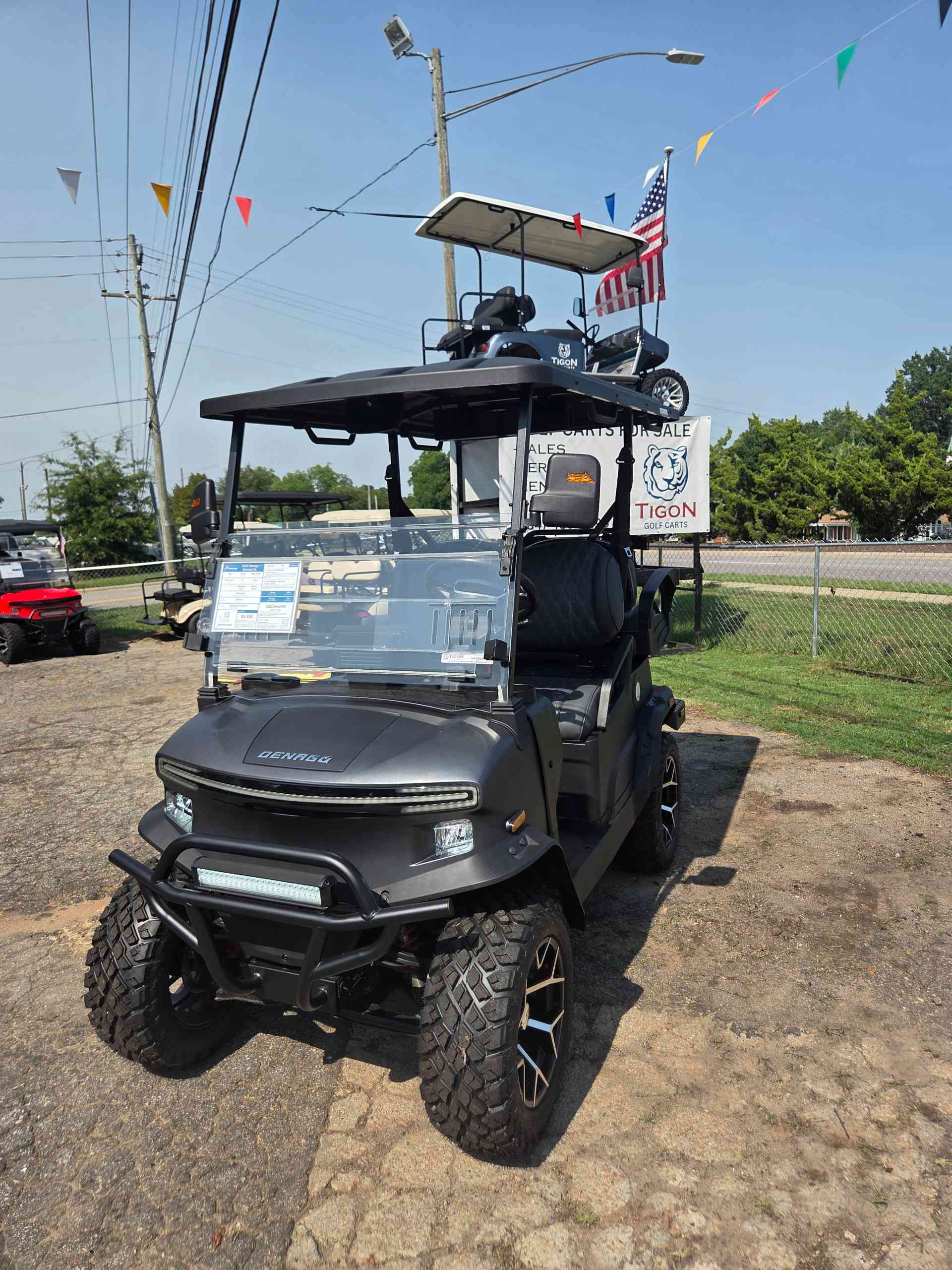
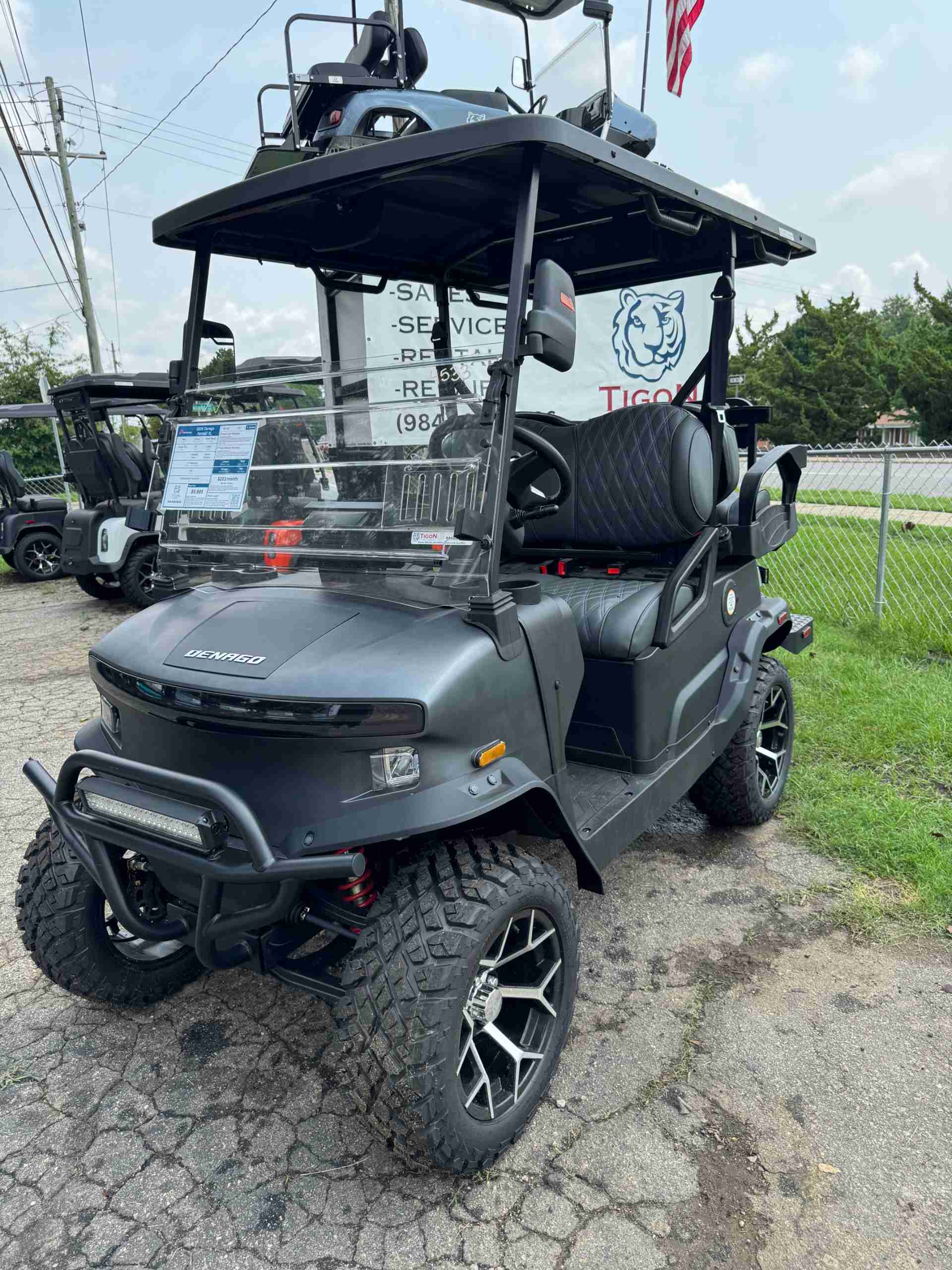
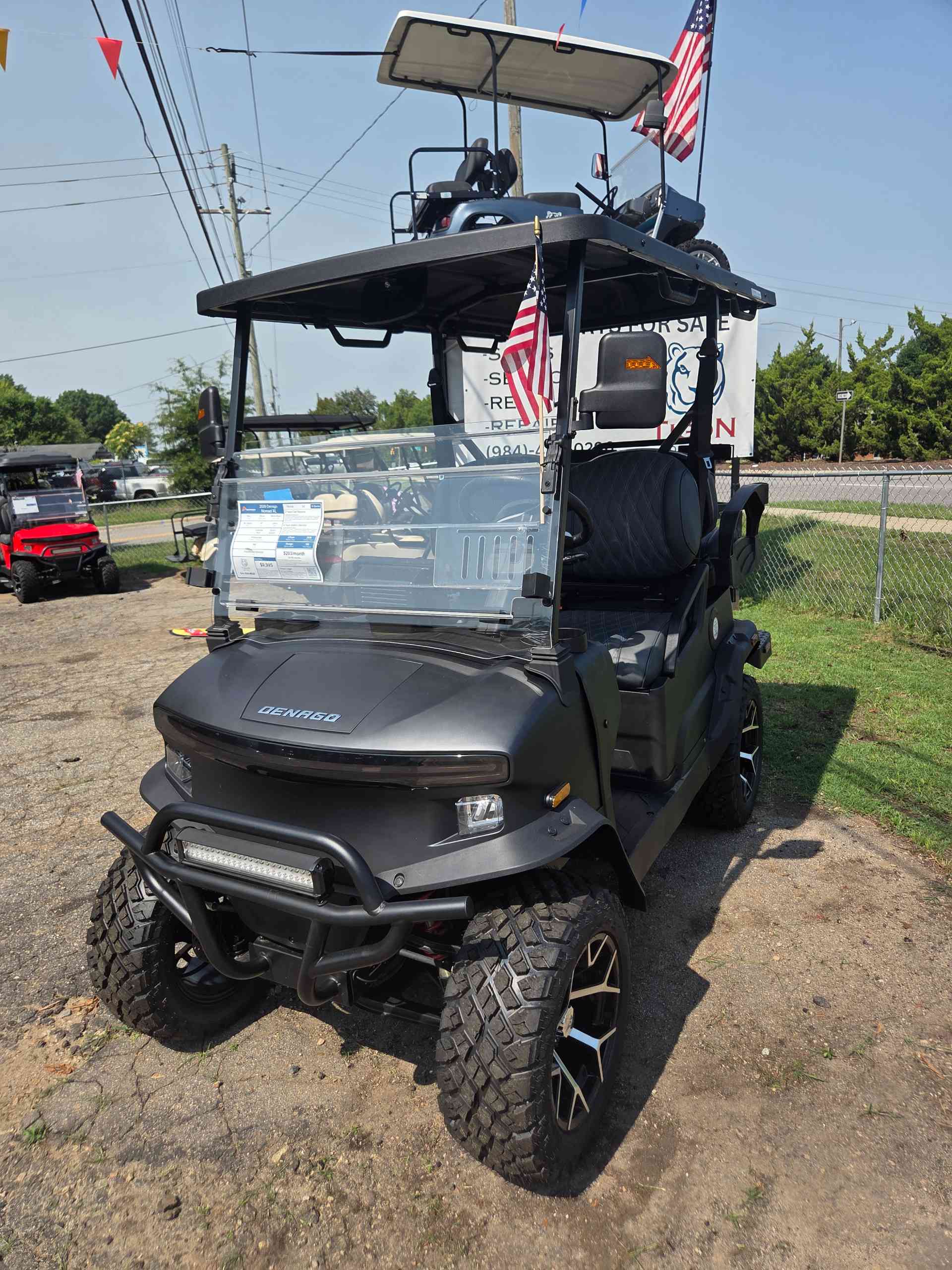
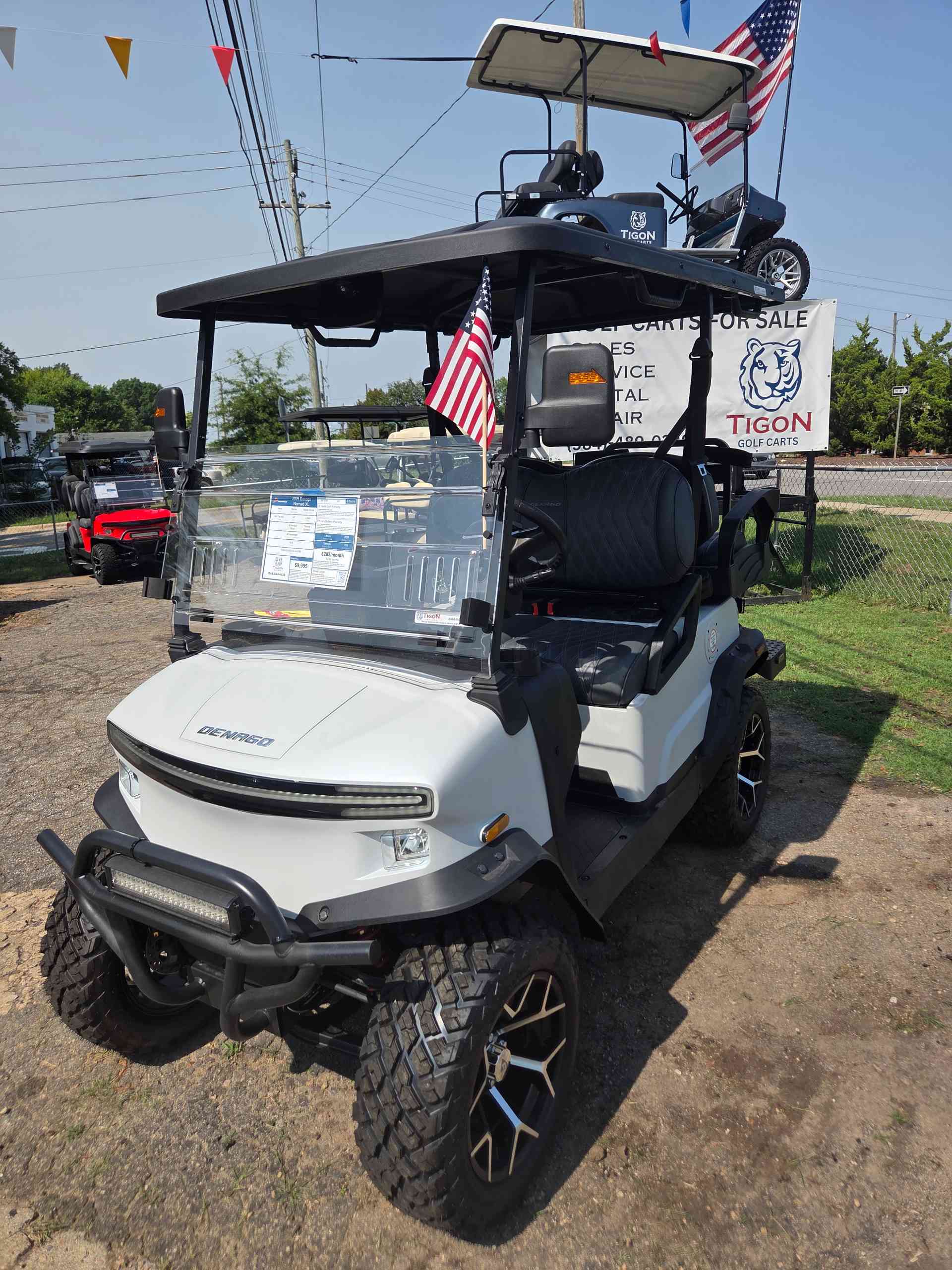
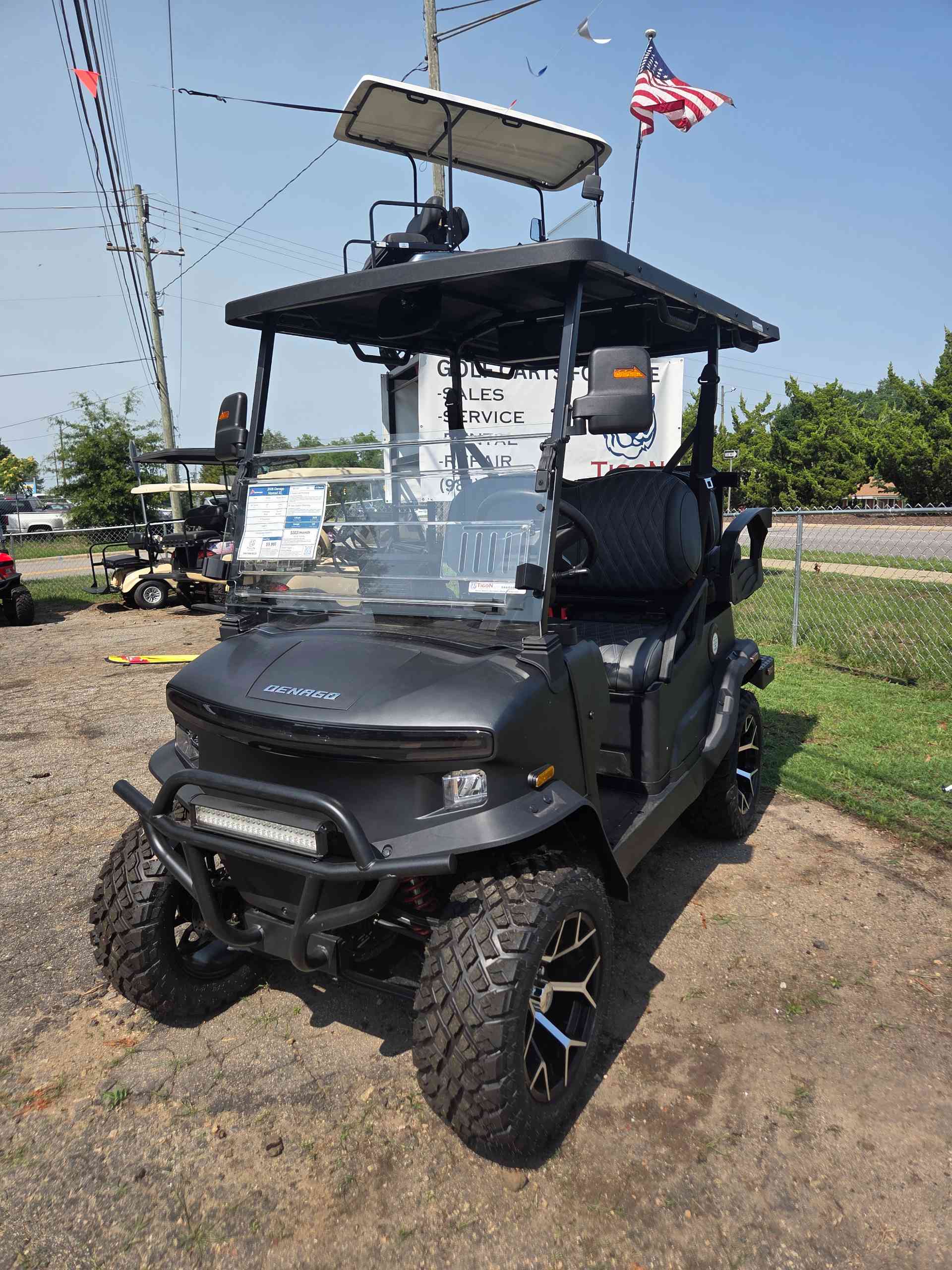
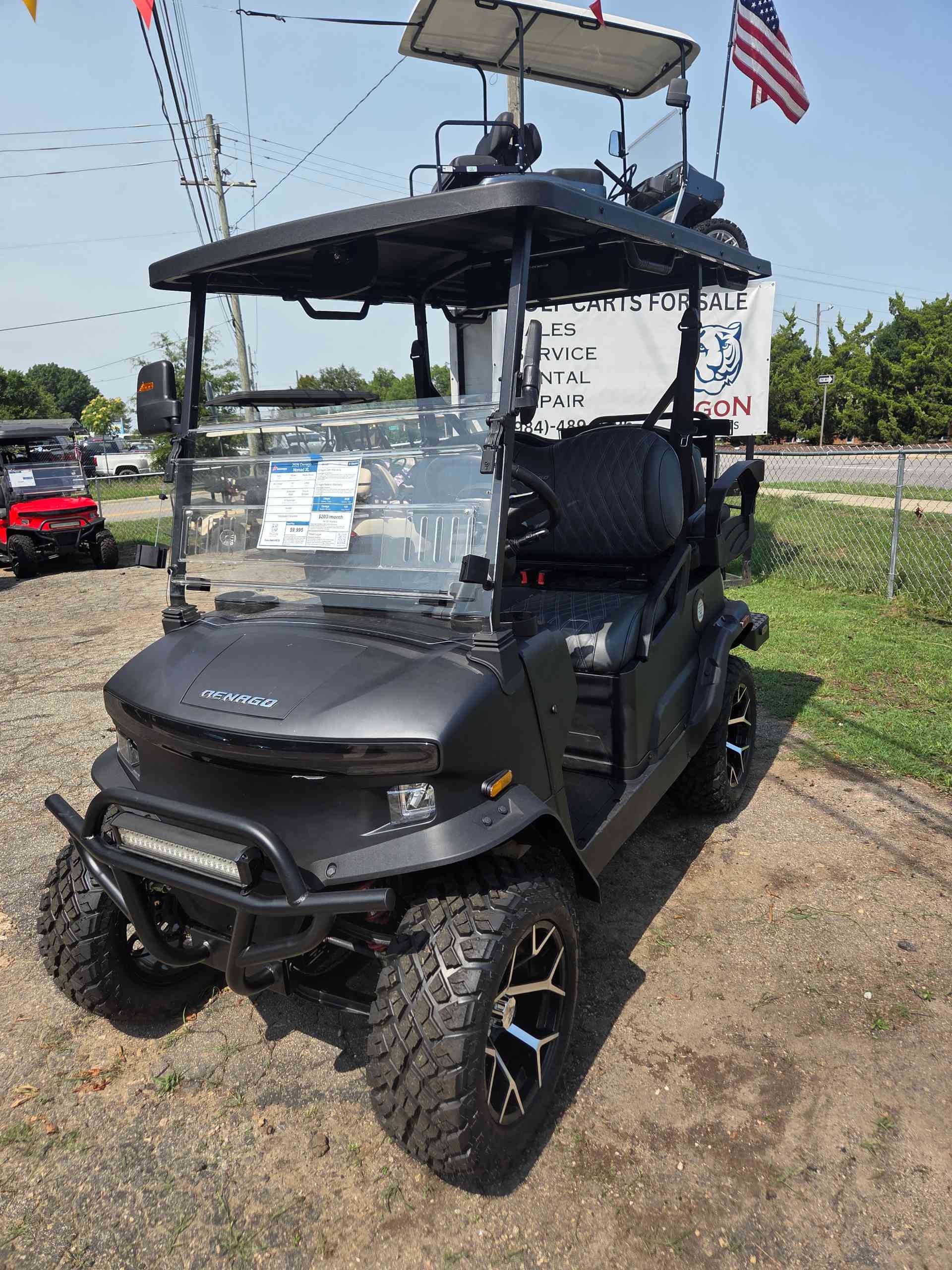
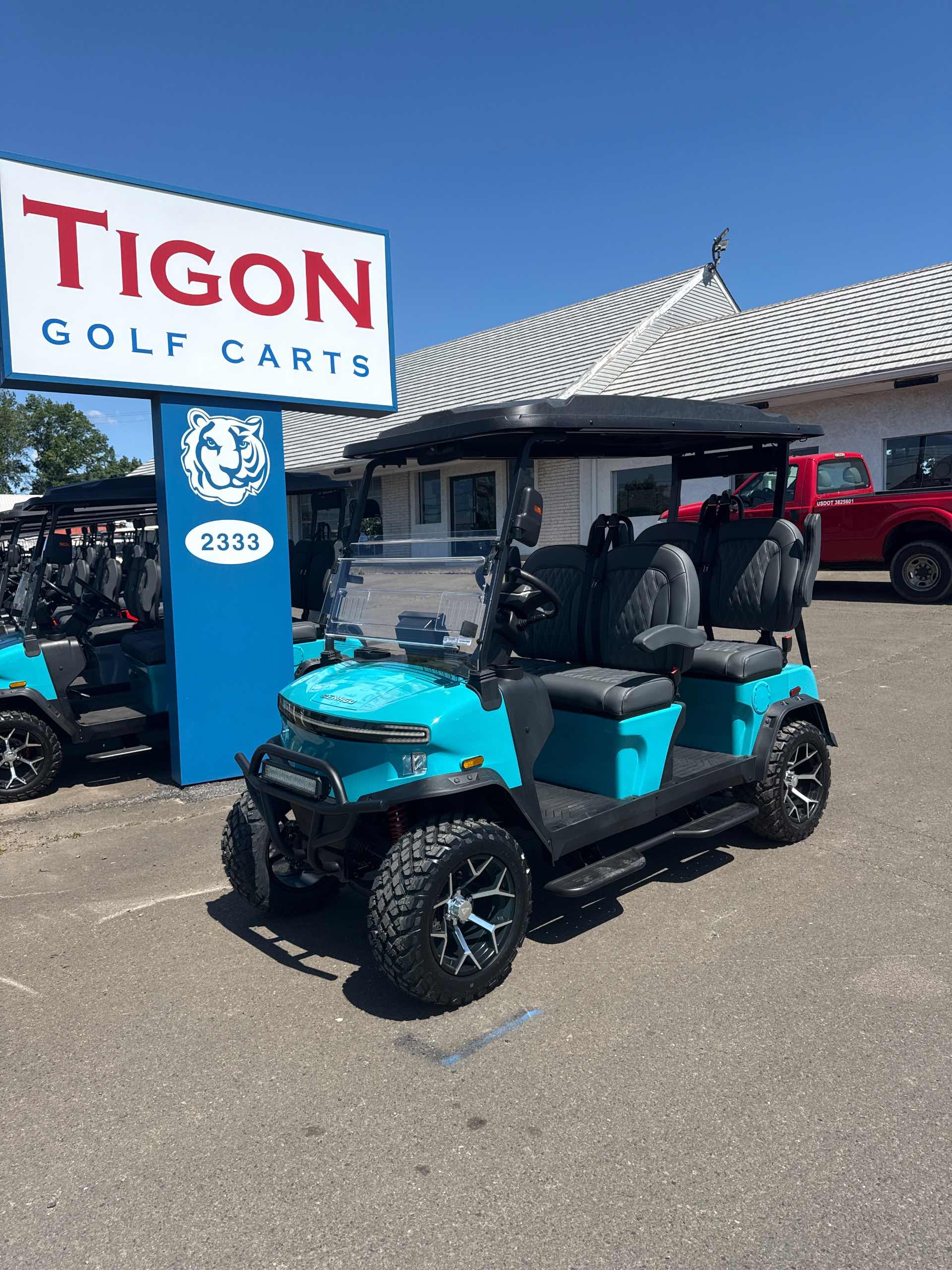
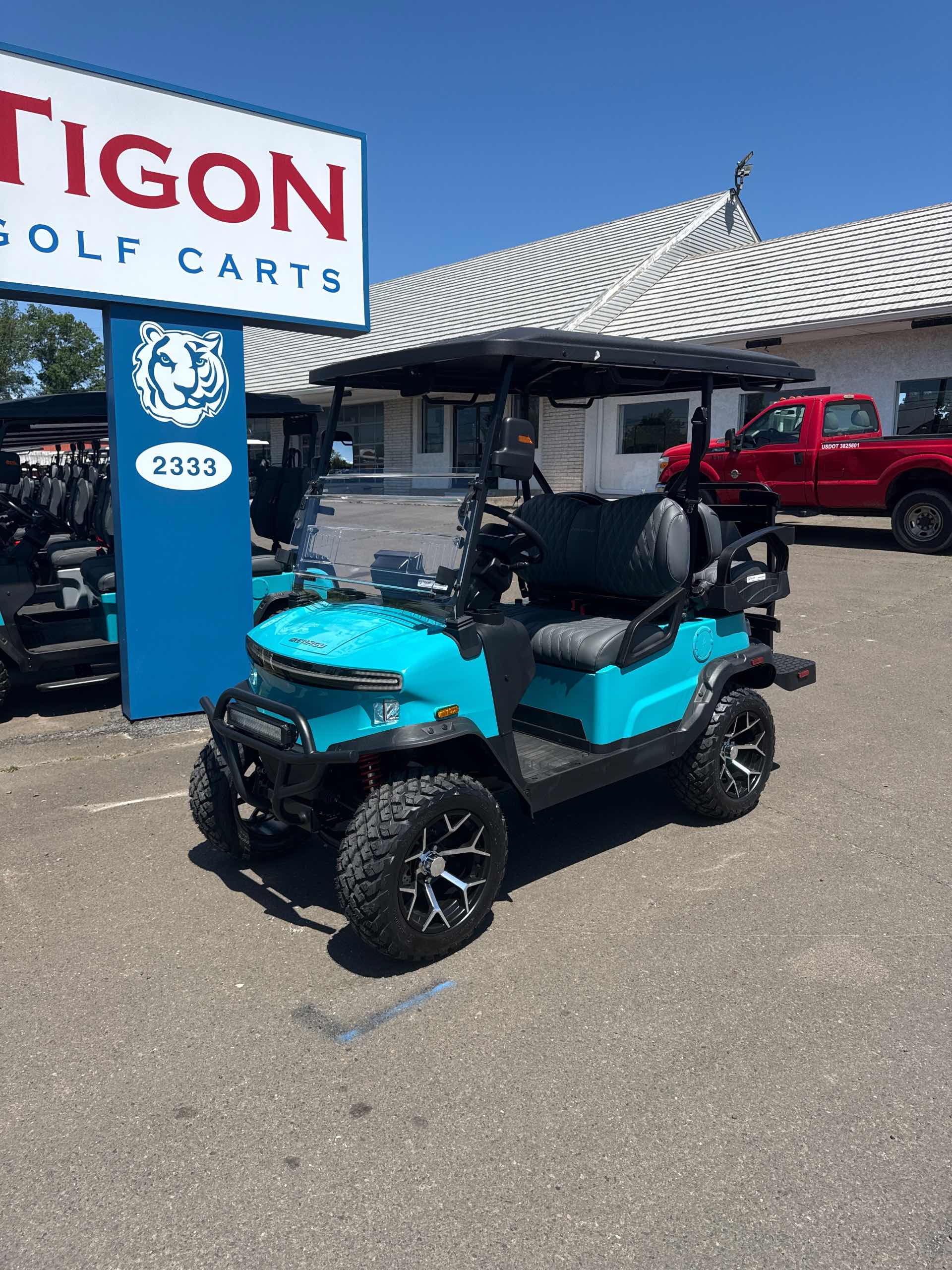
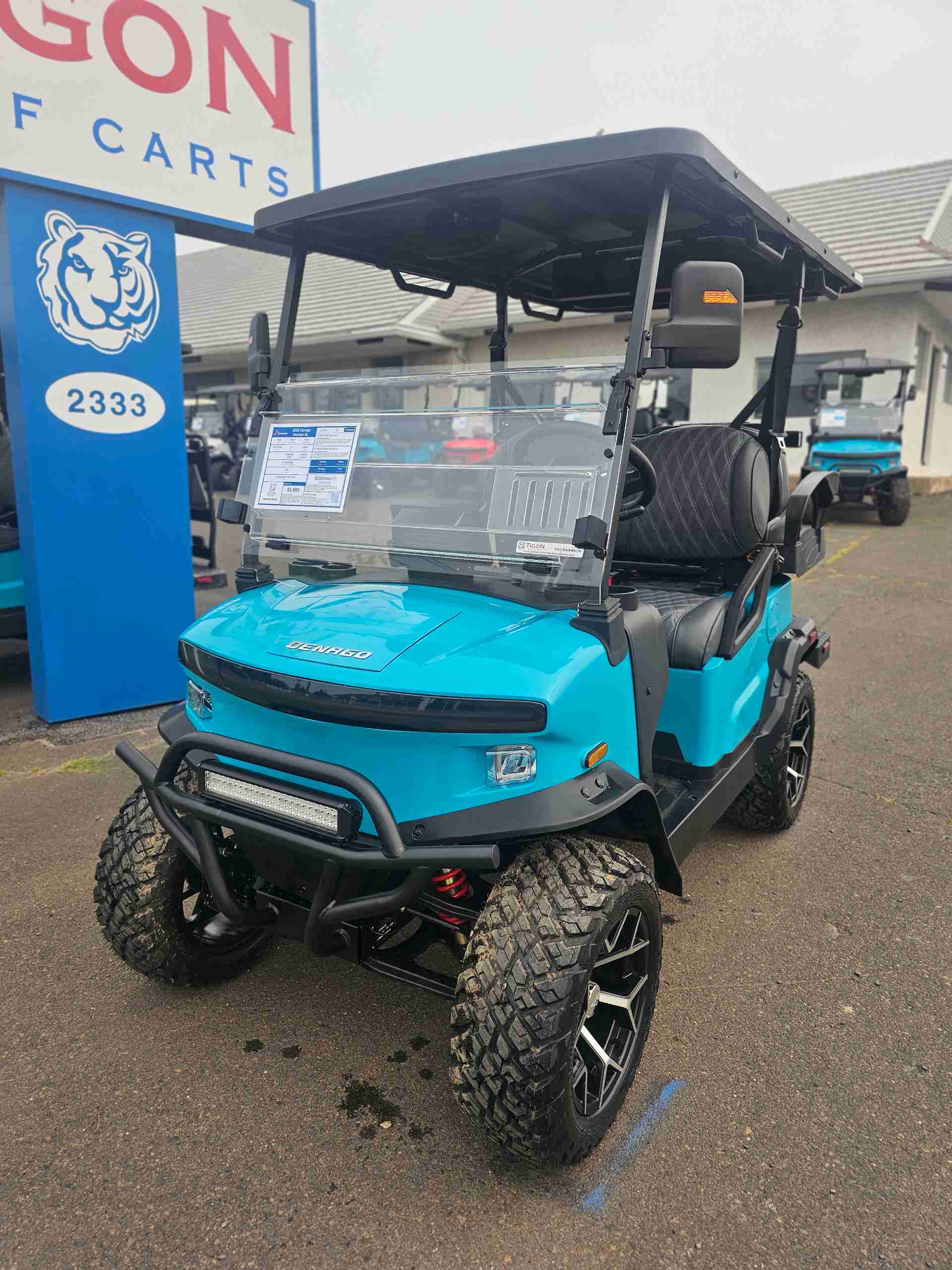
2026 Denago Nomad XL Golf Cart
Year: 2026 · Make: Denago · Model: Nomad XL · Color: Aqua · Power: Electric
Vehicle Details
$9,995
Vehicles listed as street legal start at $5,000 in current inventory. Inventory shown here is marked street legal in the DMS, not independently certified by this website. Before purchase, confirm the specific vehicle's certification label, VIN, title or MSO, required equipment and condition with the dealership. Registration, insurance, driver licensing and permitted roads depend on state and local requirements; a listing does not guarantee registration or road access.
LSVs and ordinary golf carts are different vehicle categories. Required equipment alone does not establish certification or registration eligibility. Check the state-source table below and your municipality's road restrictions.
These are model references, not stock offers or certification evidence. Confirm the exact unit, configuration, documents, current price and availability with the dealership:
| Brand / Model | Year | Seats | Top Speed | Range | Price |
|---|---|---|---|---|---|
| Evolution D5 Maverick | 2026 | 4-passenger | 25 mph | 55 mi | Confirm unit price |
| DENAGO CITY | 2026 | 5-passenger | 25 mph | 40–50 mi | Confirm unit price |
| ICON i40L LSV | 2026 | 4-passenger | 25 mph | 60 mi | Confirm unit price |
| Evolution D5 Ranger | 2026 | 4-passenger | 25 mph | 50 mi | Confirm unit price |
| Swift EV Mach 4 | 2026 | 4-passenger | 25 mph | 45 mi | Call for Pricing |
Compare new and used vehicles by warranty, battery condition and documented compliance. Model references above do not prove the certification of a specific unit. Inventory shown here is marked street legal in the DMS, not independently certified by this website. Before purchase, confirm the specific vehicle's certification label, VIN, title or MSO, required equipment and condition with the dealership. Registration, insurance, driver licensing and permitted roads depend on state and local requirements; a listing does not guarantee registration or road access.
New street legal golf carts currently in stock range from $8,495 to $18,416.82:
Browse All New Street Legal Carts →
All new street legal golf carts at TIGON include dealer-assisted title paperwork prep. 0% APR financing available on qualifying new models. Browse all new LSV inventory →
A used LSV is the fastest way into a street legal cart on a budget — the VIN, lights, signals, mirrors, and seat belts are already installed and the cart has already been titled once, so registration in your name is straightforward. TIGON currently has 22 used street-legal carts in stock, each one inspected and condition-disclosed before listing. Browse used street legal golf carts in stock, or compare against all used golf carts for sale. Confirm the equipment list on any used listing before you buy — some older carts were converted with aftermarket kits, and our team will verify VIN and FMVSS 500 compliance for you.
Under Federal Motor Vehicle Safety Standard (FMVSS) 500, a golf cart must have all eight of the following to qualify as a street legal Low Speed Vehicle:
TIGON Golf Carts' street legal models ship with every required component pre-installed and a NHTSA-compliant VIN plate, so you can register directly at your state DMV without additional modifications.
Street-legal rules for golf carts vary by state — and often by county or municipality. Most states that allow LSVs on public roads require a local township, city, or county ordinance in addition to the state statute. Here's a quick reference for the states where TIGON Golf Carts operates:
By TIGON Golf Carts. Recorded source review dates: 2026-09-01, 2026-09-02. Compiled from the state-source records linked below; each row preserves its recorded review date. Ordinary golf carts and federally compliant LSVs are different categories. Local restrictions and individual vehicle eligibility still apply.
| State | Permitted roads / LSV rule | Registration, insurance and source review |
|---|---|---|
| Alabama | No single statewide road-access rule is published in this record. Public-road operation depends on specific local authority, and the applicable local enactment controls eligible roads and crossings. An LSV is not a golf cart or a UTV. A golf cart does not become registrable merely by adding equipment; a registrable LSV must comply with FMVSS 500. State source | Registration: Required. An FMVSS-compliant LSV may receive a license plate restricted to non-interstate use. Insurance: Required. Liability insurance is required for a registered motor vehicle operated on public roads; no special LSV coverage amount is published from the sources reviewed. Recorded review: 2026-09-01 |
| Alaska | Highways with a maximum speed limit of 35 mph or less; a higher-speed highway may be crossed at an intersection with an authorized low-speed-vehicle route. A golf cart is not automatically street legal. It qualifies as a low-speed vehicle only if it satisfies Alaska's LSV definition and federal compliance requirements. State source | Registration: Required Insurance: Required Recorded review: 2026-09-01 |
| Arizona | Highways with a posted speed limit of 35 mph or less; a highway posted above 35 mph may be crossed at an intersection. Arizona's road-going category is the neighborhood electric vehicle. An ordinary golf cart should not be represented as an NEV merely because equipment was added; the vehicle must satisfy the applicable motor-vehicle definition and federal LSV requirements. State source | Registration: Required. Required for public-road operation under ordinary motor-vehicle rules. Insurance: Required. Arizona's ordinary motor-vehicle financial-responsibility rules apply; no special NEV coverage limit was identified. Recorded review: 2026-09-01 |
| Arkansas | Confirm with state agency. No current Arkansas primary source establishing a statewide posted-speed threshold for LSVs was confirmed. An FMVSS-compliant low-speed vehicle is a federally defined motor vehicle. A conventional golf cart should not be represented as an LSV without manufacturer certification. State source | Registration: Confirm with state agency. The official sources reviewed did not state an LSV-specific registration rule. Insurance: Confirm with state agency. No LSV-specific Arkansas classification or registration source was confirmed. Recorded review: 2026-09-01 |
| California | Roads with a posted speed limit of 35 mph or less. No general permission to travel on higher-speed roads is stated in this record; crossings and locally planned routes must comply with the applicable Vehicle Code provisions and local controls. California treats golf carts and NEV/LSVs as different categories. A golf cart is designed for golf-course transportation, carries no more than two persons including the driver, carries golf equipment, and does not exceed 15 mph. An NEV/LSV may reach 25 mph and is subject to motor-vehicle requirements. Adding equipment alone does not establish manufacturer-certified LSV status. State source | Registration: Required. Required for an NEV/LSV; limited golf-cart registration exemptions are a separate category. Insurance: Required. Ordinary California motor-vehicle financial-responsibility rules apply. Recorded review: 2026-09-01 |
| Colorado | Generally roads posted at 35 mph or less. A road posted above 35 mph may be crossed at an at-grade crossing. Limited-access highways are prohibited. Operation on or crossing of a state highway posted at 40 mph is permitted only when the statutory roadway conditions, including lane-width and lane-count requirements, are met. A cart is not an LSEV merely because it is electric or has added equipment. It must satisfy Colorado's definition, display a qualifying VIN, and meet applicable federal motor-vehicle standards. State source | Registration: Required. Required for public-road operation. Insurance: Required. Colorado motor-vehicle insurance requirements apply. Recorded review: 2026-09-01 |
| Connecticut | Public roads with an established speed limit of 25 mph or less. This record does not claim authority to travel along higher-speed roads or a crossing exception that was not confirmed in the current codified section. An ordinary golf cart is not automatically an LSV. It must meet Connecticut's 20-25 mph definition, weight limit, and federal design and equipment standards. Separate municipal golf-cart authority is not substituted for statewide LSV rules. State source | Registration: Required. Public Act 24-20 classifies LSVs as motor vehicles. Insurance: Required. Connecticut's ordinary motor-vehicle insurance requirements apply. Recorded review: 2026-09-01 |
| Delaware | Roads posted at 35 mph or less; a higher-speed highway may be crossed at a marked intersection. A conventional golf cart is not automatically an LSV. The vehicle must meet FMVSS 500 and Delaware title and registration requirements. State source | Registration: Required Insurance: Required. Proof of Delaware insurance meeting 21 Del. C. § 2118 is required. Recorded review: 2026-09-01 |
| Florida | Streets posted at 35 mph or less. Higher-speed roads may be crossed where permitted by law and traffic controls, but may not be traveled along. A standard golf cart is generally limited to 20 mph or less and follows § 316.212 and local authorization. An LSV is 20-25 mph and is titled, registered, insured, and operated by a licensed driver. State source | Registration: Required Insurance: Required Recorded review: 2026-09-01 |
| Georgia | Highways posted at 35 mph or less; a highway posted above 35 mph may be crossed at an intersection. An LSV requires 20-25 mph performance and FMVSS 500-based compliance. A conventional motorized cart is a separate category and does not become an LSV solely through casual equipment additions. State source | Registration: Required Insurance: Required. Georgia motor-vehicle insurance rules apply. Recorded review: 2026-09-02 |
| Hawaii | Highways posted at 35 mph or less; a highway posted above 35 mph may be crossed at an intersection. A golf cart is not automatically a neighborhood electric vehicle. The NEV must satisfy Hawaii's electric propulsion, speed, weight, wheel-count, and federal-compliance definition. State source | Registration: Required Insurance: Required. Hawaii motor-vehicle insurance rules apply. Recorded review: 2026-09-02 |
| Idaho | Confirm with state agency. The reviewed Idaho sources do not establish a special statewide posted-speed threshold. A conventional golf cart should not be represented as an LSV without manufacturer certification that it meets FMVSS 500. State source | Registration: Confirm with state agency. No LSV-specific registration rule was confirmed. Insurance: Confirm with state agency. No LSV-specific Idaho classification source was confirmed. Recorded review: 2026-09-02 |
| Illinois | Streets posted at 30 mph or less unless locally prohibited. A local government may authorize streets posted above 30 mph but not above 35 mph after a safety determination. An LSV may cross at an intersection a street posted at no more than 45 mph. Illinois regulates LSVs separately from non-highway vehicles and golf carts. An LSV requires federal certification, title, registration, and a valid plate. State source | Registration: Required Insurance: Required. Illinois motor-vehicle liability-insurance rules apply. Recorded review: 2026-09-02 |
| Indiana | Confirm with state agency. Road eligibility depends on state restrictions and the responsible local authority's ordinance. Indiana separately defines and regulates golf carts. A locally authorized golf cart is not necessarily a federally compliant, titled, and registered LSV. State source | Registration: Required. Required for an LSV operated as a road motor vehicle. Insurance: Required. Indiana financial-responsibility rules apply. Recorded review: 2026-09-02 |
| Iowa | A street with a posted speed limit of 35 mph or less. An LSV may cross a street posted above 35 mph. Iowa Code § 321.247 separately permits an incorporated area to authorize golf carts on city streets and exempts those golf carts from chapter 321 registration. That local golf-cart authority is distinct from the federally compliant LSV class. State source | Registration: Required. A qualifying LSV is a motor vehicle and is not included in the golf-cart registration exemption in § 321.247. Insurance: Required. Iowa Code § 321.20B requires proof of financial liability coverage for a motor vehicle subject to registration. Recorded review: 2026-09-02 |
| Kansas | Streets and highways posted at 40 mph or less. An LSV may cross a street or highway posted above 40 mph. Kansas regulates golf carts separately under K.S.A. 8-15,108. A golf cart does not become an LSV merely through aftermarket equipment. State source | Registration: Required. For road operation. Insurance: Required. Current proof of insurance is required for registration. Recorded review: 2026-09-02 |
| Kentucky | A qualifying LSV may operate on a highway posted at 35 mph or less. It may not cross, at an at-grade intersection, a roadway posted above 35 mph unless that intersection has an electronic traffic signal. An LSV is a manufacturer-certified, four-wheeled motor vehicle limited to 25 mph and meeting federal LSV standards. A golf cart is separately defined for the local-ordinance pathway: it is designed for golf-course transportation or maintenance, may be designed up to 35 mph, and has specified weight, capacity, and equipment limits. A golf cart used under that pathway is not a motor vehicle and is exempt from title and registration. State source | Registration: Required. An LSV operated on a highway must be registered as a motor vehicle under KRS 186.050(3)(a). Insurance: Required. The owner or operator must insure an LSV operated on a highway under KRS 304.39-080 and keep proof of insurance inside the vehicle. Recorded review: 2026-09-02 |
| Louisiana | Roads posted at 35 mph or less; crossing a faster road at an intersection is permitted. An LSV may traverse a road posted at no more than 45 mph for no more than one-quarter mile solely to connect two roads posted at 35 mph or less. An ordinary golf cart is not automatically an LSV. It must satisfy the federal LSV class and Louisiana equipment, title, registration, insurance, licensing, and inspection requirements. State source | Registration: Required. Registered like a personal-use motor vehicle; a plate is required and the annual fee is collected every two years. Insurance: Required Recorded review: 2026-09-02 |
| Maine | Roads and streets posted at 35 mph or less. An LSV may cross a road posted above 35 mph at an intersection. Maine regulates LSVs as registered motor vehicles. A golf cart does not become an LSV merely by adding road equipment. State source | Registration: Required Insurance: Required. Ordinary registered-motor-vehicle insurance rules apply. Recorded review: 2026-09-02 |
| Maryland | Roads posted at 30 mph or less unless locally prohibited. Expressways and signed controlled-access highways are prohibited. Crossing a road above 30 mph through 45 mph is permitted; crossing above 45 mph is permitted only at an intersection controlled by a signal or stop sign at each approach. A conventional golf cart is not automatically an LSV. Location-specific golf-cart exceptions must not be generalized into statewide LSV permission. State source | Registration: Required. For public-road operation. Insurance: Required. Required for registered road motor vehicles. Recorded review: 2026-09-02 |
| Massachusetts | Public ways posted at 30 mph or less unless prohibited. Crossing a road posted 30-45 mph is allowed only when the crossing begins and ends on roads posted at 30 mph or less and the intersection is controlled by signals or stop signs. Crossing above 45 mph is prohibited. Limited-access and express state highways are prohibited. The certificate of origin, title, or out-of-state registration and the manufacturer's certification label must identify the vehicle as an LSV. A modified golf cart without this evidence does not qualify. State source | Registration: Required Insurance: Required Recorded review: 2026-09-02 |
| Michigan | Highways and streets posted at 35 mph or less. A road posted above 35 mph may be crossed; the operative section states no higher-road crossing ceiling. Michigan treats an LSV as a federally compliant motor vehicle. Local golf-cart or ORV permission does not establish LSV title and registration eligibility. State source | Registration: Required. A plate is required for public-road operation. Insurance: Required. Michigan motor-vehicle insurance requirements apply. Recorded review: 2026-09-02 |
| Minnesota | Streets and highways posted at 35 mph or less. A road posted above 35 mph may be crossed directly; the statute states no maximum posted speed for the crossed road. Minnesota regulates motorized golf carts separately under § 169.045. A local golf-cart permit or slow-moving-vehicle emblem does not establish federal NEV status. State source | Registration: Required. For public-road operation. Insurance: Required. Minnesota registered-motor-vehicle insurance rules apply. Recorded review: 2026-09-02 |
| Mississippi | Confirm with state agency. Route eligibility requires state and location-specific verification. A golf cart is not automatically a federally conforming LSV. Location-specific laws authorizing golf carts and LSVs must not be described as statewide permission. State source | Registration: Required. A federally conforming LSV requires a standard passenger plate. Insurance: Required. Mississippi motor-vehicle liability requirements apply. Recorded review: 2026-09-02 |
| Missouri | Confirm with state agency. No statewide LSV road-speed or crossing rule was confirmed. RSMo § 304.034 authorizes municipal golf-cart regulation in specified circumstances. A local golf-cart ordinance does not establish federal LSV status. State source | Registration: Confirm with state agency. No dedicated DOR LSV registration policy was confirmed. Insurance: Confirm with state agency. No LSV-specific Missouri classification source was confirmed. Recorded review: 2026-09-02 |
| Montana | Highways posted at 25 mph or less. Highways posted at 45 mph or less may be crossed; crossing above 45 mph is prohibited. Montana treats golf carts separately in several provisions. Local golf-cart operation or operation under a restricted license does not establish federal LSEV certification. State source | Registration: Required Insurance: Required. Montana mandatory motor-vehicle liability protection applies unless MVD confirms a specific exemption. Recorded review: 2026-09-02 |
| Nebraska | Any highway with a speed limit of 35 mph or less. An LSV may cross a highway posted above 35 mph. Nebraska DOT may prohibit LSVs on a highway under its jurisdiction for public safety. Nebraska treats golf car vehicles separately in § 60-6,381, where operation depends on a city, village, or county ordinance and is subject to golf-car-specific restrictions. Section 60-339 excludes off-road-designed golf car vehicles from the general motor-vehicle definition. State source | Registration: Required. For operation as a motor vehicle on public highways; the golf-car ordinance process is a separate classification. Insurance: Required. Neb. Rev. Stat. § 60-6,380 expressly requires liability insurance coverage for the LSV. Recorded review: 2026-09-02 |
| Nevada | If registered, an LSV may operate on a highway posted at 35 mph or less. It may cross a highway posted above 35 mph at an intersection. Only a vehicle satisfying every element of NRS 484B.637 is an LSV; the statute does not classify a conventional golf cart as an LSV merely because equipment is added. State source | Registration: Required. NRS 484B.637 expressly conditions highway operation on registration. Insurance: Required. Nevada requires registered motor vehicles to maintain liability insurance. Recorded review: 2026-09-02 |
| New Hampshire | Ways with posted speed limits of 35 mph or less. An NEV may cross an intersection with a way posted above 35 mph. The statutory NEV class is limited to a federally compliant four-wheeled electric vehicle capable of more than 20 mph and not more than 25 mph. No determination that an ordinary golf cart satisfies that definition is made. State source | Registration: Required. For public-way operation; initial registration is handled through the owner's municipal registration office with state registration requirements. Insurance: Confirm with state agency. New Hampshire does not impose a universal private-vehicle compulsory insurance rule, but financial-responsibility requirements can apply after specified events; confirm the owner's circumstances with DMV. Recorded review: 2026-09-02 |
| New Jersey | Public roads with a posted speed limit of 35 mph or less, subject to prohibitions by the authority controlling the road. A direct crossing of a road posted above 35 mph is permitted. The LSV definition depends on the statutory speed and weight class and motor-vehicle compliance. No claim is made that adding road equipment to an ordinary golf cart establishes LSV status. State source | Registration: Required. For public-road operation; MVC's initial registration process requires title and New Jersey insurance information. Insurance: Required. An LSV must satisfy New Jersey motor-vehicle insurance requirements for registration and operation. Recorded review: 2026-09-02 |
| New Mexico | Streets or highways with posted speed limits of 35 mph or less; a neighborhood electric car may cross a street or highway posted above 35 mph at an intersection. Limited-access highways are excluded. The neighborhood electric car class is expressly limited to a four-wheeled electric vehicle in the specified speed range that complies with 49 C.F.R. § 571.500. No claim is made that an ordinary or converted golf cart meets that class. State source | Registration: Required. For operation on public roads as a motor vehicle. Insurance: Required. New Mexico's Mandatory Financial Responsibility Act applies to a motor vehicle driven on New Mexico highways. Recorded review: 2026-09-02 |
| New York | An LSV may not operate on a public highway posted above 35 mph, except to cross that highway where it intersects a highway posted at 35 mph or less. Operation is also barred on any highway where the local authority or Department of Transportation prohibits LSVs for public safety, and generally on controlled-access highways unless specifically designated. A vehicle is an LSV only if it fits VTL § 121-f, including the greater-than-20-to-25-mph performance range and FMVSS No. 500 compliance. New York DMV separately lists ordinary golf carts among devices that cannot be registered. State source | Registration: Required. Public-highway operation requires registration under the limited-use-vehicle framework and is subject to VTL § 2262 restrictions. Insurance: Required. New York requires insurance proof for vehicle registration. Recorded review: 2026-09-02 |
| North Carolina | Streets and highways posted at 35 mph or less. A road posted above 35 mph may be crossed at an intersection; the statute states no maximum posted speed for the crossed road. North Carolina separately defines golf carts and modified utility vehicles. A golf cart does not become an LSV merely through added equipment. State source | Registration: Required. Expressly required through N.C.G.S. § 20-50. Insurance: Required. Expressly required through N.C.G.S. § 20-309. Recorded review: 2026-09-02 |
| North Dakota | Highways with speed limits of 35 mph or less. A direct crossing of a highway posted above 35 mph is permitted to continue on a highway posted at 35 mph or less. Confirm with state agency. Chapter 39-29.1 defines LSVs but does not establish that an ordinary golf cart qualifies; classification of a particular cart should be confirmed with NDDOT. State source | Registration: Required. Section 39-29.1-03 prohibits operation unless the LSV is registered under chapter 39-29.1, subject to the exemptions in § 39-29.1-05. Insurance: Required. North Dakota's motor-vehicle liability-insurance operation requirement applies; chapter 39-29.1 does not state an insurance exemption for LSVs. Recorded review: 2026-09-02 |
| Ohio | Only where the local authority has adopted an ordinance or resolution authorizing operation, and only on streets or highways under that authority's jurisdiction with an established speed limit of 35 mph or less. Ohio expressly includes a vehicle commonly known as a golf cart in its under-speed-vehicle definition only when it has no more than 20 mph attainable speed and a GVWR under 3,000 pounds. This differs from the federal LSV speed band above 20 mph. State source | Registration: Required. A locally authorized under-speed vehicle must be registered under Chapter 4503 before public-road operation. Insurance: Required. A locally authorized vehicle must be titled and registered, and Ohio financial-responsibility requirements apply to registered road operation. Recorded review: 2026-09-02 |
| Oklahoma | May not operate on a street or highway posted above 35 mph, but may cross a street or highway posted above 35 mph. Oklahoma's LSV definition is limited to qualifying four-wheeled electric vehicles manufactured to FMVSS No. 500. A conventional golf cart is not shown to qualify merely through aftermarket modification. State source | Registration: Required. Public-road operation requires current motor-vehicle registration. Insurance: Required. Oklahoma's compulsory insurance law applies to registered motor vehicles operated in the state. Recorded review: 2026-09-02 |
| Oregon | An LSV may operate on a highway with a speed limit or posted speed of 35 mph or less, unless another restriction applies. City or county ordinances may allow LSVs on city streets or county roads posted above 35 mph. An Oregon LSV must satisfy the statutory four-wheel and more-than-20-to-25-mph definition. Oregon separately regulates golf carts; a golf cart is not established as an LSV merely by adding road equipment. State source | Registration: Required. Oregon generally requires registration for a vehicle operated on a highway; no LSV exemption was confirmed. Insurance: Required. Oregon financial-responsibility requirements apply to motor vehicles operated on highways. Recorded review: 2026-09-02 |
| Pennsylvania | An NEV may not operate on roads with posted speeds above 25 mph. PennDOT titles and registers only the qualifying electric NEV category for road use. Other low-speed vehicles use the ORV body type and, because they do not meet Pennsylvania roadway equipment standards, cannot be titled and registered for operation on Pennsylvania roadways. State source | Registration: Required. PennDOT issues a standard registration plate to a qualifying NEV. Insurance: Required. PennDOT expressly requires an NEV to be covered by financial responsibility. Recorded review: 2026-09-02 |
| Rhode Island | Public highways and roadways posted at 35 mph or less. At a signal- or stop-controlled intersection, an LSV may cross a road posted from above 35 through 45 mph when the approach and continuation roads are posted no higher than 35 mph. Only a vehicle satisfying the statutory electric-vehicle definition and FMVSS 500 qualifies statewide. Separate special laws govern Prudence Island LSVs and Newport commercial LSVs. State source | Registration: Required. Registration and display of the registration number are expressly required for public-way operation. Insurance: Required. The LSV definition expressly makes registration subject to insurance requirements. Recorded review: 2026-09-02 |
| South Carolina | Highways posted at 35 mph or less; an LSV may cross a highway at an intersection where the crossed highway is posted above 35 mph. Golf carts use a separate permit-decal regime under § 56-2-90. South Carolina will not issue a VIN to a homemade LSV, retrofitted golf cart, or similar vehicle, and those vehicles do not qualify as LSVs. State source | Registration: Required. An LSV is registered and licensed in the same fashion as a passenger vehicle and receives a special LSV plate. Insurance: Required. Section 56-2-120 makes LSVs subject to the same insurance requirements as other motor vehicles. Recorded review: 2026-09-02 |
| South Dakota | A low-speed vehicle may not be operated on a highway posted above 35 mph, except to cross that highway. Confirm with state agency. No statewide provision establishing that an equipment-modified golf cart becomes a federally compliant LSV was confirmed. Do not treat a golf cart as title-eligible without DOR confirmation. State source | Registration: Required. Highway operation requires the motor vehicle to be licensed under South Dakota's general registration law. Insurance: Required. South Dakota's motor-vehicle financial-responsibility requirement applies; no LSV exception was identified. Recorded review: 2026-09-02 |
| Tennessee | Generally roads posted at 35 mph or less; crossing a higher-speed road at an intersection is permitted. Local governments may restrict operation on roads under their jurisdiction. A golf cart is not an LSV merely because equipment is added. Tennessee's DOR process requires the vehicle and manufacturer documentation to establish the applicable low-speed classification and federal compliance. State source | Registration: Required. A qualifying LSV operated on public roads must be registered and plated. Insurance: Required. A registered road motor vehicle is subject to Tennessee financial-responsibility requirements. Recorded review: 2026-09-02 |
| Texas | A neighborhood electric vehicle may be operated on a street or highway with a posted speed limit of 45 mph or less and may cross a higher-speed road at an intersection. A governing body or TxDOT may prohibit operation on a road under its jurisdiction for safety. Texas defines golf carts separately and gives them separate operating rules in Transportation Code Chapter 551, Subchapter F. A golf cart is not a neighborhood electric vehicle unless the vehicle itself is subject to FMVSS 500. State source | Registration: Required. Public-road operation of a neighborhood electric vehicle requires Texas registration and plates. Insurance: Required. Texas motor-vehicle financial-responsibility law applies to a registered neighborhood electric vehicle. Recorded review: 2026-09-02 |
| Utah | Highways posted at 35 mph or less; an LSV may cross a higher-speed highway at an intersection. A highway authority may prohibit or restrict LSVs for public safety. Utah separately defines a golf cart as a device designed for transportation on a golf course and excludes it from the motor-vehicle definition. A highway LSV must meet the LSV definition and may not be structurally altered from the manufacturer's original design. State source | Registration: Required. Section 41-6a-1508 expressly applies registration, plate, and registration-fee law. Insurance: Required. Section 41-6a-1508 expressly applies Utah motor-vehicle financial-responsibility requirements. Recorded review: 2026-09-02 |
| Vermont | Highways with a posted speed limit of 35 mph or less; an LSV may cross a highway posted above 35 mph at an intersection. Interstate highways are not included. A vehicle must satisfy Vermont's LSV definition and applicable highway-vehicle requirements; a conventional golf cart is not treated as an LSV merely because equipment is added. State source | Registration: Required. Required for public-highway operation. Insurance: Required. A registered LSV is subject to Vermont financial-responsibility requirements applicable to motor vehicles. Recorded review: 2026-09-02 |
| Virginia | Public highways with a maximum speed limit of 35 mph or less. An LSV may cross an intersection with a highway posted above 35 mph. Operation is prohibited where VDOT or the governing locality has posted a safety prohibition. Virginia expressly excludes a golf cart from the LSV definition. Golf-cart operation is separately governed, including by Va. Code § 46.2-916.3; added equipment alone does not make a golf cart a qualifying LSV. State source | Registration: Required. Virginia law expressly requires registration and display of the plate prescribed by Va. Code § 46.2-711(D). Insurance: Required. The statute subjects LSVs to the insurance requirements applicable to other motor vehicles under Chapter 6. Recorded review: 2026-09-02 |
| Washington | Generally highways posted at 35 mph or less, subject to local regulation. On state-highway segments listed in chapter 47.17 RCW, operation is barred where the posted limit exceeds 30 mph. Crossing a faster road must begin and end on an eligible road and occur at an approximately 90-degree intersection; special rules apply to uncontrolled state-highway intersections. In island counties connected to the mainland only by ferry, operation may extend to highways posted at 45 mph or less. Washington separately defines a golf cart in RCW 46.04.1945 and governs golf-cart zones under RCW 46.08.175. A golf cart is not a neighborhood electric vehicle unless it independently meets RCW 46.04.357 and federal conformity requirements. State source | Registration: Required. RCW 46.61.725 expressly requires current registration and displayed license plates under chapter 46.16A RCW; DOL tracks NEVs in a separate registration category. Insurance: Required. RCW 46.61.725 requires motor-vehicle liability insurance complying with chapter 46.30 RCW. Recorded review: 2026-09-02 |
| West Virginia | Confirm with state agency. No current statewide LSV-specific road-speed ceiling was confirmed in the primary sources reviewed. Confirm route eligibility with West Virginia DMV/DOT and the road authority. West Virginia's LSV definition is based on four wheels and the 20-to-25-mph attainable-speed range. A conventional golf cart outside that definition should not be represented as an LSV based only on added equipment. State source | Registration: Required. A qualifying LSV operated on public highways is subject to motor-vehicle registration; no LSV registration exemption was confirmed. Insurance: Required. West Virginia compulsory motor-vehicle security requirements apply to registered motor vehicles. Recorded review: 2026-09-02 |
| Wisconsin | Confirm with state agency. No statewide Wisconsin LSV-specific road-speed ceiling was confirmed. Route eligibility must be confirmed with WisDOT and the road authority; do not substitute local golf-cart or UTV authorization. Wisconsin does not establish that a conventional golf cart becomes a highway motor vehicle merely through added equipment. Local permissions for golf carts or utility-terrain vehicles should not be represented as statewide LSV authority. State source | Registration: Required. If WisDOT accepts the vehicle for legal highway operation, Wisconsin registration and plates are required under Wis. Stat. § 341.04. Insurance: Required. Wisconsin's motor-vehicle liability insurance requirement applies to operation of a motor vehicle on a highway. Recorded review: 2026-09-02 |
| Wyoming | A registered multipurpose vehicle may operate on public streets and highways but not interstate highways. If it cannot achieve the maximum speed allowed on the highway, it must travel at the extreme right edge and display the required reflectorized flag or slow-moving vehicle emblem. A Wyoming golf cart is limited to a vehicle with at least three wheels, under 1,300 pounds unladen, designed or operated at no more than 15 mph, carrying golf equipment and no more than four persons, and used to travel directly to, from, or on a golf course or for a city-, town-, or county-authorized special event or circumstance. Outside that use, a qualifying golf cart falls within the multipurpose-vehicle definition. State source | Registration: Required. Registration and plates are required for multipurpose-vehicle operation on public streets and highways. Insurance: Required. Wyoming liability-security requirements apply to registered motor vehicles operated on highways. Recorded review: 2026-09-02 |
The rules above represent state-level law. Your specific township or municipality may also require its own ordinance. Always confirm local rules before registering. Call 1-844-844-6638 — our team knows the street legal regulations in every market we serve.
Once you buy a street legal golf cart from TIGON, the registration process typically involves six steps:
Also see our Street Legal Vehicles (SLV) overview and the Low Speed Vehicle (LSV) page for federal classifications and brand comparisons.
"DOT approved" means a golf cart was manufactured to comply with Federal Motor Vehicle Safety Standard (FMVSS) 500 — the U.S. Department of Transportation standard that defines Low Speed Vehicles (LSVs). This is a factory-level certification, not a field modification or aftermarket upgrade.
A DOT-approved golf cart carries an NHTSA-issued 17-digit VIN plate, ships with all eight required safety components factory-installed, and comes with a Manufacturer's Statement of Origin (MSO) — the document your state DMV requires to issue a title and license plate. Without a factory VIN and MSO, a cart cannot be titled or registered on public roads, even if the same safety equipment has been added after sale.
Field retrofits do not qualify. Adding headlights, seat belts, turn signals, and a windshield to a standard golf cart will make it better equipped, but it will not produce a factory VIN or MSO. FMVSS 500 is a factory-level certification that applies to vehicles built and tested to that standard by an NHTSA-registered manufacturer.
Brand or model names do not establish a unit's certification. Ask for its certification label, VIN, MSO or title and current equipment inspection before relying on a street-legal claim.
The brand references below are starting points for an enquiry, not proof of stock, certification or registration eligibility. Confirm the specific unit and configuration.
Ask about available configurations and confirm the specific unit's certification, documents and equipment.
View Evolution D5 specs →Review the five-passenger CITY model, then confirm the specific unit's certification, documents and local registration eligibility.
View Denago LSV models →Ask about ICON configurations; equipment and model references do not establish an individual unit's certification.
View ICON LSV models →Ask about Atlas configurations and confirm unit documents, certification, equipment and permitted roads before purchase.
View Atlas LSV models →Inventory shown here is marked street legal in the DMS, not independently certified by this website. Before purchase, confirm the specific vehicle's certification label, VIN, title or MSO, required equipment and condition with the dealership. Registration, insurance, driver licensing and permitted roads depend on state and local requirements; a listing does not guarantee registration or road access. Browse the LSV inventory or call 1-844-844-6638 to confirm a specific unit.
Under Federal Motor Vehicle Safety Standard (FMVSS) 500, a golf cart must have: (1) headlights and taillights, (2) turn signals front and rear, (3) side mirrors and a rearview mirror, (4) a DOT-approved windshield, (5) seat belts at all seating positions, (6) a speedometer/odometer, (7) a 17-digit NHTSA VIN plate, and (8) a top speed in the 20–25 mph range. Once equipped, the cart is classified as a Low Speed Vehicle (LSV) and can be titled, registered, and insured for road use. TIGON Golf Carts' street-legal models ship with all required equipment pre-installed. Call 1-844-844-6638 to confirm which in-stock carts qualify in your state. Related: Low Speed Vehicles, Street-Legal Vehicles overview
Street-legal eligibility for golf carts depends on three layers of law: federal (FMVSS 500 equipment standard), state (most allow LSVs on roads posted ≤35 mph), and local (many states require a county or municipal ordinance authorizing golf cart use on public roads). To check your city: (1) visit your state's DOT or DMV website for the state-level LSV statute, (2) call your township, borough, or city clerk's office to ask whether a local golf cart ordinance is in place, and (3) call TIGON Golf Carts at 1-844-844-6638 — our team knows the rules in every market we serve and can tell you which models qualify where you live. Related: Find your state
Yes — Pennsylvania allows street-legal Low Speed Vehicles (LSVs) on roads posted at 35 mph or less, provided the township, borough, or municipality has enacted a local ordinance permitting it. The cart must meet FMVSS 500 equipment requirements, be registered with PennDOT, titled, and carry liability insurance. TIGON Golf Carts operates multiple dealerships in Pennsylvania and can help you select a compliant model and navigate the PennDOT registration process. Call 1-844-844-6638 or visit our Hatfield, Langhorne, or Sunbury locations. Related: Pennsylvania golf carts, Find a PA location
Yes — Florida is one of the most golf-cart-friendly states in the country. Under Florida Statute 316.212, golf carts (not LSVs) may be driven on designated roadways where the speed limit is 30 mph or less, with the vehicle being authorized by local ordinance. For roads up to 35 mph, a fully equipped LSV (FMVSS 500) registered with FLHSMV is required. Florida enforces equipment requirements strictly. TIGON Golf Carts operates a dealership in Lecanto, FL serving Citrus County, Marion County, and surrounding communities. Call 1-844-844-6638 for Florida-specific guidance. Related: Florida golf carts
Yes — North Carolina allows street-legal Low Speed Vehicles on roads posted at 35 mph or less, provided the county or municipality has passed an authorizing ordinance under NC General Statute 20-121.1. The cart must meet LSV equipment standards, be registered with NCDMV, and carry liability insurance. Some beach communities and resort towns in NC have robust local ordinances in place. TIGON Golf Carts has locations serving North Carolina customers and can guide you through the NC DMV registration process. Call 1-844-844-6638 for details. Related: North Carolina golf carts
To register a street legal golf cart (LSV) with your state DMV: (1) Confirm the cart meets FMVSS 500 equipment standards — TIGON's street-legal models arrive pre-certified. (2) Obtain the Manufacturer's Statement of Origin (MSO) from the dealer — TIGON provides this at purchase. (3) Verify your local ordinance allows LSV use on public roads in your township or city. (4) Get liability insurance from an auto insurer that covers LSVs/NEVs. (5) Visit your state DMV with the MSO, proof of insurance, photo ID, and registration fee payment — typically $25–$80 depending on state. (6) Receive your title, registration, and license plate, mount the plate, and you are road-legal. Call 1-844-844-6638 and our team will walk you through the state-specific steps for your area. Related: Shop street-legal models, Find a dealership
‘DOT approved’ for a golf cart means the vehicle was manufactured to comply with Federal Motor Vehicle Safety Standard (FMVSS) 500, the U.S. Department of Transportation standard governing Low Speed Vehicles (LSVs). A DOT-approved golf cart carries an NHTSA-issued 17-digit VIN plate, arrives from the factory with all eight required safety components (headlights, taillights, turn signals, mirrors, DOT-rated windshield, seat belts, speedometer, and top speed governed to 20–25 mph), and comes with a Manufacturer's Statement of Origin (MSO) that allows a state DMV to issue a title and license plate. Only carts that were built and certified to FMVSS 500 at the factory can be called DOT approved — field retrofits of standard golf carts do not qualify for FMVSS 500 certification even if the same equipment is added. TIGON Golf Carts sells DOT-approved LSV models from DENAGO, Evolution, Swift EV, TEKO EV, TARA EV, and ICON. Call 1-844-844-6638 to confirm DOT status on any specific unit. Related: Street legal golf carts, Low speed vehicles
To verify a golf cart is DOT approved before purchasing, check for four things: (1) A 17-digit VIN plate riveted to the frame — this is issued by NHTSA and is required for FMVSS 500 compliance; no VIN means no DOT approval. (2) A Manufacturer's Statement of Origin (MSO) from the factory — this document is the golf cart equivalent of a car's MCO and is required to obtain a state title. (3) All eight FMVSS 500 safety items factory-installed and intact: headlights, taillights, amber turn signals, rearview and driver-side exterior mirrors, DOT-rated windshield, seat belts at every position, and a calibrated speedometer. (4) Governed top speed of 20–25 mph — carts faster than 25 mph or slower than 20 mph do not qualify as LSVs under FMVSS 500. At TIGON Golf Carts, every street-legal model we sell ships with all four elements confirmed — VIN plate, MSO, full safety equipment, and proper speed calibration. Call 1-844-844-6638 and ask specifically for ‘FMVSS 500 certified’ or ‘DOT-approved’ inventory. Related: Browse street-legal inventory, Contact TIGON
TIGON Golf Carts carries DOT-approved, FMVSS 500-certified models from six brands: DENAGO (the 5-passenger CITY NEV), Evolution (select D5 and Carrier models), Swift EV (TIGON private-label LSV), TEKO EV (TIGON private-label LSV), TARA EV (TIGON private-label LSV), and ICON (select i40 and i60 LSV configurations). All of these models ship with a factory VIN, full FMVSS 500 safety equipment, and an MSO for DMV titling. Standard golf cart models from Club Car, EzGo, and Yamaha sold as golf course equipment are NOT DOT approved — they lack a factory VIN and were not built to FMVSS 500 standards. Call 1-844-844-6638 or visit any TIGON dealership and ask specifically for DOT-approved models — our sales team will confirm certification status and current inventory for your state. Related: DOT-approved inventory, DENAGO golf carts, Street legal guide
No. A standard golf cart cannot be retrofitted to become DOT approved after purchase. FMVSS 500 is a factory-level certification — it applies to vehicles built and crash-tested to that standard by a certified manufacturer, not to vehicles modified in the field. Adding headlights, seat belts, turn signals, and a windshield to a standard golf cart will make it better equipped, but it will not give the cart a factory VIN or an NHTSA-issued MSO, which are the two documents required to title the vehicle as an LSV at a state DMV. Without a title, the cart cannot be legally registered for on-road use in any state. If you want a street-legal, DOT-approved golf cart, you must purchase one that was originally manufactured to FMVSS 500 standards. TIGON Golf Carts sells DOT-approved LSV models starting around $9,995 — call 1-844-844-6638 to confirm availability in your state. Related: Shop DOT-approved LSVs, Street legal golf carts