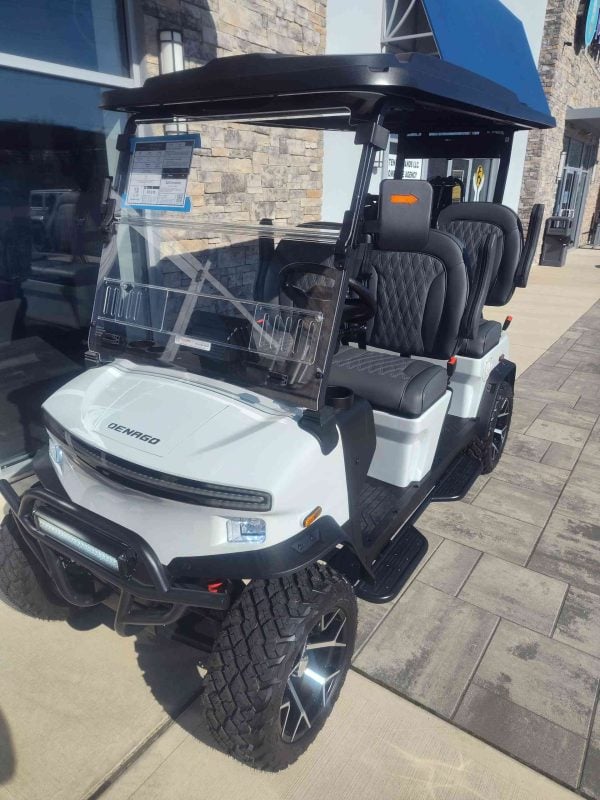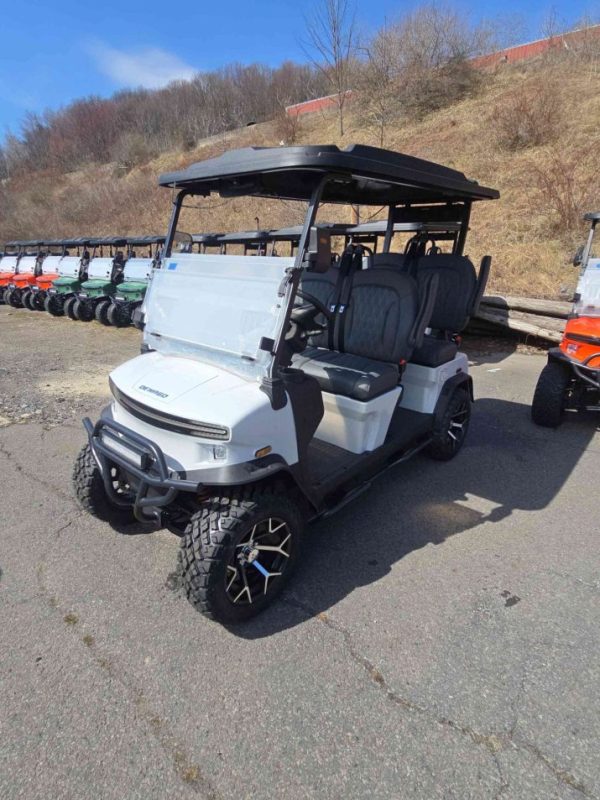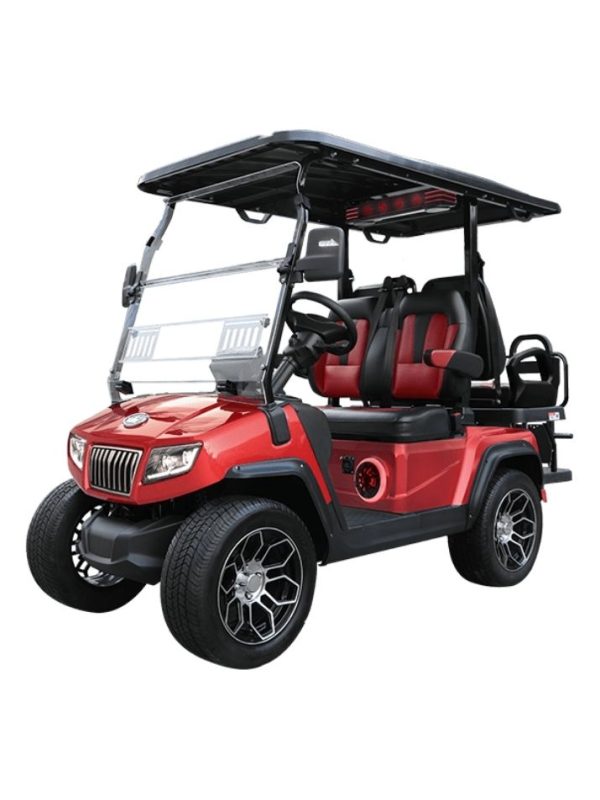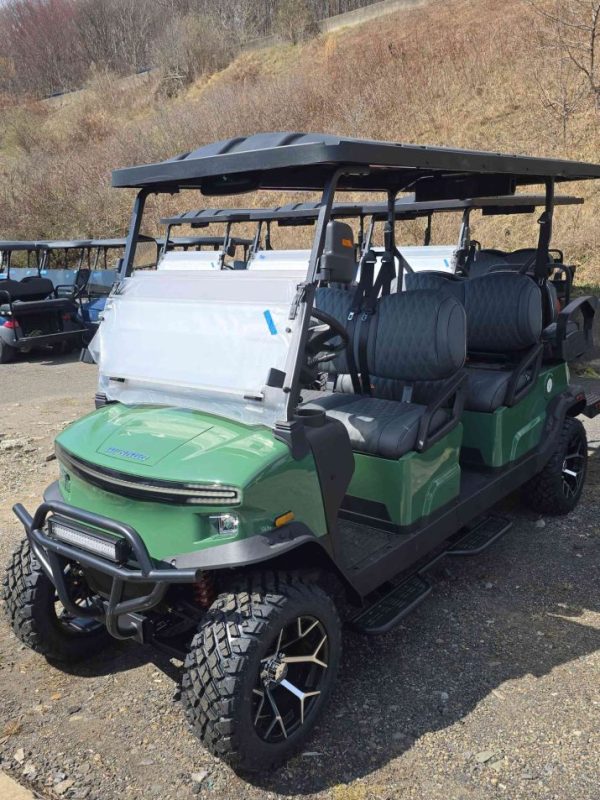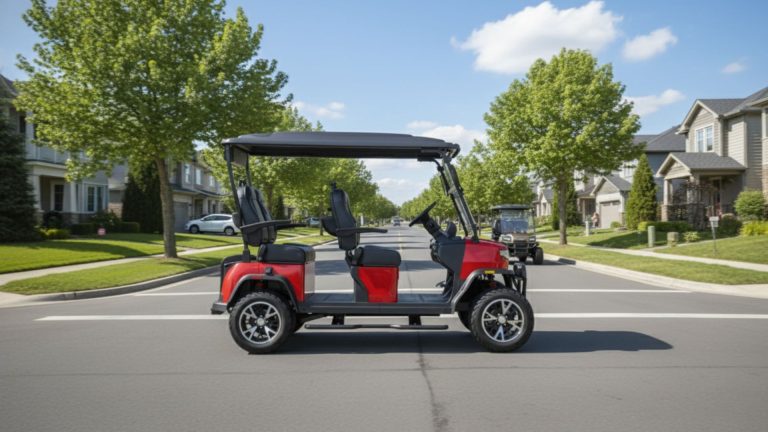
Choosing between the two standout models from TEKO’s lineup—TEKO® EV TROPHY and TEKO® EV TROPHY PLUS—often comes down to your priorities. Is it passenger comfort? Load flexibility? Or striking the balance between ride quality and capability?
Both are electrified, share core systems, and embody TEKO’s design philosophy. But they diverge in how they deliver space, flexibility, and usage. This comparison helps you decide which model better suits your real-world needs.
1. Shared Foundations: What They Have in Common
Before contrasting, it’s important to recognize what both models share. Their commonalities set the baseline:
-
Battery & Power: Both use a 51.2 V lithium system, with intelligent battery management for range and longevity.
-
Motor & Torque: A 5 kW AC high-torque motor powers each model.
-
Range Performance: Under ideal conditions, both can approach up to ~40 miles on a single charge.
-
Brand DNA: They share the same build quality, color options, lighting systems, and core safety features.
Because of these shared components, much of the difference lies not in “does it run well” but in how it runs for you.
2. Seating & Passenger Experience
TROPHY: 4 Forward-Facing Seats
The TEKO® EV TROPHY gives each of its four passengers forward-facing views, great visibility, and equal ride conditions. This layout ensures uniform comfort, with no compromise on who gets the “better seat.”
TROPHY PLUS: 4+2 Flexible Layout
In contrast, the TEKO® EV TROPHY PLUS offers six spots: four forward plus two rear-facing. This extra capacity adds flexibility—carry more passengers when needed, or fold the rear seats to enable cargo.
However, rear-facing seats sometimes offer a different ride feel—less forward visibility, more reliance on suspension. But for families or groups, that trade-off is often worthwhile.
3. Comfort & Ride Quality
Weight & Suspension Impact
Because TROPHY PLUS carries more structure and potential load, its suspension is often tuned to handle extra weight. That means under light load, the TROPHY may feel slightly more responsive or “lively.”
But under full capacity (six riders or mixed cargo), TROPHY PLUS likely performs more stably, maintaining balance and damping.
Cabin Layout & Ergonomics
Both models emphasize ergonomics: intuitive controls, accessible step-in height, and comfortable padding. The key difference: TROPHY PLUS must design for dual modes—passenger and cargo—so its shapes and transitions can feel more modular.
4. Capability & Utility
Load & Cargo Flexibility
This is where TROPHY PLUS truly shines. With folding rear seats, it can switch from passenger mode to haul mode in seconds. That means you can carry groceries, recreational gear, or even maintenance supplies when needed.
In contrast, TROPHY is optimized purely for passenger transport, without the same fold-down functionality.
Performance under Load
With the same motor and battery architecture, both vehicles handle light to moderate load well. But TROPHY PLUS will naturally show performance gradients when burdened (steeper hills, heavier loads). That said, good design (reinforced frame, balanced weight distribution) helps mitigate those effects.
5. Spec Comparison Table
| Spec / Feature | TROPHY | TROPHY PLUS |
|---|---|---|
| Seating | 4 Forward-Facing | 4 + 2 (Rear-Facing) |
| Cargo Mode | Fixed rear deck | Fold-down rear seats |
| Weight (Curb) | Lighter | Slightly heavier |
| Ride under load | Strong | Designed to maintain stability |
| Versatility | Passenger-focused | Passenger + cargo flexibility |
| Comfort under light load | Slight edge (less weight) | Very good |
| Best use cases | Neighborhood, campus, family with 4 | Larger families, resorts, group transport, mixed cargo |
6. Use-Case Recommendations
| Scenario | Recommended Model | Why |
|---|---|---|
| Daily family of 4 | TROPHY | Simpler, lighter, focused on comfort for 4 |
| Occasional guests / extended family | TROPHY PLUS | Additional seats when needed plus cargo flexibility |
| Resort shuttle / guest transport | TROPHY PLUS | More capacity and flexibility |
| Campus & small-vehicle zones | TROPHY | Easier maneuverability |
| Mixed utility & passenger roles | TROPHY PLUS | Best of both worlds |
7. Ownership & Cost Efficiency
Given their shared systems, much of the running costs overlap—electricity, battery maintenance, parts supply. However, the added complexity and weight of TROPHY PLUS may incur marginally higher wear over time (suspension, tires). That said, if you’re using the extra capacity regularly, the trade-off is justified.
8. TIGON Golf Carts
If your primary goal is consistent passenger comfort for up to four people, the TEKO® EV TROPHY is an excellent, streamlined choice. But if you value adaptability—needing extra seats or cargo options from time to time—the TEKO® EV TROPHY PLUS is the more versatile and future-ready pick.
Ultimately, both models deliver on TEKO’s promise of electric performance, quiet rides, and modern aesthetics. Choose based on how you use your EV day to day—and you’ll have a companion that fits your lifestyle without compromise.