
Electric vs. Gas Golf Carts:
The golf cart market is booming, offering an incredible variety of vehicles for everything from hitting the links to cruising the neighborhood. As you embark on the journey to find your perfect ride, one of the most fundamental decisions you’ll face is choosing between an electric or a gas-powered golf cart.
Both types have distinct advantages and disadvantages, and the “right” choice ultimately depends on your specific needs, priorities, and lifestyle. Let’s break down the key differences to help you decide.
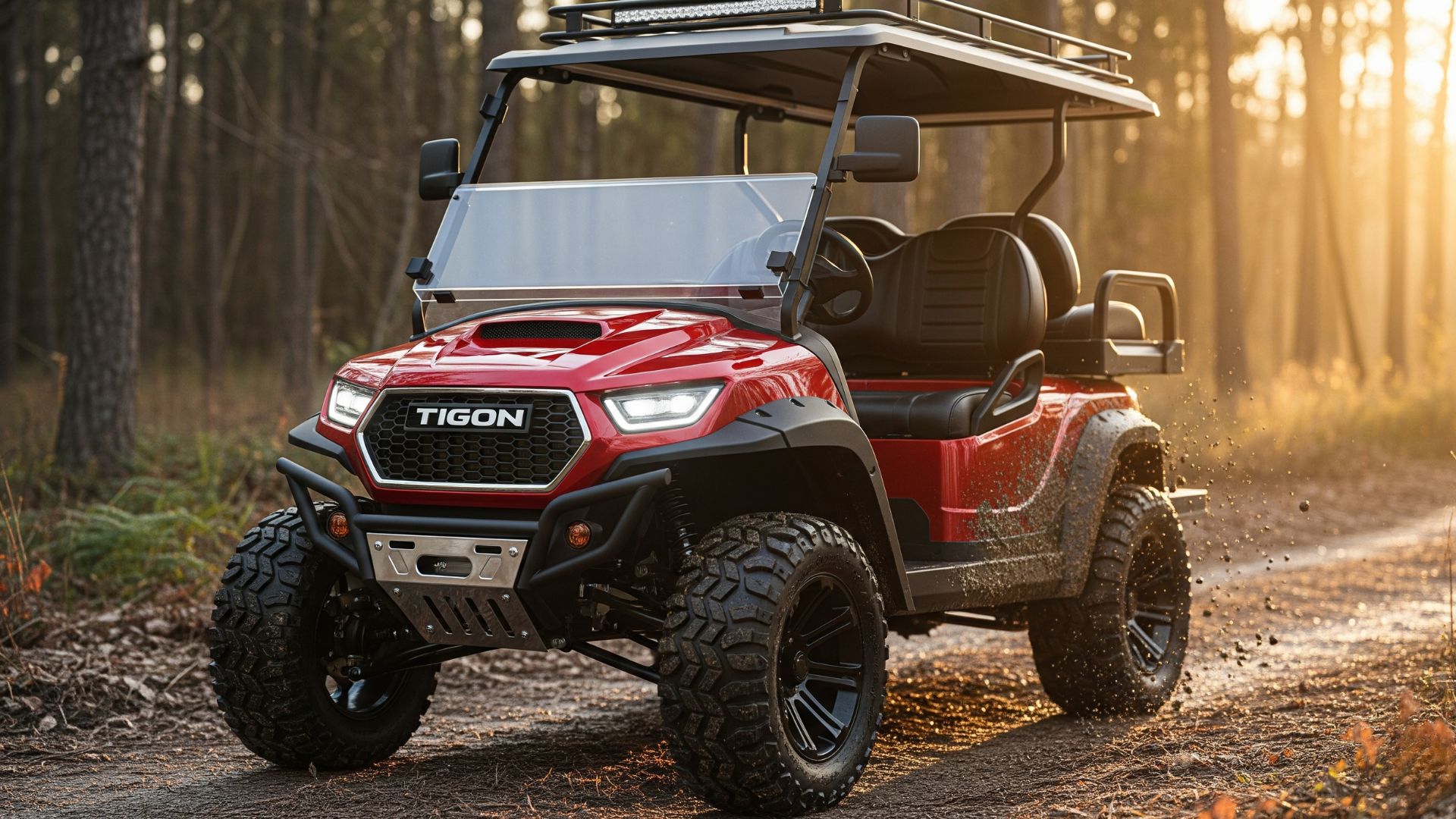
Electric Golf Carts: The Quiet Revolution
Electric golf carts are powered by rechargeable batteries, typically lead-acid or the increasingly popular lithium-ion. Brands like EVolution, ICON, EPIC, Denago, Swift EV, Royal, DACH, and TIGON are at the forefront of electric golf cart innovation.
Pros of Electric Golf Carts:
- Quiet Operation: This is arguably the biggest selling point. Electric carts run almost silently, making them ideal for golf courses, quiet neighborhoods, and early morning commutes where noise can be a concern. Enjoy the sounds of nature or conversations with passengers without engine rumble.
- Zero Emissions: Electric carts produce no tailpipe emissions, making them an environmentally friendly choice. This is beneficial for air quality, particularly in enclosed spaces or areas with strict environmental regulations.
- Lower Running Costs: While the initial cost can sometimes be higher (especially for lithium-ion models), electricity is generally cheaper than gasoline. Over the lifespan of the cart, you’ll save significantly on fuel costs.
- Less Maintenance: Electric motors have fewer moving parts than internal combustion engines, meaning less to break down and fewer routine maintenance tasks like oil changes, spark plug replacements, and fuel filter changes. Your primary maintenance will involve battery care.
- Smooth Acceleration: Electric motors deliver instant torque, providing a smooth and responsive acceleration.
- Ideal for Shorter Distances: Perfect for a round of golf, zipping around a residential community, or managing a smaller property.
- Modern Features: Many new electric carts come packed with advanced features like touchscreen displays, integrated audio, and backup cameras.
Cons of Electric Golf Carts:
- Limited Range: The travel distance is limited by battery capacity. While modern lithium batteries offer impressive ranges, you’ll still need to plan for recharging.
- Recharge Time: Fully recharging a depleted battery pack can take several hours (typically 4-8 hours for lithium, longer for lead-acid). This can limit continuous use without adequate downtime or multiple battery packs.
- Battery Replacement Cost: While lithium batteries last much longer, both lead-acid and lithium batteries will eventually need replacing, which can be a significant expense.
- Performance on Hills: While newer, more powerful electric models handle hills well, older or less robust electric carts might struggle on very steep or long inclines, especially with a full load.
Gas Golf Carts: The Traditional Workhorse
Gas golf carts are powered by small internal combustion engines, similar to those found in lawnmowers or small cars. While traditional brands like EZ-GO, Club Car, and Yamaha have long offered gas models, the market has seen a shift towards electric.
Pros of Gas Golf Carts:
- Longer Range: Gas carts can typically travel much further on a single tank of fuel than electric carts can on a single charge. This is beneficial for large properties, extended use, or areas without convenient charging access.
- Quick Refueling: Refilling the gas tank takes only a few minutes, allowing for virtually continuous operation without significant downtime.
- More Power and Torque: Gas engines generally offer more raw power and torque, making them excellent for climbing steep hills, hauling heavy loads, or navigating rugged, off-road terrain.
- Less Affected by Load/Terrain: Their performance tends to be more consistent regardless of the number of passengers or challenging landscapes.
- Lower Upfront Cost (Sometimes): Older or basic gas models might have a lower initial purchase price than comparable electric models, though this gap is closing, especially with advanced electric options.
Cons of Gas Golf Carts:
- Noisy Operation: Gas engines produce significant noise and vibration, which can be disruptive on a golf course or in a quiet neighborhood.
- Emissions & Fumes: They produce exhaust fumes and have a distinct gasoline smell, contributing to air pollution. This can be a concern in enclosed spaces like garages.
- More Maintenance: Gas carts require more frequent and extensive maintenance, including oil changes, spark plug replacements, air filter cleaning, and other engine-related upkeep.
- Higher Running Costs: The fluctuating price of gasoline means higher ongoing fuel expenses compared to electricity.
- Less Environmentally Friendly: For those prioritizing eco-conscious choices, gas carts fall short due to their emissions.
Making Your Decision: Consider Your Lifestyle
To choose the best golf cart for you, ask yourself these questions:
- Where will you use it most? For golf courses and quiet communities, electric is often preferred. For large rural properties, hunting, or heavy-duty tasks, gas might be more suitable.
- How far do you need to go? If long distances without a charging point are a regular occurrence, gas offers more range flexibility.
- Is noise a concern? Electric carts are significantly quieter.
- Are you comfortable with maintenance? Electric carts require less hands-on engine maintenance.
- What’s your budget for initial purchase and ongoing costs? Factor in fuel/electricity and maintenance over time.
- Do you value eco-friendliness? Electric carts are the clear winner in terms of environmental impact.
- How important is instant power for hills or towing? Gas traditionally excels here, though powerful lithium electric models are closing the gap.
The Evolving Landscape
It’s important to note that the golf cart market is constantly evolving. Advances in lithium-ion battery technology are making electric carts more powerful, extending their range, and reducing charging times, making them increasingly competitive with gas models in terms of performance. Many new electric carts from brands like EVolution and ICON offer features and capabilities that rival, or even surpass, traditional gas models.
Ultimately, by weighing these factors against your personal priorities, you’ll be well-equipped to select the electric or gas golf cart that’s perfectly suited for your needs.
Ready to explore the options? Visit TIGON Golf Carts to see our full inventory of electric and gas golf carts and find the perfect match for your lifestyle!