
The Complete Medium Speed Vehicles (MSVs) 2026 Guide for Local Transportation, Safety, and Urban Mobility
Medium-speed vehicles (MSVs) are becoming one of the most important and misunderstood categories in the modern mobility world. As we enter 2026, MSVs sit at the intersection of golf carts, neighborhood electric vehicles (NEVs), and compact urban commuter solutions. They offer more speed than traditional low-speed vehicles (LSVs), more safety features than golf carts, and more efficiency than passenger cars for trips under five miles. With U.S. trips under 3 miles accounting for nearly 50% of all daily travel, the MSV segment is positioned for explosive growth—especially in states actively defining regulatory frameworks.
What Is a Medium-Speed Vehicle in 2026?
A Medium-Speed Vehicle (MSV) is a four-wheeled electric or gasoline vehicle that:
-
Reaches over 30 mph but not more than 35 mph
-
Is street legal in certain states and municipalities
-
Operates on roads posted 40–45 mph, depending on local laws
-
Must meet federal requirements under 49 CFR 571.500
-
Uses more stringent safety equipment than LSVs but less than full passenger vehicles
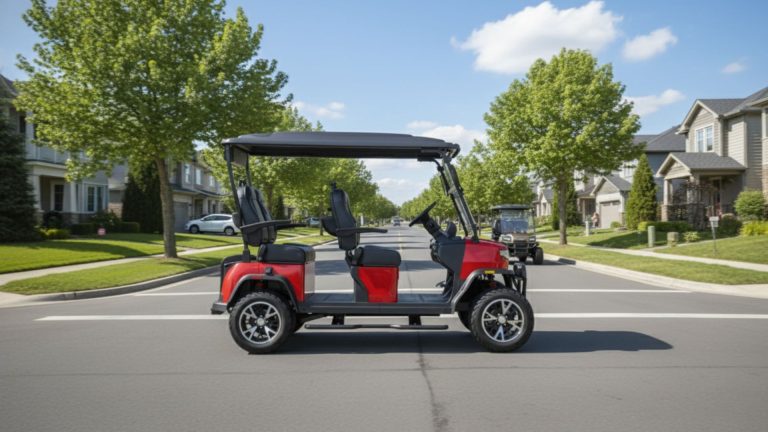
MSVs sit above golf carts and LSVs but below compact cars. With protective structures, better lighting systems, and VIN compliance, they provide safer, faster mobility for campus, municipality, resort, and urban travel.
MSV vs. LSV: What Changed Going Into 2026?
As state laws mature, the gap between LSVs and MSVs becomes more pronounced.
Comparison Table: LSV vs. MSV (2026 Standards)
| Feature | Low-Speed Vehicle (LSV) | Medium-Speed Vehicle (MSV) |
|---|---|---|
| Top Speed | 25 mph max | 35 mph max |
| Minimum Operating Speed | 20 mph | 30–32 mph typical |
| Road Access | Roads ≤ 35 mph | Roads ≤ 40 or 45 mph (state dependent) |
| Federal Standard | 49 CFR 571.500 | 49 CFR 571.500 + enhanced equipment |
| Interstate Use | Prohibited | Prohibited |
| Safety Equipment | Basic | Expanded (crushproof structure, advanced lighting) |
| Best Use Case | Gated communities, beaches, short hops | Urban corridors, campuses, mixed-traffic areas |
Key Federal Safety Requirements for MSVs in 2026
To qualify as a Medium-Speed Vehicle, a manufacturer must include:
-
FMVSS-compliant lighting: headlamps, tail lamps, turn signals, stop lamps
-
Reflectors (SAE A) and side marker lamps
-
Windshield meeting ANSI Z-26.1 standards
-
Parking brake (FMVSS 571.135)
-
Vehicle Identification Number (VIN)
-
Seat belts (FMVSS 209 and 210)
-
Mirrors (FMVSS 111)
-
Horn and reverse warning beeper
-
Front + rear bumper systems
-
Crushproof or roll-cage-style protection
Electric MSVs must also comply with FMVSS 305 relating to electrical system safety.
MSV Road Access Rules (Updated for 2026)
General U.S. Rules
-
Interstates: MSVs are prohibited
-
Crossing Highways: Allowed at controlled intersections
-
Urban Use: MSVs may operate at posted limits of 40–45 mph depending on state rules
-
Traffic Flow: Drivers must not impede traffic and may be required to pull over
Examples of State Differences (as of 2025–2026)
-
Tennessee & Washington: Explicit MSV statutes
-
Montana & Oklahoma: Specific operational classifications
-
Pennsylvania: Lacks a distinct MSV category—meaning many MSVs must meet full motor-vehicle requirements to legally operate above 25 mph
Why MSVs Are Growing in 2026
1. Urban Mobility Pressure
Cities aim to replace short car trips with compact electric vehicles to reduce congestion.
2. Sustainability Push
Electric MSVs consume:
-
Zero fuel when parked
-
Zero fuel when idling
-
Far less energy than full-sized EVs
3. Campus & Municipality Adoption
Universities, resorts, airports, and business campuses use MSVs for safe, medium-range, point-to-point transportation.
4. Consumer Demand for “More Than a Golf Cart”
Families in beach towns, lake towns, and master-planned communities prefer faster vehicles that keep up with traffic.
Real-World Uses for MSVs in 2026
Residential
-
Master-planned communities
-
Lake towns
-
Island towns
-
Neighborhood errands
Commercial
-
Resort shuttles
-
Hotel logistics
-
Maintenance fleets
-
Security patrol vehicles
Industrial
-
Warehouses
-
Distribution centers
-
Utility campuses
Campus & Institutional
-
Universities
-
Hospitals
-
Government facilities
Delivery & Last-Mile Transport
-
Compact delivery in dense urban zones
-
Food delivery and micro-logistics
-
Postal-style local delivery routes
Top MSV Manufacturers Going Into 2026
-
Club Car®
-
Denago®
-
Tomberlin®
-
EPIC®
-
Evolution® (select models meeting MSV criteria)
-
Royal EV®
-
TEKO® EV (future MSV updates for 2026 expected)
-
TARA Harmony® (select models depending on state classification)
MSV Safety: Why the Debate Continues
NHTSA has historically pushed back on creating an MSV category lighter than passenger-car standards, citing crash-severity physics:
-
A collision at 35 mph produces nearly double the impact energy of a collision at 25 mph.
-
Fatality rates on roads ≤ 45 mph underscore the need for passenger-vehicle-level safety equipment.
2026 Outlook:
Regulators continue considering a “modernized MSV class” with enhanced crash protection and lightweight EV design, but no final rulemaking is expected until late 2026 or early 2027.
Consumer Search Intent: What People Want to Know in 2026
1. Can I drive an MSV in my state?
Yes, depending on your state’s adoption of MSV regulations.
2. Are MSVs street legal everywhere?
No. Some states allow MSVs only on 40–45 mph roads, while others require full passenger vehicle certification.
3. Are MSVs safer than golf carts?
Absolutely. They include VINs, bumpers, advanced lighting, better braking, reinforced frames, and sometimes roll-cage structures.
4. Can I use an MSV for daily commuting?
Yes—for short, local commutes (1–5 miles). They are not designed for highway or suburban long-distance driving.
5. Are MSVs worth buying in 2026?
If you live in a beach town, resort town, university zone, or master-planned community—yes.
6. Do insurance companies cover MSVs?
Yes. Most insurers categorize MSVs similarly to NEVs, small passenger vehicles, or compact utility EVs.
FAQ Section (Expanded for Semantic SEO)
Q: What qualifies as a Medium-Speed Vehicle?
A: Any four-wheeled motor vehicle capable of 31–35 mph with FMVSS-compliant safety equipment.
Q: Are MSVs allowed in Pennsylvania?
A: Pennsylvania currently recognizes LSVs but lacks a full MSV framework. Most MSVs must be certified as passenger vehicles to operate above 25 mph.
Q: Are MSVs safer than LSVs?
A: Yes. MSVs require expanded lighting systems, crash-resistant design, and greater road compatibility.
Q: Can MSVs drive on 45 mph roads?
A: In some states, yes—those with MSV statutes. Always confirm with local DOT guidelines.
The Future of Medium-Speed Vehicles (2026–2027 Market Outlook)
1. Growth in tourism towns
Beach communities, RV resorts, and national park gateway towns are adopting MSVs faster than LSVs.
2. More 35 mph EV models emerging
Manufacturers like Denago®, Evolution®, Tomberlin®, and TEKO® will release lighter, stronger 2026–2027 MSV-ready platforms.
3. Municipal adoption expanding
Cities want zero-emission options for code enforcement, parking patrol, and downtown fleet use.
4. Safety rules tightening
NHTSA’s anticipated 2026 review may push MSVs toward partial passenger-vehicle crash standards.
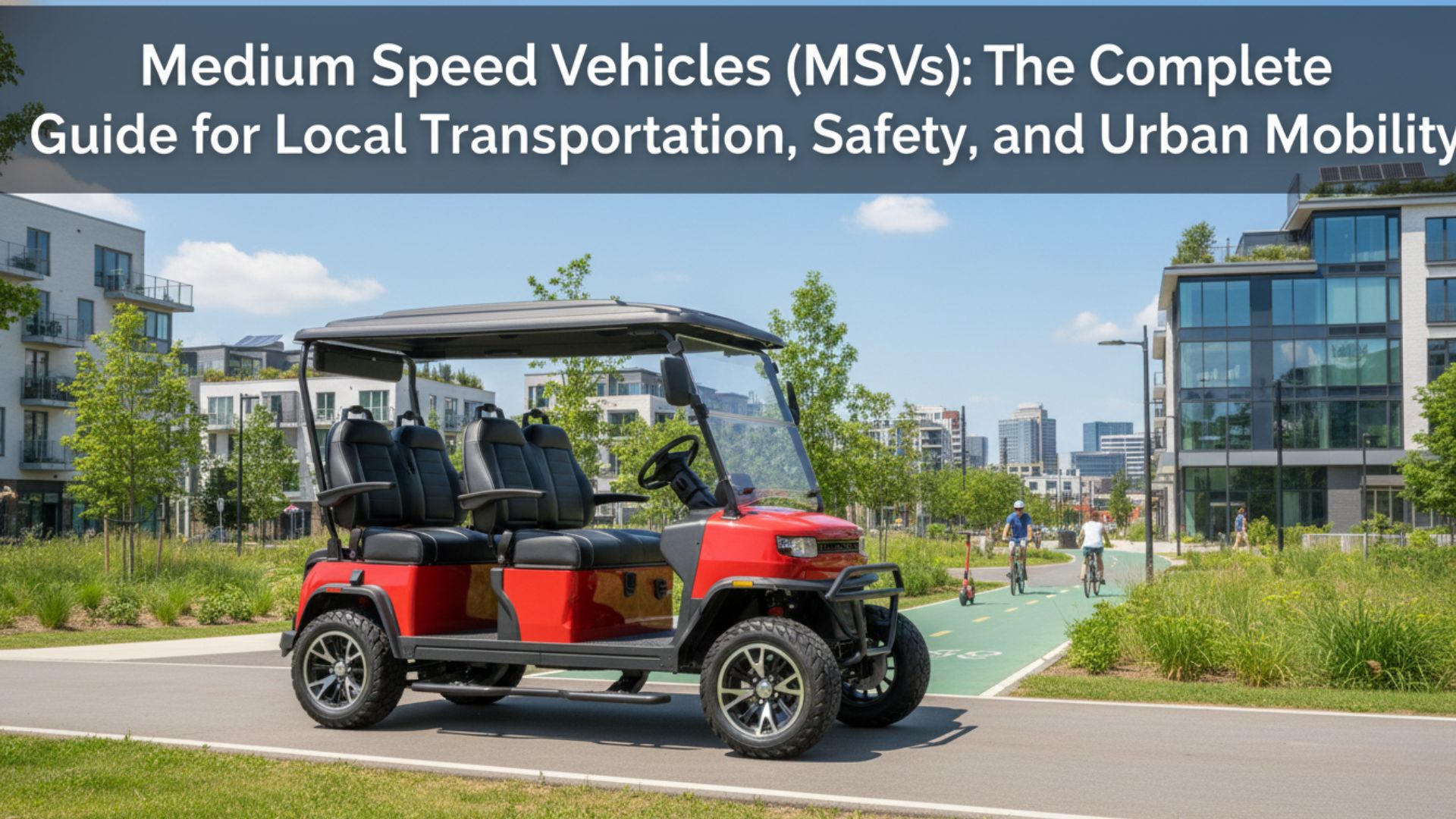
Are Medium-Speed Vehicles the Future of Local Transportation?
As the U.S. moves toward more efficient, local-trip mobility, MSVs offer the ideal middle ground between golf carts, LSVs, and full passenger cars. With better safety, broader road access, and rapidly improving electric powertrains, MSVs are positioned to dominate the 2026 transportation market in tourist regions, college towns, municipalities, and growing suburban neighborhoods. While regulations vary by state, demand for safer, faster neighborhood mobility continues climbing—and MSVs fill that gap perfectly.
#MSV #MediumSpeedVehicles #ElectricMSV #StreetLegalMSV #35MPHMSV #MSVElectric #UrbanMSV #EVTransport #ElectricTransport #FutureMSV #MSV2026 #NextGenMSV #EcoMSV #SustainableMSV #ElectricMobility #NeighborhoodMSV #CommunityMSV #EVLifestyle #MSVLife #ModernMSV #ElectricDrive #LocalEVTravel #ElectricCommuter #CityMSV #CampusMSV #ResortMSV #DailyEV #LocalMobilityEV #MSVElectricDrive #SmartEVTransport #ElectricVehicleClass #ElectricStreetLegal #EVSpeed35 #EVMobility2026 #MSVRevolution #MSVUpgrade #ElectricFleet #EVCommunityTravel #ElectricLocalTravel #ZeroEmissionMSV #EcoFriendlyMSV #CleanEnergyMSV #ElectricNeighborhoodTravel #ElectricTownTravel #ElectricStreetTravel #ElectricRideMSV #EVForCommunities #ModernEVTransport #ElectricRoadReady #TIGONMSVs